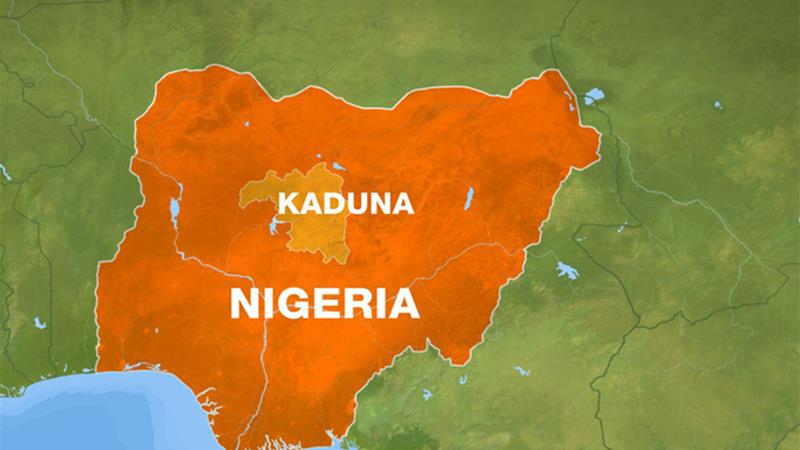
Traders in Kaduna have raised the alarm over the crippling effect of rising transportation costs on their businesses, warning that the sustained increase in fuel prices has driven up goods prices, slashed customer patronage and pushed several small enterprises to the brink of collapse.
The traders, who spoke in separate interviews with THE WHISTLER across different business districts in Kaduna, painted a picture of a commercial environment under severe stress, with the burden of freight costs from southern supply hubs such as Lagos and Ibadan increasingly transferred to end consumers who are themselves struggling with reduced purchasing power.
Haruna Yakubu, a general merchandise dealer, said goods he previously sold for N160,000 now fetch N180,000, while others that moved at N90,000 have climbed to N100,000.
The price adjustment, he said, has driven customers away rather than sustaining his margins. “There is a decrease in customer patronage. Customers are not coming as they used to,” he said.
For Ramatu Suleiman, who deals in day-old chicks and poultry feeds, the situation has been even more acute.
The cost of day-old chicks has more than doubled, rising from N800 to N1,800, an increase she attributed directly to the compounding effect of haulage costs on a perishable commodity that must be transported quickly over long distances.
“The hike in transportation has affected everything in this business,” she said.
Ngozi Okafor, who sells electronic and solar appliances, said the price escalation begins the moment imported goods land in Lagos and compounds at every subsequent leg of the journey before reaching Kaduna.
She said she has been forced to raise prices simply to remain operational, a decision that has more than halved her daily customer traffic.
“I usually get 10 to 15 customers per day, but the number has now dropped to about five,” she said.
Musa Adamu, a provision store owner in one of Kaduna’s busy retail corridors, said virtually no product category has been spared. From toiletries to food items and household consumables, he said the transportation cost variable has infected every shelf in his store, making it increasingly difficult to stock competitively priced goods.
The strain has also reached the food service sector. Fatima Garba, who runs a local restaurant, said the rising cost of transporting foodstuffs and cooking ingredients had squeezed her operating costs significantly, with implications that go beyond business survival.
She called on the government at all levels to treat the transportation cost crisis as a food security emergency. “When the cost of moving food goes up, the cost of feeding goes up. People are eating less or eating poorly, and that has consequences beyond the market,” she said.
Economic analysts say the traders’ accounts reflect a predictable but deeply damaging transmission mechanism in which fuel subsidy removal, combined with naira depreciation and poor road infrastructure, converts every kilometre of freight movement into a compounding cost burden.
Dr. Aliyu Musa Abdullahi, a development economist and lecturer at Kaduna State University, told NEWSNGR that the crisis is structural rather than cyclical, meaning it will not self-correct without deliberate policy intervention.
“What we are seeing is not a temporary market adjustment. It is the full weight of unresolved logistics infrastructure deficits meeting an inflationary environment,” he said.
“Nigeria’s overreliance on road transport, combined with the poor state of federal highways connecting the north to southern supply markets, means that every naira increase in the pump price translates into a disproportionate increase in the final cost of goods by the time they reach consumers in Kaduna.”
He argued that the government needed to pursue a dual intervention short-term palliatives such as targeted freight subsidies for essential commodities alongside long-term investment in rail infrastructure and the rehabilitation of major arterial roads.
“Without addressing the cost of movement, monetary policy alone cannot tame the inflation that ordinary Nigerians are experiencing at the market level,” he added.
The Kaduna traders’ lament mirrors a nationwide pattern of commercial distress that has intensified since the removal of fuel subsidy in May 2023, with the Nigerian Bureau of Statistics recording successive upticks in food and non-food inflation driven in significant part by logistics costs.
For the traders on Kaduna’s streets, however, the statistics are less relevant than the empty stalls, the reduced daily takings, and the growing number of customers who come to look but leave without buying.