Across East Africa, fuel has become more than just a commodity, it is a daily reminder of how differently neighbouring nations are experiencing the same global economic pressures. From long queues in some areas to relatively stable supply in others, the region presents a striking contrast that continues to shape public debate on governance and resilience.
Source: UGC
In the wake of the recent nationwide demonstrations over the rise in cost of fuel, journalist Alex Chamwada took a tour through East Africa to examine fuel availability and pricing trends.
He told NGBREAKINGNEWS that despite frustrations at home, the country remains comparatively better placed than several of its neighbours, including some oil-producing nations elsewhere on the continent.
His findings reveal a continent grappling with uneven access, rationing systems, and rising costs, even as Kenya faces its own affordability concerns.
Fuel rationing in Ethiopia
In Ethiopia, Chamwada described a difficult reality for ordinary motorists due to a countrywide fuel shortage brought about by rationing.

Read also
Musalia Mudavadi warns Kenyans, urges them to brace for more economic hardship: “The reality”
“You get a fuel coupon from government once a week,” he reported, painting a picture of strict controls designed to manage scarcity.
Hawassa, located about 275 kilometres south of Addis Ababa, is one of several urban centres where fuel distribution has reportedly been constrained.
The system of rationing, while ensuring some level of access, has also introduced long waits and uncertainty for drivers and businesses dependent on transport.
Fuel crisis in Burundi
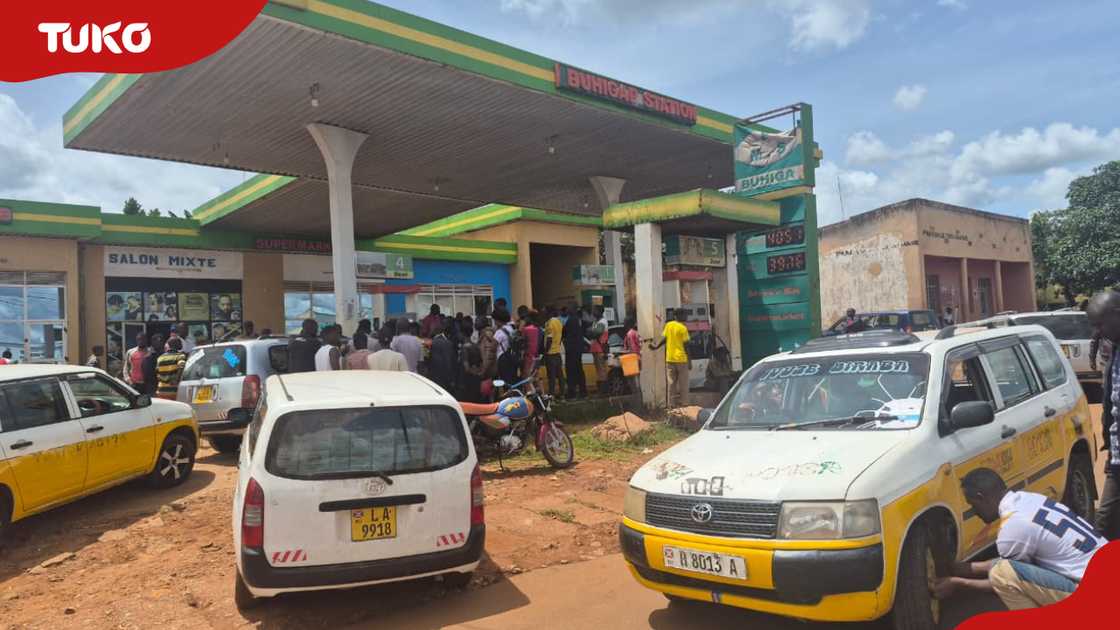
A similar situation is being experienced in Burundi, where diesel in particular has become increasingly difficult to access.
Reports from the country suggest that supply inconsistencies have forced motorists to queue for extended periods, with availability varying significantly by region and station.
Against this backdrop, Kenya’s fuel market presents a different challenge; not scarcity, but cost.
Recent regional price comparisons for May 2026 show that Rwanda overtook Kenya as the most expensive petrol market in East Africa, following the latest round of fuel price adjustments across the region.

Read also
William Ruto sends message of hope to Kenyans amid fuel price crisis: “Nobody should feel abandoned”
Rwanda has most expensive fuel in EA
In Rwanda, petrol prices surged sharply from KSh 203.09 to KSh 259.09 per litre, placing it at the top of the regional pricing table and significantly above its neighbours.
The increase reflects mounting pressure on import-dependent economies that remain highly exposed to global oil price fluctuations and currency volatility.
Kenya now ranks second in the region, with super petrol priced at approximately KSh 214.25 per litre.
While this remains lower than Rwanda’s latest figures, it still places Kenyan consumers among the most affected in East Africa.
Comparative fuel prices in East Africa
Tanzania follows closely with petrol priced at around KSh 204.67 per litre, maintaining a relatively stable position but still reflecting global market pressures.
Uganda has recorded a slight easing, with prices declining from KSh 184.55 to KSh 179.74 per litre , offering some relief to motorists.

Read also
Kenya’s fuel crisis: How William Ruto’s challenges echo those of his predecessors
Burundi sits slightly lower at about KSh 178.50 per litre, though its challenge is less about price and more about availability, with diesel shortages reported in several areas.
At the other end of the spectrum, Ethiopia remains the cheapest fuel market in the region, with petrol priced at approximately KSh 137.52 per litre.
This affordability, however, comes with its own trade-offs.
Why Ethiopia suffers fuel rationing
Ethiopia’s position has been largely attributed to state-controlled pricing mechanisms, subsidies, and strict foreign exchange regulation policies that insulate domestic consumers from global oil shocks.
While this approach keeps prices low, it is also closely linked to the rationing systems and periodic shortages reported in different parts of the country.
The regional contrast highlights a shared dilemma across East Africa: how to balance affordability, availability, and economic sustainability in a volatile global energy market.
Countries that allow market-driven pricing often face higher consumer costs, while those that intervene heavily risk shortages and rationing.

Source: UGC
Kenya’s fuel situation better?
For Kenya, the debate continues to sit at the intersection of policy and perception. While fuel prices remain a burden for households and businesses, the broader regional comparison suggests a more complex reality.

Read also
Super Metro promises fare adjustments after diesel price drop: “We’ll review our fares”
Kenya is neither the cheapest nor the most expensive, but positioned in the middle of a highly uneven East African landscape.
Chamwada’s research was reiterated by popular hotelier Mohammed Hersi who expressed the need to have an optimistic view of the discourse.
“We certainly have issues but we are 10 times better than many other countries including oil producing nations,” he noted.
His perspective was a call for citizens to view national challenges through a broader, long-term lens rather than through the lens of day-to-day politics alone.
What high fuel costs mean to Kenyans
Still, for ordinary citizens, the numbers only tell part of the story. Behind each litre of petrol is a wider conversation about transport costs, food prices, inflation, and the daily struggle to make ends meet.
And yet, amid the frustrations, there remains a recurring reminder in public discourse: nations endure beyond administrations.
Policies change, leaders come and go, but the Republic, and its people remain.
In that sense, the fuel debate across East Africa is not just about petrol prices or shortages. It is about how nations manage scarcity and how citizens interpret governance.
Source: NGBREAKINGNEWS