‘Bitter irony: Most Christians Killed by Militia in Middle Belt, not Borno’ — Expert.
By Mike Odeh James
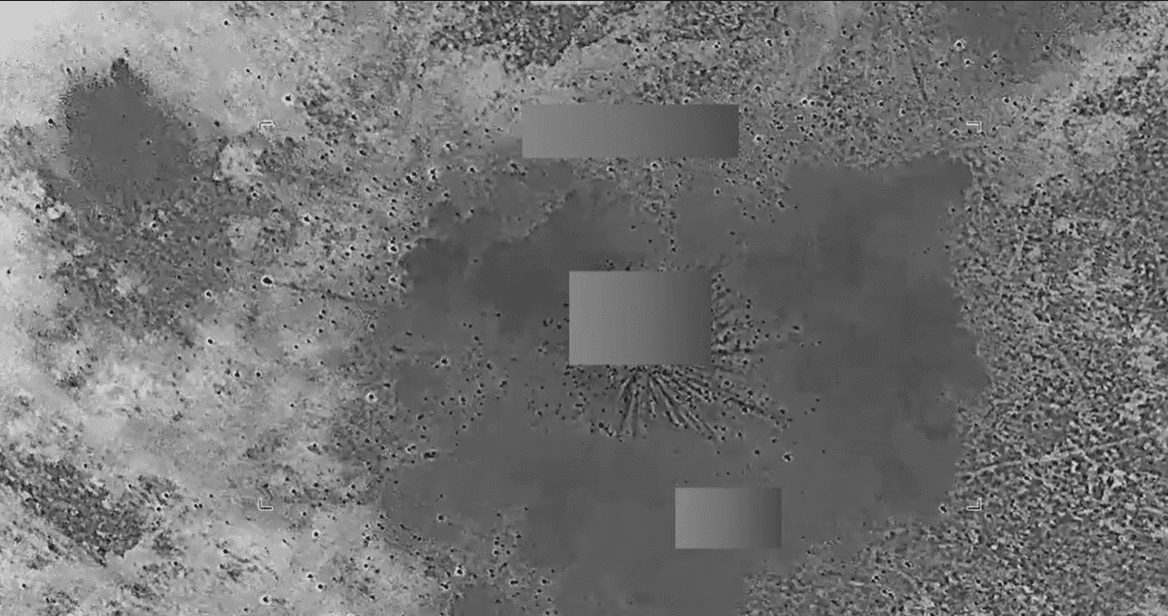
(Abuja) Nigerian and American forces have claimed the scalp of ISIS second in command. But Nigeria’s own military said it killed the same man 14 months ago.
The joint operation announced by President Donald Trump and President Bola Tinubu was framed as a milestone. Trump described Abu Bilal al Minuki as the most active terrorist in the world and ISIS global number two, crediting American bravery and Nigerian partnership.
But records from Nigeria Defence Headquarters told a different story. In April 2024, Major General Edward Buba announced that al Minuki had been “neutralized.” The announcement was unambiguous. The man, apparently, was dead.
Now, 14 months later, he has been killed again.
Current Defence spokesperson Major General Michael Onoja dismissed the contradiction. He insisted the two operations involved not the same person. The administration admitted on Saturday that the Nigerian military erroneously claimed to have taken down the ISIS leader in 2024.
Retired Brigadier General Bashir Adewinbi nonetheless praised the US-Nigeria collaboration. He said results should be acknowledged even when intelligence is imperfect.
Ghost of Shekau
The confusion recalls one of the Nigerian government’s most resilient assets: fake news. Few episodes in Nigeria’s long insurgency have illustrated the fog of war better than Boko Haram leader Abubakar Shekau. Security forces declared him killed at least four times before he surfaced alive each time, releasing videos mocking the military. The military never offered a satisfying account of how it got it so wrong.
Retired Brigadier General Edmin George did not mince words. “The fact that he rose from a Boko Haram commander to the second in command of ISIS globally shows that we left them unchecked for too long,” he said. “In guerrilla warfare, mistaken kills happen. But when those mistakes are announced as major victories and then walked back, institutional credibility becomes the casualty no one bothers to count.”
For the scrambling Tinubu administration, the kill of al Minuki betokened something rare: a public nod from Washington. US Secretary of War Pete Hegseth applauded the mission as validation of Trump’s promise to protect Christians. AFRICOM commander General Dagvin Anderson praised months of intelligence sharing. And Team Tinubu has more reason to celebrate after Africom’s announcement on X of another airstrike in Northeastern Nigeria on May 17. (The target was not disclosed.)
Abuja’s response has framed the operation as proof of a maturing defense relationship. Sustained American involvement could strengthen Nigeria’s capacity against jihadist networks.
“But optimism must be weighed against history,” David Onyilokwu Idah of the International Human Rights Commission Abuja told TruthNigeria. “The Trump Administration takes a transactional approach to foreign partnerships,” he said.
“Deeper military ties will carry conditions. Trump will be demanding from Tinubu good governance, some concessions, and a safer environment for over 120 million Nigerian Christians and commitment to proper democratic ideals. But would the Nigerian government be truthful?
“On Sahel strategy, the U.S. priorities strongly align with Nigeria’s own. Abuja historically has resisted foreign military basing on its soil; however, we are seeing a shift. We may start seeing U.S. trainers, military advisors, and drones hovering over our airspace,” Idah added.
Middle Belt’s Bitter Question
Absent from the national reaction has been mention of Nigeria’s Christian killing zone: the Middle Belt. And communities noticed, sharply.
Friday Agbo, MD of Alterkonsult Think-tank in Kaduna, believes that Trump has been misled once again by Nigeria’s leadership.
“For villages across Benue, Plateau, Kaduna, and Taraba states, Hegseth’s framing of the mission as a campaign to protect Christians rang hollow. The Fulani Ethnic Militia, operating across the Middle Belt, has killed thousands of indigenous Christian farming families over the past decade. Villages burned. Mass graves dug. Tens of thousands displaced.
“Hegseth’s declaration — ‘We hunted this top ISIS leader in Nigeria who was killing Christians’ — landed with bitter irony. For survivors across Benue’s river valleys and Plateau’s farming communities, the Christians being killed most consistently are being killed not by ISIS in Borno, but by armed militia moving through the agricultural heartland with impunity, week after week, unnamed by Washington.
“Trump says he is protecting Christians. But the people killing us every week are not in Borno. They are in our forests, our farms, our roads. Nobody is doing precision airstrikes on them,” Agbo told TruthNigeria.
In Benue, community leaders said they welcomed any genuine effort to protect Nigerian Christians. But they demanded to know why the international spotlight remained fixed on the northeast while the Middle Belt bled without a single presidential post naming their attackers.
The death of Abu Bilal al Minuki may represent a genuine blow to global ISIS. The Nigeria–United States partnership holds real promise. But for the widow in Benue burying her husband this week, killed not by a man Donald Trump has ever named, this is a victory aimed at the wrong forest.
Mike Odeh James is a conflict reporter for TruthNigeria.