By Ebere Inyama
(Imo state) As Nigeria celebrates workers’ day on May 1, workers in the government and private sectors, most of whom rely on their monthly salaries for survival, are gradually becoming alarmed over the rising inflation in the Nigerian economy.
Speaking during an interview with the News Agency of Nigeria on Tuesday 27 April, 2026 in Abuja, the President of the Nigerian Labor Congress (NLC), Mr. Joe Ajaero said rising inflation has continued to erode workers’ purchasing power, noting that the recent rise in fuel prices has worsened hardship for workers nationwide.
“Even if Nigerian workers earn ₦1m ($728,000), it will not be meaningful if the naira has no value”, said Ajaero.
“What we are looking for is a currency that can sustain workers and their families at least to the end of the month,” he continued.
“We raised concerns when global developments began to impact fuel prices locally, and we called for intervention but up till now, the situation has not improved, and the burden on workers continues to increase,” Ajaero added.
Workers mobilize for protests
Earlier on 3 April 2026, the Nigeria Labour Congress (NLC) expressed concern over what it described as widespread violations of the wage law, including failure to implement consequential salary adjustments and directed workers in states yet to fully implement the 2024 national minimum wage Act to mark the International Workers’ Day with street protests.
In a circular issued by the labor center’s general-secretary, Comrade Emmanuel Ugboaja, the NLC directed workers to converge at designated labor houses, union offices or public squares by 7:00 a.m. on May 1, 2026, before embarking on peaceful processions across their respective state capitals.
Government promises vs economic realities
On May 29, 2023, President Bola Tinubu announced the removal of Nigeria’s fuel subsidy immediately hiking pump prices from ~₦185 ($0.13)to ₦550 ($0.40) + per liter. As of April 2026, the pump price of Premium Motor Spirit (PMS) stands at ₦1400 ($1.02) per liter.
In his Independence Day broadcast to mark Nigeria’s 65th anniversary, President Tinibu said that “following the removal of the corrupt petroleum subsidy, his government has freed up trillions of Naira for targeted investment in the real economy and social programmes for the most vulnerable, as well as all tiers of government.”
Three years after the fuel subsidy removal, reports from labor leaders indicate that the Nigerian economy hasn’t improved.
Speaking at a press conference held in Abuja on Tuesday 7 April, 2026, the Assistant General Secretary of the Nigeria Labour Congress (NLC), Eustace James, said policies introduced to strengthen the economy were instead aggravating citizens’ living conditions.
“Nigerians have yet to experience the expected benefits from the savings generated by the removal of fuel subsidy”, James said.
“With the removal of fuel subsidy, one would have expected that the resources saved would be invested in public and social services that directly benefit Nigerians. However, citizens appear to be worse off,” he added.
Research findings presented by Mohammed Shuaibu of the University of Abuja at a stakeholders’ dialogue organized by Agora Policy in Abuja on Thursday 12 March 2026, show that the removal of petrol subsidy by the Nigerian government as announced by President Bola Tinubu on 29 May 2023, led to sharp price increases across the economy and worsening poverty levels.
Increasing debt burden
Data released by the Debt Management Office (DMO) in April, 2026, indicates that Nigeria’s total public debt stood at ₦159.28 trillion ($115.8bn) as of December 31, 2025. With Nigeria’s population estimated at about 220 million, the figures suggest that every citizen now carries a significant share of the national debt which is largely driven by increased domestic borrowing.
“As government borrowing increases, poverty continues to rise”, said the Executive Director of the Civil Society Legislative Advocacy Centre (CSLAC), Auwal Rafsanjani.
Social realities and security concerns
With a headline inflation rate of 15.38 per cent in March 2026, according to the National Bureau of Statistics (NBS), and 80 per cent of the youth unemployed according to ActionAid/Plan International report in December, 2025, some of the frustrated job seekers are turning to crime.
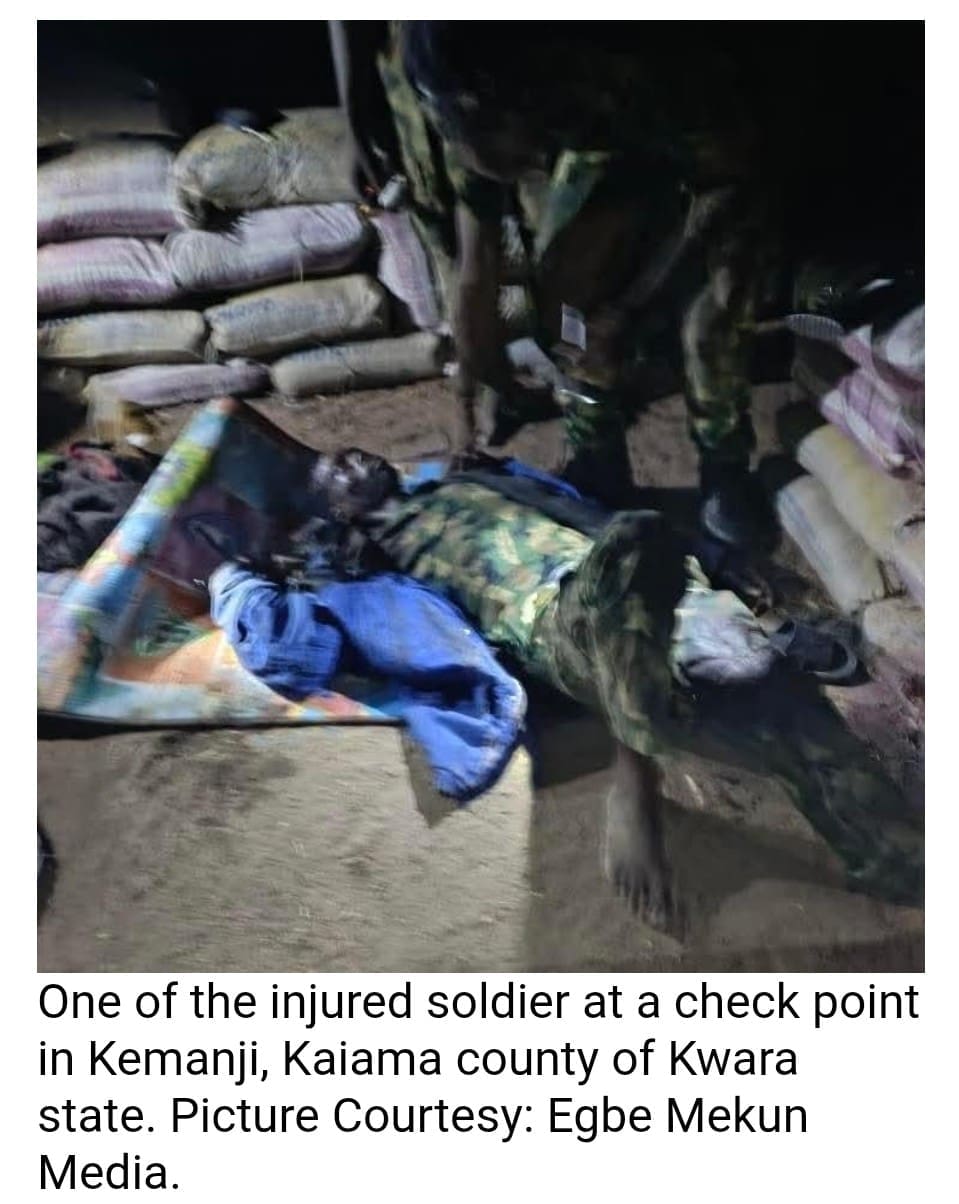
Violence in Nigeria’s Middle Belt—primarily states like Benue, Plateau, Taraba, and Nasarawa—remains a severe security crisis characterized by a cycle of kidnappings, mass killings and displacements of indigenes.
As of late April 2026, the region continues to experience coordinated night raids and ambushes targeting rural communities, often resulting in heavy civilian casualties and the destruction of farmlands and homes.
Amnesty International reports that between 2023 and May 2025, over 6,800 people have been murdered in Benue State, while over 2600 were killed in Plateau State in coordinated assaults attributed mainly to the Fulani Ethnic Militia. In Nasarawa’s Doma and Awe, recurring violence has reportedly displaced tens of thousands, many of whom still live in Internally Displaced Persons (IDP) camps with no clear prospects of return.
A wake – up call for the Nigerian government
A report by BudgIT, a civic organization, obtained by BusinessDay, warned that “Nigeria faces a severe fiscal inflection point driven by explosive debt accumulation, weak revenue mobilization, currency depreciation and heavy reliance on high-cost borrowing.”
To ease near-term pressures, the report recommended “targeted short-term financing such as concessional lines or multilateral support contingent on credible structural reforms, to bridge immediate gaps without resorting to high-cost domestic borrowing.”
In a message shared with TruthNigeria on 1 May 2026, the Vice President of the Nigeria Union of Journalists (NUJ) (Southeast), Comrade Ezenwa Adiuku, paid tribute to Nigerian workers.
“Your sacrifices—often unseen and underappreciated—are vital to nation-building, good governance, and the preservation of democratic values”, Adiuku wrote.
“I also call on governments and employers to prioritize the welfare, safety, and professional development of workers, especially journalists, whose role in shaping public discourse cannot be overstated”, the message added.
Ebere Inyama reports on conflict for TruthNigeria.