Rubio is scheduled to arrive in India tomorrow after attending the NATO foreign ministers’ meeting in Sweden and days after his visit to China, where US President Donald Trump’s administration sought to improve engagement with Beijing.
“I think the visit is significant in substance as well as symbolically, coming as it does after a year of considerable turmoil and uncertainty in the India-US relationship,” Shankar said. “So we see it as an effort by the US to stabilise an important strategic partnership in the Indo-Pacific.”
Shankar said India is closely watching whether the strategic alignment between Washington and New Delhi in the Indo-Pacific remains intact following Trump’s outreach to China.
“From India’s point of view, especially after Trump’s visit to China, there are doubts and questions about how the strategic convergence between India and the US in the Indo-Pacific will move in the future,” she said. “Will the strategic convergence be held hostage to US-China ties?”
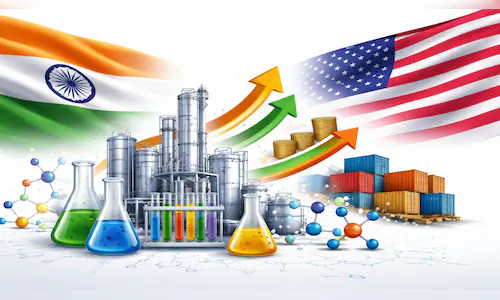
Rubio’s four-day India visit is expected to focus on energy security, trade and defence cooperation, while also including bilateral talks with Quad foreign ministers in New Delhi on May 26.
Ahead of the visit, Rubio described India as a “great ally and partner” and said the United States was willing to sell New Delhi as much oil as it wanted to buy. His comments came shortly after the Trump administration claimed China had agreed to purchase more American oil following recent talks with Beijing.
Shankar said energy cooperation would be an important part of the discussions, though she stressed that the relationship extends beyond oil and gas trade.
“Energy is important, but apart from oil and gas, there has also been a delegation from the US on nuclear energy that visited India and held discussions with officials and private-sector participants,” she said.
She noted that India has recently opened up nuclear energy to private-sector participation and addressed concerns over supplier liability, which had earlier been a sticking point for US companies.
“There is a window of opportunity, and it is something on which the two countries have begun re-engagement with this visit,” she added.
At the same time, Shankar cautioned that commercial and technological issues remain unresolved. She said US crude oil remains expensive for Indian refiners because of higher freight and logistical costs, while American nuclear projects have previously faced pricing concerns.
Rubio also revealed that Venezuela’s Vice President may visit India next week for talks on oil supplies. India had imported Venezuelan crude before US sanctions disrupted purchases.
Shankar said Venezuelan crude could once again become part of India’s energy basket if there is greater policy clarity from Washington. Reliance Industries was among the major Indian buyers of Venezuelan oil before sanctions tightened.
Beyond energy, Shankar said defence technology cooperation and supply chain resilience would also feature prominently during Rubio’s engagements in India.
“To what extent is the Trump administration willing to proceed on co-production, co-design, and co-manufacturing, or to transfer defence technologies to India? Those are also issues that will be on the table,” she said.
She also reiterated India’s position on the Quad grouping, saying New Delhi sees it as a flexible strategic platform rather than a formal military alliance.
Also Read | Tulsi Gabbard resigns as Trump’s intelligence chief: Report
“We are a strategic partner of the United States, not an ally,” Shankar said, adding that India remains cautious given that it is the only Quad member sharing a land border with China.
Rubio’s visit comes as India and the US are also advancing trade negotiations. US Ambassador to India Sergio Gor recently said a US delegation would travel to New Delhi in June for further discussions and that an interim trade agreement could be finalised within weeks.
The visit also coincides with heightened attention around billionaire Gautam Adani after the US Department of Justice dropped criminal fraud charges against him and certain officials linked to his group, following a separate civil settlement tied to alleged Iran sanctions violations.