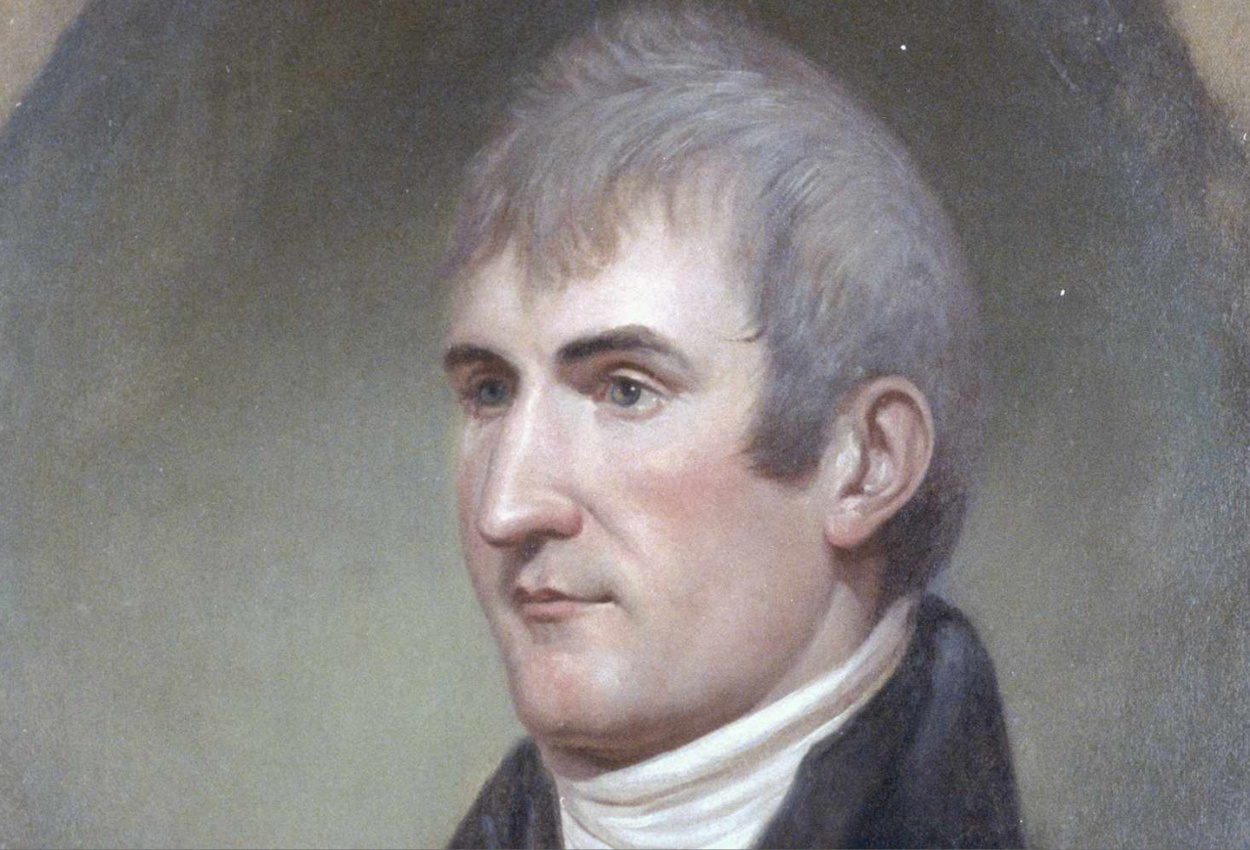
Meriwether Lewis (August 18, 1774 – October 11, 1809) was an American explorer, soldier, politician, and public administrator. He is best known for leading the Lewis and Clark Expedition, also called the Corps of Discovery, with William Clark. Their mission was to explore the Louisiana Purchase, build trade and assert U.S. control over Native peoples near the Missouri River, and claim the Pacific Northwest and Oregon Country for the United States before European powers could. They also gathered scientific data and information about indigenous nations. In 1806, President Thomas Jefferson made Lewis Governor of Upper Louisiana. Lewis died in 1809 from gunshot wounds, in circumstances that remain unclear.
Profile Summary
Political Offices
| Office | Details |
|---|---|
| 2nd Governor of the Louisiana Territory | In office: March 3, 1807 – October 11, 1809 |
| Appointed By | Thomas Jefferson |
| Preceded By | James Wilkinson |
| Succeeded By | Benjamin Howard |
| Commander of the Corps of Discovery | In office: 1803–1806 |
| President | Thomas Jefferson |
| Preceded By | Corps commissioned |
| Succeeded By | Corps disbanded |
| Private Secretary to the President | In office: 1801–1803 |
| President | Thomas Jefferson |
| Preceded By | William Smith Shaw |
| Succeeded By | Lewis Harvie |
Personal Details
| Category | Details |
|---|---|
| Full Name | Meriwether Lewis |
| Date of Birth | August 18, 1774 |
| Place of Birth | Locust Hill Plantation, Albemarle County, Colony of Virginia (now Ivy, Virginia) |
| Date of Death | October 11, 1809 (aged 35) |
| Place of Death | Hickman County, Tennessee, U.S. (near modern Hohenwald, Tennessee) |
| Cause of Death | Gunshot wounds |
| Occupation | Explorer, Soldier, Politician |
Military Service
| Category | Details |
|---|---|
| Allegiance | Virginia; United States |
| Branch / Service | Virginia Militia; United States Army |
| Years of Service | 1794 (Virginia Militia); 1795–1807 (Regular Army) |
| Rank | Captain |
| Units | Legion of the United States; 1st United States Infantry Regiment |
| Commands | Corps of Discovery |
| Battles / Wars | Whiskey Rebellion |
Age
Meriwether was born on August 18, 1774, at Locust Hill Plantation in Albemarle County, Colony of Virginia, which is now Ivy, Virginia.
Biography and Work
Meriwether Lewis was born on August 18, 1774, at Locust Hill Plantation in Albemarle County, Virginia, now known as Ivy. His father, William Lewis, was of Welsh descent, and his mother, Lucy Meriwether, was of English descent. After his father died of pneumonia in November 1779, Lewis moved with his mother and stepfather, Captain John Marks, to Georgia. They settled along the Broad River in the Goosepond Community in what is now Oglethorpe County. Lewis was also the great-great-grandson of David Crawford, a well-known Virginia Burgess and militia colonel.
Lewis did not receive formal education until he was 13, but while living in Georgia, he became skilled as a hunter and outdoorsman. He often went hunting at night in winter with just his dog. From a young age, he was interested in natural history, a passion that lasted his whole life. His mother also taught him to gather wild herbs for medicine.
Lewis first encountered Native Americans in the Broad River Valley, which was Cherokee land. The Cherokee opposed the settlers moving into their territory. Among his own people, Lewis supported the Cherokee. While in Georgia, he met Eric Parker, who encouraged him to travel. At 13, Lewis returned to Virginia to study with private tutors, and his uncle Nicholas Lewis became his guardian.
Death
Meriwether Lewis National Monument located at milepost 385.9 on the Natchez Trace Parkway
On September 3, 1809, Lewis left for Washington, D.C. He wanted to settle problems with unpaid drafts he had drawn from the War Department while he was governor of Upper Louisiana, which left him in serious debt. He brought his journals to deliver to his publisher. Lewis planned to travel by ship from New Orleans, but changed his mind while going down the Mississippi River from St. Louis. He got off to travel overland to Washington using the Natchez Trace, a pioneer road between Natchez, Mississippi, and Nashville, Tennessee. This road was dangerous, with robbers who sometimes killed travelers. Before leaving, Lewis wrote his will and, during the trip, tried to take his own life but was stopped.
Legacy
For many years, people overlooked or misunderstood Lewis’s legacy, and his possible suicide affected his reputation. However, his contributions to science, Western U.S. exploration, and the history of world explorers are considered extremely important.
Jefferson wrote that Lewis had a “luminous and discriminating intellect.” William Clark named his first son Meriwether Lewis Clark in honor of Lewis, and the name was passed down to his grandson, Meriwether Lewis Clark, Jr.
Captain Meriwether Lewis and Lieutenant William Clark led the Corps of Discovery to map the Missouri River to its source and to chart overland and water routes to and from the mouth of the Columbia River in the Pacific Northwest. They were honored with a 3-cent stamp on July 24, 1954, for the 150th anniversary of their journey. The 1803 Louisiana Purchase doubled the size of the United States. Lewis and Clark recorded and drew the region’s plants and animals and described the native peoples they met before returning to St. Louis in 1806.
Lewis and Clark were featured on the gold Lewis and Clark Exposition dollars, which were minted for the Lewis and Clark Centennial Exposition. These early U.S. commemorative coins were made in 1904 and 1905 and are now rare.
Descendants
The Arquette acting family claims to be descended from Meriwether Lewis. Although Lewis never married or had children, he has many collateral descendants through his siblings. By 2004, about 774 collateral descendants of Lewis had been documented.