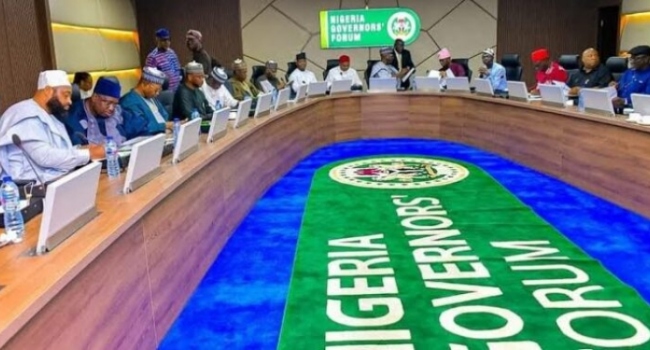
The Nigeria Governors’ Forum has proposed a new national minimum wage of ₦100,000 as part of efforts to mitigate the biting economic hardship facing Nigerian workers.
Chairman of the forum and Governor of Kwara State, AbdulRahman AbdulRazaq, disclosed this in a statement on Saturday, noting that the proposal was driven by escalating inflation, high cost of living, and increasing financial pressure on citizens.
AbdulRazaq said state governors had acknowledged the urgency of improving workers’ welfare in line with prevailing economic realities, adding that consultations were ongoing with relevant stakeholders.
He said, “State governments recognise the urgent need to improve workers’ welfare in response to the current economic realities facing Nigerians.”
The NGF chairman explained that governors were already in talks with the Federal Government and organised labour to arrive at a mutually acceptable wage structure that balances workers’ needs with fiscal sustainability.
“We are actively engaging with the Federal Government and organised labour to arrive at a wage structure that is fair to workers and sustainable for government finances,” he added.
According to him, the ongoing discussions are aimed at enhancing workers’ purchasing power without undermining the capacity of state governments to meet their obligations, including infrastructure development and public service delivery.
He stressed that while the demand for better wages is justified, policymakers must also take into account the financial realities confronting subnational governments.
The proposed ₦100,000 wage, if approved, is expected to intensify nationwide debate over salary structures, inflation, and broader economic reforms, as Nigerians continue to grapple with rising food prices, transportation costs, and other essential expenses.
Nigeria’s current statutory minimum wage stands at ₦70,000 per month, though some states, including Lagos, Rivers and Imo, reportedly pay above the benchmark.
Meanwhile, the Nigeria Labour Congress has consistently called for a comprehensive wage review, insisting that Nigerian workers deserve a living wage capable of meeting present-day economic demands rather than one that merely sustains survival.
FOLLOW US
FOR MORE HERE