By Haroon Ishola Balogun
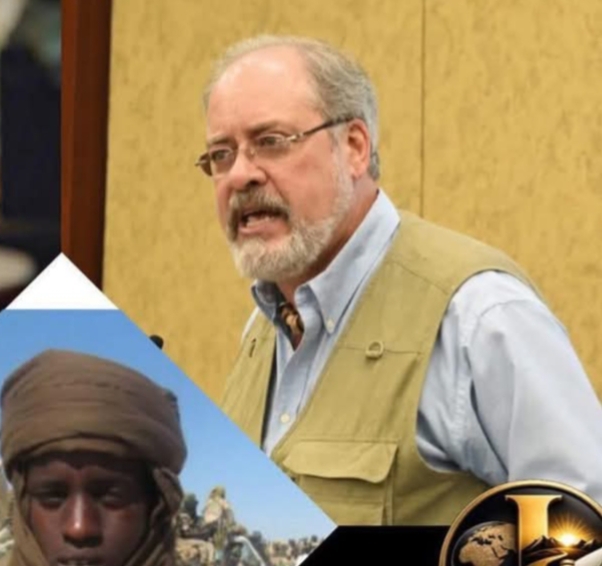
In recent days, a deeply inflammatory and misleading post by a foreign commentator, Mike Arnold, has circulated across social media platforms, falsely portraying the Sultan of Sokoto, His Eminence Muhammadu Sa’ad Abubakar, as the mastermind of a supposed Islamic agenda to conquer Nigeria and unleash a global jihad.
The publication, wrapped in sensational headlines and conspiracy-laden language, is not only dishonest and reckless, but also a dangerous attempt to undermine Nigeria’s fragile social and religious harmony by demonizing one of the country’s most respected voices for peace and interfaith unity and 17th most influential Muslim in the world.
For millions of Nigerians — Muslims and Christians alike — the Sultan’s decades-long record speaks louder than the manufactured hysteria of online propagandist and alarmist such as Mike Arnold seeking attention by creating fear and division.
Far from being an agent of extremism, the Sultan of Sokoto has consistently stood as one of Nigeria’s strongest advocates for peaceful coexistence, religious tolerance, national unity, and dialogue across faith lines. His interventions during periods of national tension have repeatedly helped calm nerves, reduce hostility, and preserve social stability in a country as religiously and ethnically diverse as Nigeria.
To accuse such a figure of orchestrating violence is not only absurd; it is maliciously wicked.
… Sultan As A Symbol Of Unity, Not Division
Since ascending the throne in 2006, Sultan Sa’ad Abubakar has built a reputation as a bridge-builder committed to fostering understanding between Muslims and Christians. As President-General of the Nigerian Supreme Council for Islamic Affairs (NSCIA), he has consistently emphasized moderation, mutual respect, and national cohesion.
At various times of heightened religious tension, the Sultan has publicly condemned terrorism, sectarian killings, and extremist ideologies. He has repeatedly declared that Boko Haram and similar groups do not represent Islam and should never be used to define Nigerian Muslims.
His voice against extremism remains particularly resonant. In one of his widely quoted remarks, the Sultan explained:
“Jihad simply means striving — striving to be a better Muslim, a better Christian, a better citizen, and a better human being. It is not about killing anyone. Islam abhors extremism.”
Another is: “If you blow up yourself or kill people shouting ‘Allahu Akbar’, you are going to hell”— Sultan of Sokoto
Besides, his collaboration with Christian leaders, particularly through platforms such as the Nigeria Inter-Religious Council (NIREC), has helped sustain dialogue even during some of Nigeria’s darkest moments.
Alongside Christian clerics, including leaders of the Christian Association of Nigeria (CAN), the Sultan has travelled across the country preaching peace and urging Nigerians not to allow religion become a weapon of political manipulation.
These are not the actions of a man plotting division. They are the actions of a statesman committed to peace and harmonious coexistence.
Indeed, several Christian leaders have, over the years, publicly acknowledged this Sultan’s efforts towards peace and national development. His palace has remained open to religious and community leaders from all backgrounds, while his speeches consistently emphasize justice, compassion, and peaceful coexistence.
… Security Is the responsibility of government
One of the most dishonest aspects of Mike Arnold’s narrative is the attempt to place responsibility for Nigeria’s security challenges on the Sultan.
Nigeria is a constitutional democracy with elected governments, security agencies, military institutions, and law enforcement structures responsible for protecting lives and property.
The Sultan is a traditional and religious leader with moral influence, not a military commander or political ruler controlling the Nigerian state.
To suggest that he directs national security operations or orchestrates violence across the country is a dangerous falsehood completely detached from reality.