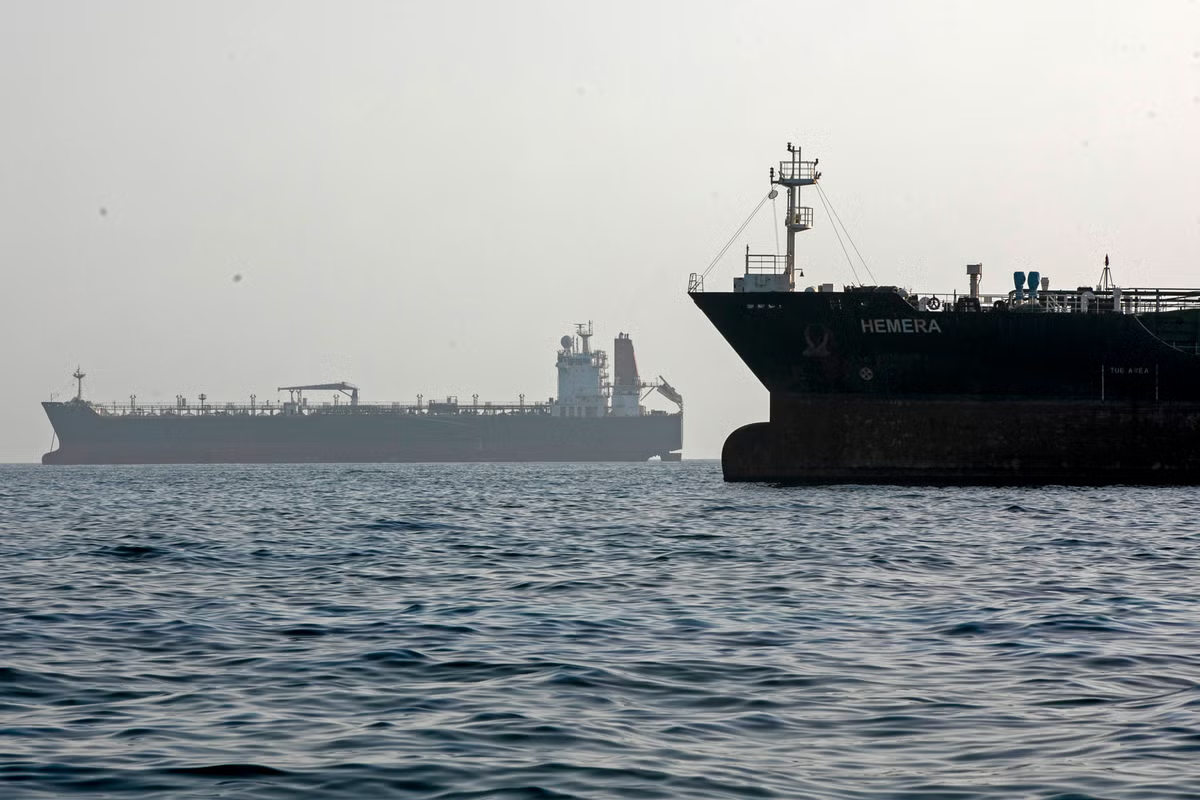
The world faces the prospect of significantly reduced oil and natural gas consumption if the Strait of Hormuz remains closed for an extended period due to the US-Israeli war on Iran, Dallas Federal Reserve President Lorie Logan warned on Wednesday.
For three months, Iran has restricted shipping through the vital waterway, leading to a surge in energy, food, and fertilizer prices.
Before the conflict, approximately one-fifth of the world’s oil and liquefied natural gas traversed the narrow strait.
“With supplies highly constrained, if shipping through the strait does not soon return to prewar levels, world oil and natural gas consumption could need to fall more meaningfully than it has so far,” Logan stated in remarks prepared for a Bank of Japan conference.
She added that the economic fallout would hinge on “the degree to which end users can switch to other energy sources or use energy more efficiently, versus curtailing economic activity.”
U.S. oil executives, surveyed recently by the Dallas Fed, anticipate only modest increases in domestic oil output: a quarter of a million barrels per day this year and half a million next year.
This pales in comparison to the roughly 13 million barrels per day reduction in global oil supply since the start of the Iran war, a shortfall currently being offset by drawing down finite inventories.
Logan underscored the inevitable market adjustment, saying, “One way or another, I expect energy markets to come into rough balance before too long. If the molecules aren’t available, the world can’t consume them.”
Logan was one of three Fed policymakers who dissented from last month’s interest-rate decision, arguing the US central bank should signal that a rate hike was as plausible as a cut, given rising energy and other prices.
While she offered no near-term economic forecasts or comments on monetary policy in her closed-press remarks, she advocated bolstering the resilience of the Treasury market.
She called for centrally clearing the Fed’s own Treasury securities trading and enhancing its liquidity toolkit beyond existing operations, noting the growing share of Treasuries held by leveraged investors.
“Levered positions can unwind rapidly in the event of price or funding shocks,” Logan cautioned. “The Treasury market underpins government finance, the flow of investment, and the implementation and transmission of monetary policy. Its resilience deserves, and requires, ongoing effort and vigilance.”
More details here...