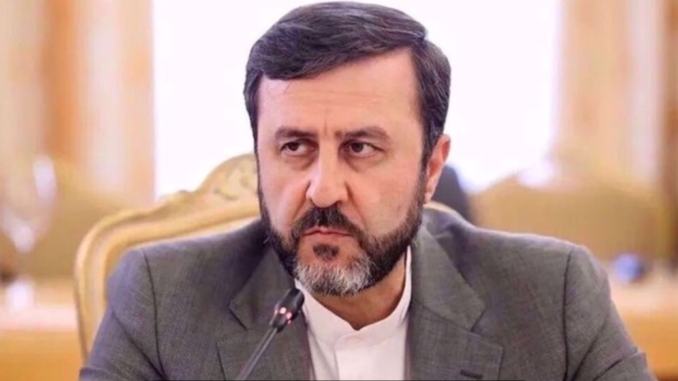
During a meeting with Iran’s Parliament National Security and Foreign Policy Commission on Tuesday, Deputy Foreign Minister Kazem Gharibabadi said Tehran had presented several demands to Washington as part of negotiations aimed at permanently ending the war between the two countries.…....
Among Iran’s key demands are international recognition of its right to enrich uranium, an end to military confrontations across the region, including in Lebanon, and the withdrawal of U.S. forces from areas surrounding Iran.
Gharibabadi also said Tehran wants sweeping economic and political concessions from Washington, including “the lifting of the U.S. naval blockade, the unfreezing of Iranian assets and properties, the provision of war reparations by the United States for reconstruction efforts, and the termination of all unilateral sanctions and UN Security Council resolutions.”
The comments come more than a month after a fragile ceasefire between Iran and the United States took effect on April 8, temporarily halting weeks of escalating military tensions that had pushed the region to the brink of a wider conflict.
Since then, both sides have continued direct negotiations while also exchanging messages through Pakistani mediators in an attempt to avoid another outbreak of fighting.
But tensions remain high.
Current U.S. President Donald Trump recently rejected Iran’s proposals, calling them “nonsense,” and warned that Washington could resume military action if talks fail to produce a deal soon.
Trump said on May 18 that the United States could launch another strike against Iran within “the next two to three days” if negotiations collapse. He also revealed that a military operation planned for May 19 had been postponed after appeals from the leaders of three Gulf Arab nations.
The sharp rhetoric from both sides highlights just how uncertain the path to peace remains, even as diplomatic channels stay open behind the scenes.