*Insists Nigeria’s leadership should focus on productivity, not ceremony
*Says diplomacy shouldn’t be reduced to symbolic displays
Chuks Okocha in Abuja
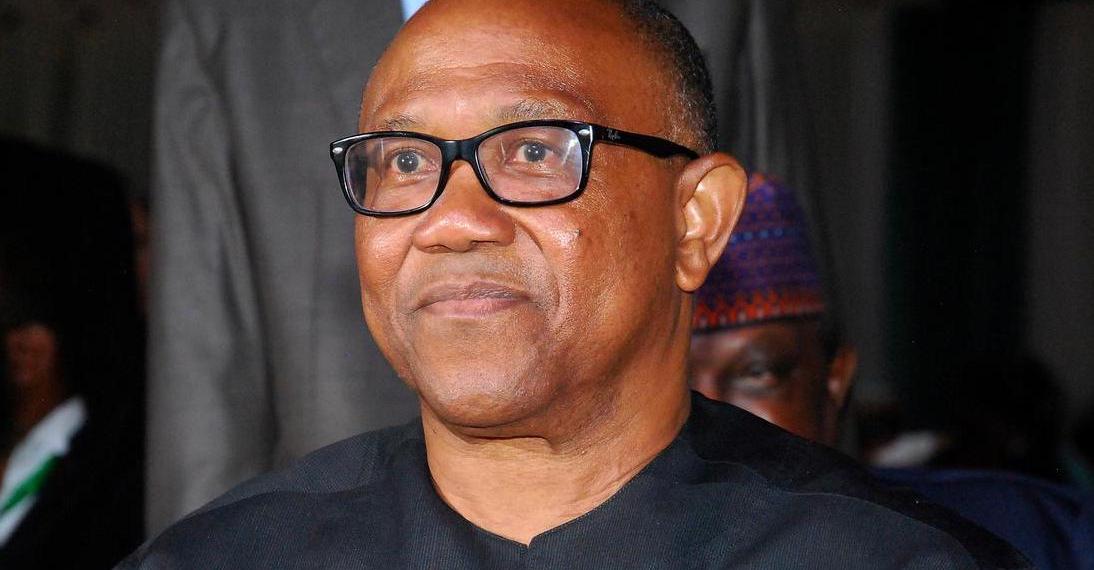
The former Labour Party (LP) presidential candidate, Mr. Peter Obi, has queried the economic benefits of President Bola Tinubu’s foreign trips, saying that the United States President Donald Trump secured deals worth billions of dollars from China.
Obi argued that foreign trips by government officials must deliver tangible economic benefits to Nigerians.
According to him, foreign engagements by the Nigerian leaders must translate into measurable economic benefits for the citizens.
While Trump has returned to Washington after two days of talks with Chinese leader Xi Jinping in Beijing, Tinubu just returned to Nigeria from a three-nation visit to France, Kenya, and Rwanda.
During Tinubu’s visit to France, he met with global investors and defended his administration’s economic reforms.
He also attended the Africa Forward Summit in Nairobi, Kenya, co-hosted by President Emmanuel Macron and President William Ruto.
While in Nairobi, Tinubu held a bilateral meeting with Madagascan leader Michael Randrianirina.
In Kigali, Rwanda, the Nigerian leader joined other African presidents, investors, and chief executives at the Africa CEO Forum to discuss ways of accelerating Africa’s economic transformation through regional integration and cross-border investments.
Reacting in a post on his X handle yesterday, Obi said state visits by leaders and diplomacy must produce measurable gains for citizens.
The former Anambra State governor and presidential aspirant on the platform of the Nigeria Democratic Congress (NDC) said every foreign trip undertaken by government officials should translate into investments, technology transfer, trade agreements, industrial partnerships, and job creation.
Referencing recent engagements by Trump with China, Obi claimed the American delegation consisted mainly of key government officials and top business figures, contrasting it with what he described as large entourages accompanying Nigerian leaders on foreign trips.
He questioned the direct economic value of such visits, asking how many factories, agricultural agreements, manufacturing partnerships, and jobs would come to Nigeria as a result of the engagements.
Obi added that at a time when many Nigerians were struggling with economic hardship, every kobo spent on foreign trips must deliver clear value through investments, jobs, and broader economic opportunities.
According to Obi: “State visits by leaders are not tourism, and diplomacy is not a fashion parade. Every foreign trip undertaken by a government must deliver measurable benefits to the people, including investments, technology transfer, trade agreements, factory expansion, industrial partnerships, and job creation.
“During President Trump’s recent visit to China, the American delegation reportedly included a few top government officials, and many of the biggest figures in global business and technology.
“Consequently, huge trade deals worth several billion dollars, including about 200 Boeing orders, were achieved.
“The list of the entourage included: Donald J. Trump – President of the United States; Marco Rubio – Secretary of State; Pete Hegseth – Secretary of Defence; Elon Musk – CEO, Tesla & SpaceX; Jensen Huang – CEO, Nvidia; Tim Cook – CEO, Apple; Larry Fink – CEO, BlackRock; Stephen Schwarzman – CEO, Blackstone; and Kelly Ortberg – CEO, Boeing.
Other members of the US delegation, Obi said, include: “Brian Sikes – CEO, Cargill; Jane Fraser – CEO, Citigroup; Larry Culp – CEO, General Electric; David Solomon – CEO, Goldman Sachs; Sanjay Mehrotra – CEO, Micron Technology; Cristiano Amon – CEO, Qualcomm; Dina P. McCormick – President of Meta; Ryan McInerney – CEO, Visa; Michael Miebach – President, Mastercard; Jim Anderson – CEO, Coherent, and Jacob Thaysen – CEO, Illumina.”
Obi added that: “That is how serious nations approach diplomacy, by aligning foreign policy with economic expansion, industrial growth, innovation, and national productivity.
“I hope that lessons can be learned from these recent visits, comparing them with the President of Nigeria’s recent state visit to the United Kingdom.
“A large entourage of politicians, aides, and government officials travelled, yet Nigerians are still asking a simple question: what exactly did Nigeria bring home?
“Which factories are coming to Nigeria? What power, technology, manufacturing, agricultural, or industrial agreements were secured?
“How many direct jobs will this visit create for Nigerian youths? What investments were attracted? What measurable economic outcomes can the ordinary Nigerian point to?” Obi queried.
Obi claimed Tinubu’s delegation to the UK included: President Tinubu; his wife, Remi; 12 governors; nine ministers; seven members of the National Assembly; over 20 senior State House staff; over 30 security personnel; over 10 domestic staff, and several supporters and associates.
“It is not enough to ride horses, wear matching uniforms, attend royal banquets, and release glossy photographs. Symbolism without substance cannot feed hungry citizens.
“Today, Nigeria is in decline, battling serious insecurity, food insecurity, unemployment, a weakened naira, declining industrial productivity, and worsening poverty.
“At a time when millions of Nigerians struggle daily to afford food and survive economic hardship, every kobo spent on foreign trips must produce tangible national value: investments, factories, jobs, exports, infrastructure, and economic opportunities. “Nigeria needs leadership that is focused less on optics and more on productivity; less on ceremony and more on measurable economic results. A New Nigeria is Possible,” Obi stated.