Clutching a pack of Uno cards and a Little Mermaid colouring book, eight-year-old Nour* was forced to leave her home in southern Lebanon as Israeli forces bombarded the region.
Clothes were the only other item she carried as her family fled their town and joined the more-than one million internally displaced people fleeing Israeli attacks, which have razed villages to the ground.
These treasured possessions, Nour says, were gifts from her mum and dad. “They mean so much to me,” she says from a collective shelter in Beirut where she now lives with her sister Tala* and mother Sarah*.
It is a story all too common in Lebanon’s 632 collective shelters for refugees, where nearly 130,000 people are residing as they seek safety from ongoing shelling near their homes, which has continued despite a ceasefire agreement being extended for another 45 days.
“My children always say, ‘We want to go home. When are we going back home and back to school?’ They tell me they just want to play in the garden again,” says Sarah, 31, Nour’s mother.
“Sometimes my children do not express how they feel in words, but I can notice that they are scared. My daughter puts a pillow over her head when she sleeps, and she asks me to go with her to the toilet.
“They still remember the sound of the warplanes.”
Since the conflict erupted on 2 March, when Hezbollah fired rockets into Israel in response to the launch of the US-Israeli war on Iran, at least 3,020 people have been killed in Lebanon, with another 8,824 wounded, according to the Lebanese health ministry. A total of 211 children have died.
Nora Ingdal, Save the Children’s Lebanon country director, says the conflict has “ripped children from their homes, friends and any sense of normal routine, replacing it with fear and uncertainty”.
The trauma suffered will have “devastating consequences for years to come”, she adds.
Just over a week ago, Israel and Lebanon agreed to extend a ceasefire for an additional 45 days following talks in Washington.
But Israel and Hezbollah have continued launching attacks on each other, as was the case during the first truce which began on 16 April.
Of the million displaced people, children make up 400,000 of them, many now sharing overcrowded rooms with poor toilets and no space to play.
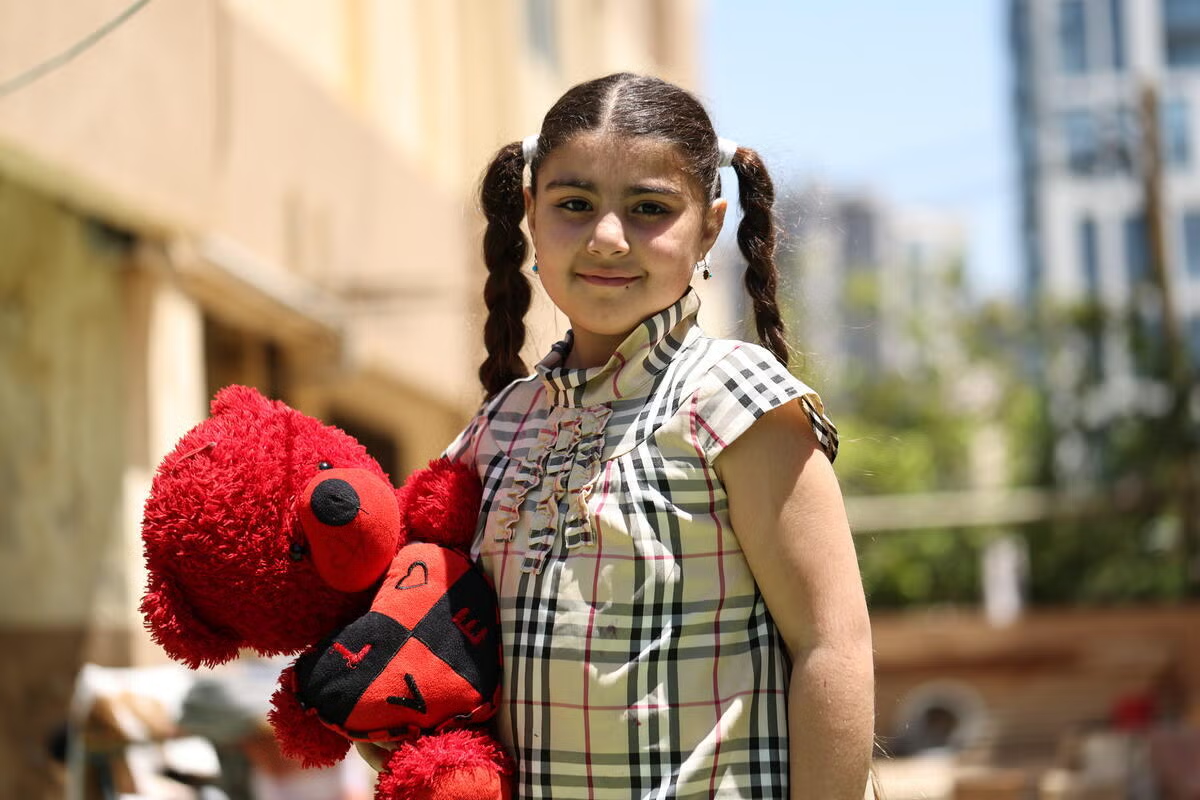
Far away from home, and with many unlikely to see their homes again following the Israeli bombardment, children in the Beirut shelter – and others across the country – are clutching on to the few remnants of their childhood.
“I brought this red teddy bear with me because I love it so much; it was a gift from my dad,” says six-year-old Elissa.
“I couldn’t bring my Teletubbies toys, though. I really miss my toys and the clothes I had to leave behind at home.”
Farah and Leen, both 10, were only able to take a single doll with them when they were uprooted from southern Lebanon.
“I wasn’t able to bring many toys with me, only this one. I just wish for the war to end so we can go back home and find our house safe, just as it was before,” says Farah.
Leen’s Barbie doll was gifted to her by her mother, and is now a precious piece of home that she keeps in the displacement camp.
“It means so much to me because it was a birthday gift from my mom. I really miss my village, my room, and everything we left behind at home,” she says.
Wael refused to let war and displacement bring an end to his half decade of collecting toy cars.
The 10-year-old relies on his collection, turning to them in times of anxiety as a source of comfort and fun – and a reminder of his lost home.
“They mean the world to me,” he says. “Whenever I feel bored, I play with them. I’ve been collecting these cars since I was only five years old.”
The loss of toys has been difficult for Lebanon’s children. But the lack of normal school time, and the ability to socialise with friends in the playground, will be even more damaging.
“I brought my notebook to study and my football to play with,” says Tala, 10. “I just want the war to end so I can go home to my village and sleep in my own bed.