While praising the ‘visible improvements’ Mr Olopade admitted the NPFL must still overcome long-standing structural challenges to attract major investors.
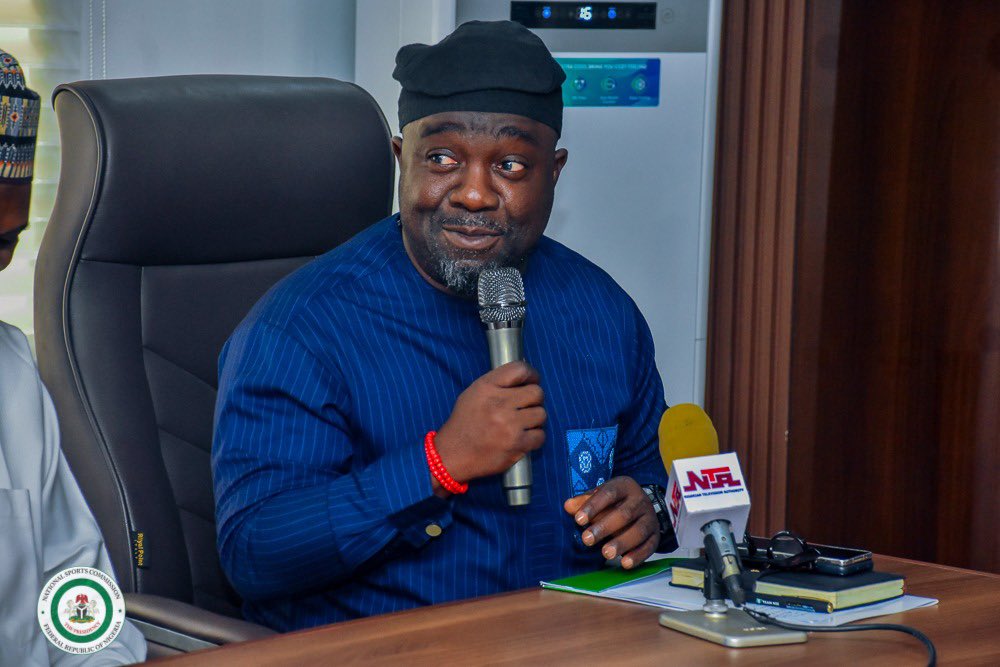
Calls for major corporate investment in the Nigeria Premier Football League resurfaced on Sunday after the Director General of the National Sports Commission, Bukola Olopade, declared that the domestic league has now developed enough structure and competitiveness to attract multi-billion naira sponsorship deals.
Mr Olopade made the remarks in Lagos shortly after Rangers International secured the 2025/26 NPFL title with a dramatic 2-1 victory over Ikorodu City FC at the Mobolaji Johnson Arena.
The title race went down to the final day, with Rivers United FC also defeating Katsina United 3-0 in Port Harcourt, but Rangers’ victory ensured the Flying Antelopes finished top of the standings to claim their ninth league crown.
Speaking after presenting the trophy alongside NPFL Chairman Gbenga Elegbeleye and presidential aide Adeyinka Adeboye, Mr Olopade praised the progress recorded by the league over the last three seasons.
“I want to first of all congratulate Hon. Gbenga Elegbeleye, the Chairman of the League. It’s an amazing job they have done this season, just like they did last season and two years ago when we had the Super Eight here,” Mr Olopade said.
“There has been tremendous improvement. We keep moving from strength to strength, and today’s atmosphere was amazing. It’s something that we all as Nigerians must be proud of. Congratulations to Rangers, Ikorodu City, and Rivers United, amazing football today.”
The NSC D.G noted that improved organisation, scheduling, and the competitiveness of the league now provide a stronger platform for commercial growth.
“In terms of structure, planning, and timing, we have moved on. What we need to work on now, and I am saying this in front of the chairman, is to attract multiple mega sponsorships for the league,” Mr Olopade stated.
“This league is ripe for multibillion-naira sponsorship, and that’s what we need to start working towards collectively.”
For years, attracting long-term headline sponsors has remained one of the NPFL’s biggest challenges despite Nigeria’s large football audience and passionate fan base.
Several factors have historically slowed major corporate investment in the league, including concerns over inconsistent officiating, poor playing surfaces, crowd violence, security issues at match venues, irregular scheduling, weak television production, and broader governance instability within domestic football.
Corporate brands have also often struggled to see sufficient commercial returns due to limited broadcast reach and inadequate marketing structures around clubs and matchday experiences.
However, industry figures believe recent reforms introduced under Mr Elegbeleye’s administration have gradually improved confidence in the league.
The NPFL has witnessed better fixture coordination, stricter club licensing measures, improved officiating oversight, and enhanced matchday organisation in recent seasons.
The dramatic 2025/26 title race — which saw Rangers and Rivers United separated by just one point entering the final round — also generated significant nationwide interest.
The emergence of clubs such as Ikorodu City added another layer of excitement to the campaign. Despite being relatively new in the top flight, the Lagos side remained in the title conversation deep into the season while also challenging for continental qualification.
For Rangers, Sunday’s triumph further reinforced the club’s historic status in Nigerian football.
Founded shortly after the Nigerian Civil War in 1970, Rangers remain one of Nigeria’s most decorated clubs and the only side never relegated from the country’s top division.
Under coach Fidelis Ilechukwu, the Enugu side have now won two league titles in three seasons, highlighting a remarkable resurgence after years of inconsistency.
Beyond the trophy celebrations in Lagos, Mr Olopade insisted stronger collaboration between the NPFL, the National Sports Commission, and the Nigeria Football Federation would be essential if the league hopes to fully unlock its commercial potential and compete more effectively with leading leagues across Africa.