As Americans grapple with rising prices at gas pumps and grocery stores, President Donald Trump’s top economic adviser has framed elevated consumer spending as a sign of the country’s resilience.
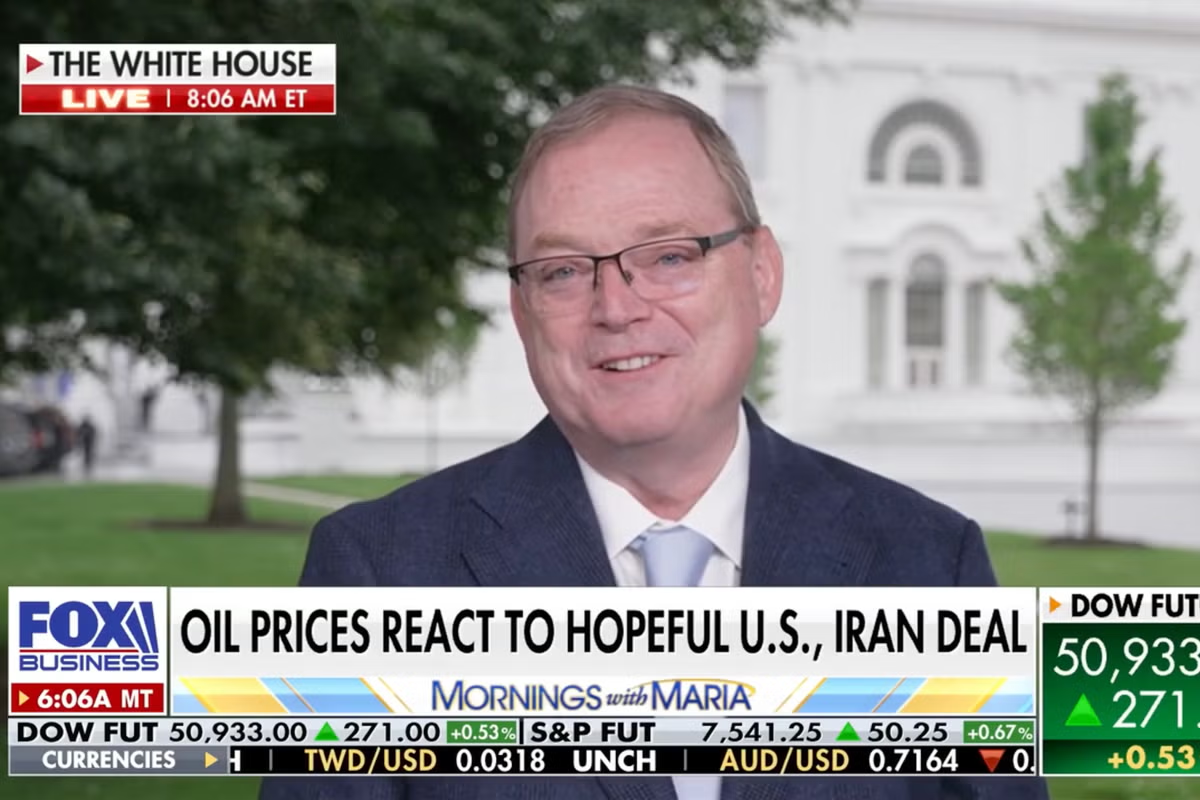
During an interview with Fox Business on Tuesday, Director of the National Economic Council Kevin Hassett doubled down on his upbeat view of the economy, arguing that the knock-on effects of the Iran war are only a “temporary circumstance.”
“While people have been spending more money at gas stations, they’ve been spending more money on everything else, which means that they’re still very, very optimistic about the state of the economy, and they should be,” Hassett told Maria Bartiromo, while grinning outside the White House.
“And so, despite this disruption, all the momentum that we built with ‘The Big Beautiful Bill’ and AI and everything else is really, you know, is what the main economic story in the U.S. is,” he stressed. “Think about it: We’ve got a capital spending boom, we’ve got a labor supply boom because of the ‘No Tax on Tips’…you know, [the] stock market is celebrating.”
Bartiromo, however, repeatedly pressed Hassett on the health of the economy, asking him when exactly Americans can expect gasoline prices to come down in a “meaningful way.”
“I think this thing can resolve itself much faster than people think,” Hassett said, without providing a clear timeline for price decreases. He claimed a “wave” of excess energy would soon spread throughout the world.
On Tuesday, the national average price for a gallon of gasoline stood at $4.49 — up sharply from $2.98 in the days before the war began in February, according to AAA. As a result of the conflict, currently paused under a fragile ceasefire, the Strait of Hormuz has been subject to dueling U.S. and Iranian blockades, fueling dramatic upticks in global oil costs and an across-the-board rise in inflation.
The Fox Business host noted that the consumer sentiment index, as reported by the University of Michigan, fell to a record-low 44.8 earlier this month, a 14.2 percent delcine year-on-year. The consumer sentiment index is a monthly indicator about how optimistic or pessimistic consumers are about the overall economy and their personal finances.
But, Hassett dismissed this figure as inaccurate.
“They call it consumer sentiment but I don’t think those words mean what they think they mean anymore,” Hassett responded. “They’ve somehow devised a political survey that tells us how Democrats are feeling about things.”
Numerous other indicators, however, suggest the Republican president’s stewardship of the economy is broadly unpopular.
Just 16 percent of Americans rate the country’s current economic conditions as good or excellent, the lowest such figure since 2023, according to a Gallup survey released this month. And, among Republicans, approval of Trump’s handling of the economy has fallen from 78 percent to 63 percent, according to the latest AP-NORC poll.
Elsewhere in the 20-minute interview, Bartiromo asked whether or not the top economist is worried about affordability ahead of the midterms, pointing to increases in the cost of groceries, insurance and housing.
In April, for instance, the price for food eaten at home rose 2.9 percent, the highest year-over-year inflation rate for the category since August 2023. Food away from home also increased 3.6 percent over the last year, according to USDA statistics.
“We’ve got to do all of the above to get prices back down,” Hassett said. “We’re 100 percent concerned about affordability, but we’re doing micro things and macro things to make sure inflation goes down.”