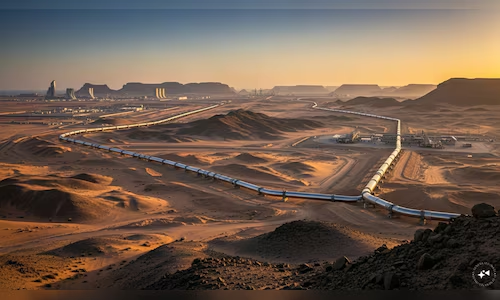
In an interview with the Atlantic Council on Wednesday, May 20, Sultan Ahmed Al Jaber, CEO of Abu Dhabi National Oil Co (ADNOC), said that the pipeline will double the export capacity of ADNOC through Fujairah, a port on the Gulf of Oman outside the Strait of Hormuz.
“Right now, too much of the world’s energy still moves through too few chokepoints. That is exactly why the UAE made the decision more than a decade ago to invest in infrastructure that bypasses the Strait of Hormuz. And it is why we moved ahead with our second pipeline in 2025,” he explained.
He revealed that the second pipeline is expected to begin operations in 2027, with 50% of its work already completed. The UAE has sped up construction after Iran blocked the Strait of Hormuz earlier this year.
The blockade, which began in early March, has disrupted oil and gas exports from the UAE and other Gulf Arab producers. The UAE is currently using an existing pipeline to Fujairah that can transport up to 1.8 million barrels of oil per day.
Al Jaber described the closure of Hormuz as the “most severe supply disruption on record.” He said more than 1 billion barrels of oil have been lost since the blockade began, and added that the “number goes up by almost 100 million barrels every single week.”
He also shared that even if the conflict ended immediately, it would take at least four months for oil flows to recover to 80% of normal levels. Al Jaber mentioned that full recovery may not happen until the first or second quarter of 2027.
“This is not just an economic problem,” Al Jaber said. “This sets a dangerous precedent once you accept that a single country can hold the world’s most important waterway hostage.”