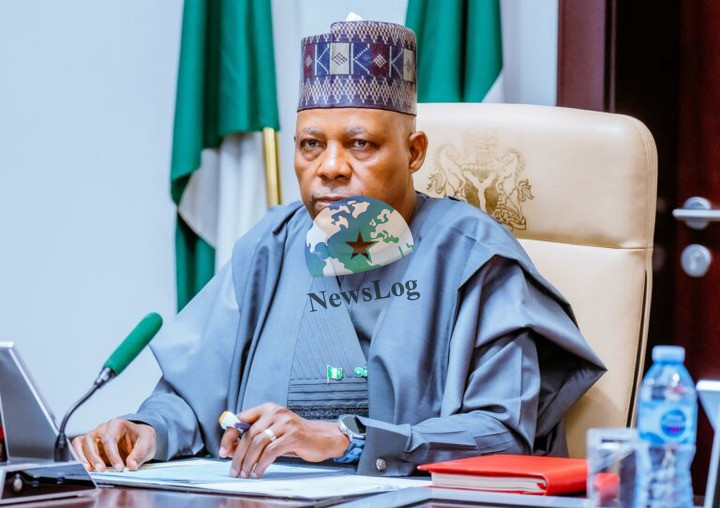
According to a report by Punch on Thursday, April 30, 2026, Vice President Kashim Shettima has called on political actors across Nigeria to exercise restraint and maintain unity as political activities gradually increase ahead of the 2027 general elections.….....
The Vice President made the appeal in a statement shared through his official social media channels on Thursday, where he addressed the growing political conversations, realignments, and consultations taking place within various political parties across the country.
His remarks come at a time when political engagements are becoming more active as parties and aspirants begin positioning themselves for future electoral contests.
In his message, Shettima warned against actions that could weaken the internal structures of political parties during periods of heightened political activity.
He explained that while competition is a normal part of democratic processes, it should not be allowed to degenerate into internal hostility or actions that could destabilise political organisations.
According to him, political parties play an important role in strengthening democracy, and their stability is essential for maintaining order and effective political participation in the country.
The Vice President further noted that the build-up to general elections often brings increased tension, negotiations, and strategic positioning among political stakeholders.
He explained that such developments are expected in any democratic system where individuals and groups seek political office or influence.
However, he cautioned that disagreement among party members or political actors should not be misinterpreted as personal enmity or used as justification for actions that could harm party unity.
He emphasised that political engagement should remain focused on ideas, policies, and governance rather than personal conflicts.
Shettima stressed the importance of viewing political parties as collective institutions that require protection and careful management, especially during sensitive political periods.
According to him, parties are not meant to function as arenas of conflict but as platforms where individuals with shared goals can work together to achieve common political objectives.
He explained that maintaining internal cohesion within parties is necessary for ensuring stability within the broader democratic system.
He added that when political parties are weakened by internal disputes, it can affect their ability to perform effectively in elections and governance.
The Vice President also encouraged political leaders at all levels to promote dialogue and understanding within their respective parties.
He stated that political maturity requires the ability to manage disagreements without allowing them to escalate into divisions that could damage organisational unity.
According to him, leaders have a responsibility to guide their supporters and members towards constructive engagement, especially during periods of political uncertainty or competition.
He emphasised that leadership involves not only pursuing political goals but also ensuring that institutions remain intact and functional.
Shettima explained that political actors should be mindful of their actions and statements during election cycles, as such periods are often characterised by heightened emotions and competing interests.
He noted that responsible communication and behaviour are essential for preventing misunderstandings and maintaining peace within political structures.
According to him, political disagreements should be addressed through established party mechanisms and not through actions that could undermine collective progress or destabilise internal systems.
In his appeal, the Vice President described political parties as families that consist of individuals with different opinions but shared aspirations.
He noted that just like in any family setting, differences are natural, but they should not lead to actions that threaten the unity of the group.
According to him, preserving unity within political organisations is essential for ensuring that they remain strong and effective in fulfilling their roles within the democratic process.
He added that political parties must always prioritise collective stability over individual interests.
Shettima’s statement reflects ongoing discussions within Nigeria’s political environment as preparations for the 2027 general elections gradually take shape.
Political observers have noted that early consultations, alliances, and internal party engagements are already beginning across different regions of the country.
These activities are often accompanied by strategic positioning by political actors seeking to strengthen their influence ahead of future elections.
The Vice President’s remarks also highlight the importance of maintaining stability within political parties during periods of transition and preparation.
Analysts note that internal cohesion is often a key factor in determining the strength and performance of political organisations during elections.
As parties continue to engage in consultations and restructuring, attention remains on how they will manage internal differences while preparing for the next electoral cycle.
He said, “We must remind ourselves that a political party is not a battlefield. It is a family. And even in the most spirited family, the roof must never be pulled down because one room appears warmer than another.”