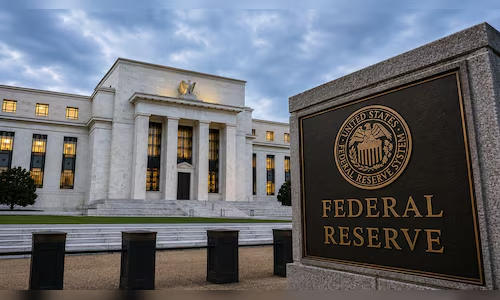
In a proposal released on Wednesday (May 20), US Fed said the new account structure is aimed at supporting payment innovation while limiting risks to Reserve Banks and the wider financial system.
The proposal follows a request for information issued in December 2025, under which the Federal Reserve sought feedback on a prototype account model. According to the Board, a growing number of institutions with varied business models — including some that are not federally insured — have sought direct access to Federal Reserve payment services to reduce transaction costs and improve payment speeds.
Under the proposed framework, payment account holders would be restricted to clearing and settlement functions. They would not receive interest on balances held with a Reserve Bank, nor have access to intraday credit or the Federal Reserve’s discount window. The accounts would also include automated controls designed to prevent overdrafts.
The Federal Reserve said the proposal would not change existing legal eligibility requirements for access to Federal Reserve accounts or payment services. It also reiterated that institutions using the accounts would be expected to address illicit finance risks.
The proposal includes some revisions from the earlier prototype after feedback received during the consultation process. These include raising the maximum closing balance allowed in an account and linking balance limits to an institution’s expected payment activity.
Separately, the Board said it is encouraging Reserve Banks to temporarily pause decisions on account access requests from institutions classified under Tier 3 of the Federal Reserve’s Account Access Guidelines until the policy development process is completed. The move is intended to ensure consistency while the central bank reviews public comments on the proposal.
The public comment period will remain open for 60 days after the proposal is published in the Federal Register.