4 min readUpdated: May 26, 2026 09:36 PM IST
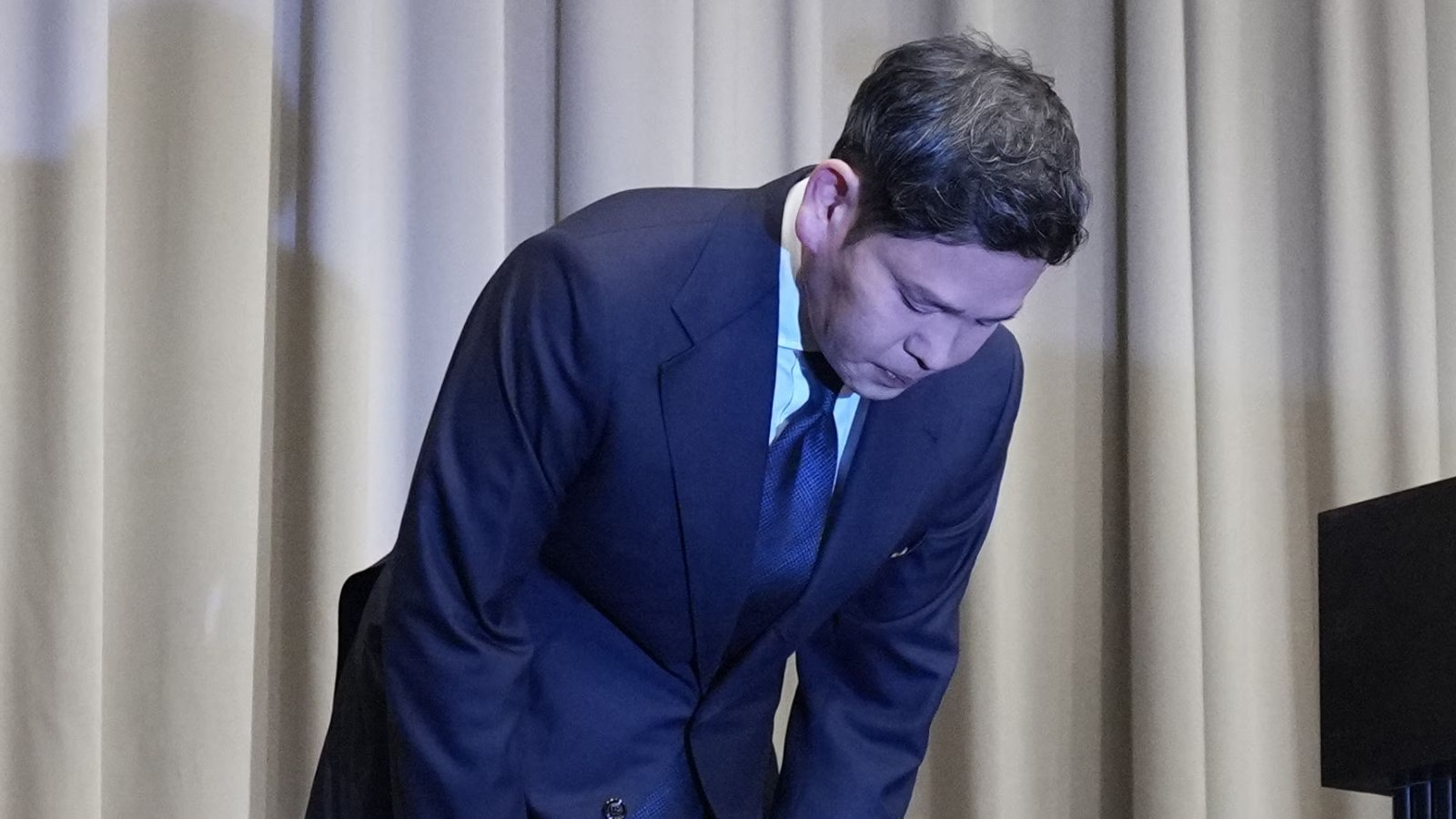
Shinsegae Group chairman Chung Yong-jin on Tuesday bowed three times in a televised statement, pleading for forgiveness over a Starbucks Korea marketing campaign that critics said mocked the victims of the 1980 Gwangju Uprising, in which hundreds of pro-democracy protesters were killed by South Korea’s then-military regime, news agency AP reported.
It was Chung’s second apology in two weeks. The South Korean retail tycoon, whose group owns a 67.5 per cent stake in Starbucks Korea, addressed the bereaved families of democracy activists killed by the country’s former military dictatorship and the wider Korean public.
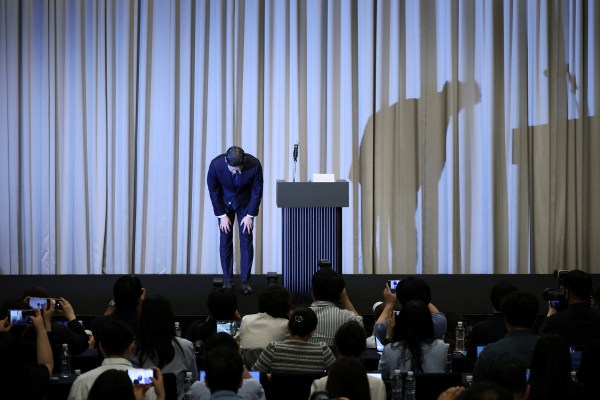 South Korea’s Shinsegae Group Chairman, Chung Yong-jin bows while making a public apology over Starbucks’ “Tank Day” campaign, which was launched on the same day as the anniversary of the May 18 Gwangju uprising, in Seoul. (REUTERS)
“I take it very seriously the fact that many people felt deep pain and anger because of Starbucks Korea’s inappropriate marketing campaign,” Chung said.
Management bears full responsibility for the situation, he emphasised, urging the public not to direct their frustration at frontline Starbucks staff. No major incidents have so far been reported at store locations.
The ‘Tank Day’ campaign
The backlash centred on a Starbucks Korea promotion launched on May 18 to roll out a large-size tumbler the chain calls the “Tank.” The company described the date as “Tank Day.”
The choice of date and product name was widely read as a reference to the military tanks that South Korean troops used during the May 1980 crackdown in Gwangju, when soldiers, tanks and helicopters were deployed against citizens demonstrating for democracy under the regime of General Chun Doo-hwan.
The campaign compounded the outrage by carrying the slogan “Thwack it on the table.” Many South Koreans read the phrase as a reference to a notorious 1987 police statement that attempted to cover up the torture death of student activist Park Jong-chol, in which investigators claimed the 21-year-old had died suddenly after they “hit the desk with a thwack” — a line that became shorthand for the brutality of the military regime the Gwangju Uprising had risen against.
Story continues below this ad
Fallout and dismissals
Within hours of the campaign launch, Shinsegae cancelled the promotion and fired the chief executive of Starbucks Korea. Police have also opened an investigation based on complaints filed by the families of those killed at Gwangju.
Chung issued his first apology on May 19, saying the campaign had caused “deep pain to the victims and bereaved families of the May 18 Democratization Movement as well as to the public.”
Senior Shinsegae Group executive Jeon Sangjin said the company has yet to find conclusive evidence that Starbucks Korea marketing employees intended to mock the pro-democracy movement, an accusation the employees have denied. However, Jeon said some employees refused management requests to hand over their smartphones during a week-long internal review, and added that the company would await results from the police inquiry. Any employee found to have intended to ridicule the protesters would be fired, he said.
Government and political reaction
Interior and Safety Minister Yoon Ho-jung announced that Starbucks products would no longer be used at government events and lamented the chain’s “anti-historical behaviour.”
Story continues below this ad
President Lee Jae-myung weighed in on X last week, calling the marketing a betrayal of South Korea’s democratic values.
“The campaign displayed inhumane and disgraceful behavior by cheap profiteers who deny the values of the South Korean community, basic human rights and democracy,” Lee wrote.
The Gwangju Uprising
The crackdown in Gwangju came months after General Chun Doo-hwan seized power in a coup in late 1979. Government records put the official death toll in Gwangju at around 200, though activists have long maintained the true figure was far higher. Chun’s government also imprisoned tens of thousands of South Koreans during his rule.
Public anger over Chun’s dictatorship culminated in nationwide protests in 1987 that forced him to accept a constitutional revision introducing direct presidential elections — widely regarded as the start of South Korea’s transition to democracy.
(With inputs from AP)
Story continues below this ad
(The article is curated by Salonee Kulkarni, who is an Intern at The Indian Express)
Stay updated with the latest – Click here to follow us on Instagram
© IE Online Media Services Pvt Ltd