• Umahi: FG undertaking N34trn road projects nationwide
•Disu wants patrol bases, drone-monitoring facilities in key expressways
Emmanuel Addeh in Abuja
The Federal Ministry of Works and the Nigeria Police Force have agreed to strengthen collaboration on the protection of major highways and critical road infrastructure across the country as ongoing road projects under the Bola Tinubu administration gather momentum.
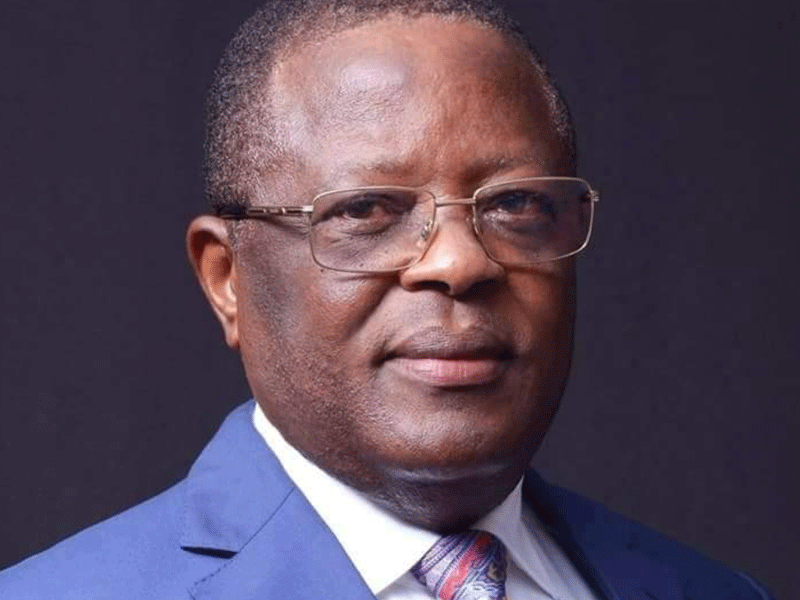
Minister of Works, David Umahi, disclosed this yesterday while receiving the Inspector General of Police (IGP), Rilwan Disu, and his delegation at the ministry’s headquarters in Abuja, where they discussed issues bordering on security along major expressways.
Umahi said the support of security agencies had been crucial to the execution of strategic road projects, particularly in areas facing security challenges, and commended the police, military and other security agencies for safeguarding workers and infrastructure nationwide.
He noted that several major highway projects, including the 240-kilometre dual carriageway project in Sokoto State, would have been difficult to execute without sustained security support.
“Without your assistance and the combined efforts of security agencies, it would have been difficult to forge ahead with many of these projects. We appreciate the commitment of the police and other security agencies in helping the government deliver these critical roads,” Umahi said.
Highlighting achievements in the road sector, Umahi said the federal government was undertaking road projects worth about N34 trillion nationwide, including inherited projects and four flagship legacy highway projects designed to stimulate economic growth and national integration.
According to him, the administration has adopted reinforced concrete pavement technology on many roads to improve durability and reduce future maintenance costs, stressing that the current roads will last between 50 years to 100 years.
“There is no major federal highway corridor in the country that is not receiving attention. These projects are not just road projects; they are investment projects that will drive economic transformation,” he said.
Besides, Umahi revealed plans to enhance security on major highways through the installation of solar-powered street lighting, closed-circuit television cameras, observation posts and designated police monitoring facilities.
He said the initiative would begin on strategic routes across the six geopolitical zones, including the Lagos-Ibadan Expressway, Abuja-Kaduna-Kano highway, Enugu-Onitsha Expressway, Eleme-Onne corridor, Mararaba-Benue route and the Numan-Jalingo road.
The minister also advocated the strengthening of the Federal Highway Patrol unit of the police to focus specifically on highway security, suggesting that toll revenues from major roads could help sustain such operations.
Umahi called on Nigerians to support security agencies by providing credible intelligence and assisting the families of fallen security personnel, urged political actors to embrace constructive criticism rather than divisive rhetoric, saying meaningful opposition should provide practical alternatives to government policies.
The minister expressed confidence in the economic reforms being implemented by President Bola Tinubu, arguing that the measures had begun stabilising the economy and would eventually translate into broader benefits for citizens.
Earlier, the Minister of State for Works, Bello Goronyo, praised the IGP for his leadership and called for greater police support in securing road construction sites nationwide. Goronyo noted that the government’s ambitious road infrastructure programme required enhanced security collaboration to ensure timely delivery of projects.
In his remarks, Disu lauded the ministry of works for its ongoing infrastructure drive, describing roads as vital assets that promote economic development, social integration and national security.
“You are working on the dream of a nation. Roads do not only carry daily bread; they carry the future of a nation,” the police chief said, stating that improved road infrastructure contributes significantly to crime reduction by creating employment opportunities and stimulating economic activities in communities.
He urged the ministry to incorporate dedicated security infrastructure into major highway projects, including designated police checkpoints, patrol bases, observation centres and drone-monitoring facilities.
The Inspector General also appealed for the provision of patrol and armoured vehicles to support highway policing operations, assuring that any equipment provided would be deployed strictly for road security and patrol duties.
According to him, the proposed security architecture would strengthen surveillance, improve emergency response times and help protect road users along strategic corridors across the country.