By Olabode Opeseitan
A record $10 billion flowed into Nigeria in a single quarter, and a Nairametrics Capital Importation Report says almost none of it will build a factory, hire a worker, or survive beyond the next Treasury bill rollover.
The report is not wrong in its arithmetic. It is incomplete in its accounting. There is a meaningful difference, and that difference matters enormously for how investors, policymakers, and citizens read Nigeria’s economic progression.
What the Report Got Right
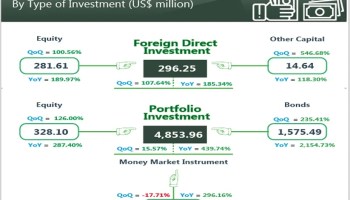
Let us begin where intellectual honesty demands: the Nairametrics piece correctly identifies a structural tension that no one can dismiss. Of the $47.6 billion in total capital importation recorded since May 2023, only $1.9 billion qualifies as foreign direct investment in the conventional sense. The remaining $45 billion is portfolio capital, and $6.5 billion of the $10 billion Q1 2026 headline flowed directly into money-market instruments. The report’s central metaphor of tourists versus settlers is apt and analytically sound. Portfolio capital is, by design, liquid. It arrives quickly, earns its coupon, and departs at the first sign of a more attractive yield elsewhere. The same attributes that make Nigerian Treasury bills attractive at yields north of 20 percent (sovereign backing, short tenor, no operational complexity) make them structurally distinct from the kind of capital that builds a factory in Kano or a processing plant in Nasarawa.
The report is also correct that Nigeria’s FDI peak was 2014, and that the decade since has been a story of declining long-term equity commitment interrupted by brief recoveries. Between 2023 and 2025, net FDI inflows fell by about 50.72 percent, from $1.873 billion to $923 million, even as total capital importation surged by 494 percent over the same period. That divergence is not a distraction. It is the central economic story of the reform era, and any honest assessment of the Tinubu administration must reckon with it.
Where the Report Falls Short
The report’s failure is not factual. It is contextual, methodological, and at its worst structurally misleading by omission. A piece of journalism that acknowledges $10 billion in a single quarter and then discusses only what that capital is not doing is practicing selective optics.
The Report Uses the Wrong Measurement Frame Entirely
The NBS Capital Importation Report tracks only capital imported through the banking system, which is foreign currency formally remitted into Nigerian commercial banks. It does not capture offshore financing, intra-company transfers, reinvested earnings, or capital deployed directly through international contractors and project syndicates.
This distinction matters enormously. In 2025, the Ministry of Petroleum Resources approved 28 Field Development Plans valued at $18.2 billion. Shell’s Bonga South West Aparo deepwater project carries a life-of-field investment value of $20 billion, with its Final Investment Decision targeted for 2027. Yet the actual foreign capital that appeared in the oil and gas sector column of the NBS Capital Importation Report for Q1 2026 was $460,000, because international oil majors finance large deepwater campaigns through offshore syndication, internal balance sheets, and reserve-based lending facilities, none of which flow through Nigerian commercial banks. The report reads the absence of that capital from the NBS table as evidence of stagnation. The correct reading is that the measurement tool is not designed for what is being measured.
The Domestic Capital Revolution Goes Unmentioned
The Nairametrics piece does not devote a single sentence to what may be the most consequential economic development of the Tinubu era: the acceleration of domestic industrial capitalism as a structural substitute for, and complement to, foreign investment.
The Dangote Refinery is now producing at 700,000 barrels per day, having surpassed its original design capacity of 650,000 bpd and positioning itself as a credible contender for the absolute largest refinery in the world (single or multi-train) by 2028. Its management plans to double the facility’s capacity to 1.4 million bpd, thereby upstaging the current world-leading facility in Jamnagar, India. It is directly dismantling Nigeria’s refined product import bill, which historically consumed billions of dollars in scarce foreign exchange annually. The BUA Group has commissioned multi-million-tonne capacity additions at its cement plants in Sokoto and Okpella, with its mega-refinery in Akwa Ibom in active development. Heirs Energies closed a $750 million Reserve-Based Lending facility, co-financed with Afreximbank and recognized internationally as the Best Oil and Gas Deal of the Year. The Pacific Holdings 1,250-megawatt power plant in Ondo State, a $2 billion facility, is fully constructed and awaiting final commercial connection to the national gas grid. NLNG Train 7, which will expand Nigeria’s liquefied natural gas export capacity by 35 percent from 22 to 30 million tonnes per annum, is 98 percent complete.
Then there is the Conoil–TotalEnergies production partnership, sealed in Paris between business icon Dr. Mike Adenuga Jr. and Patrick Pouyanné. It is more than a contract; it is a structural alignment between two giants of global energy capital. The public record confirms a major upstream commitment with strategic links to Nigeria’s deepwater and gas value chain, including assets that ultimately feed the LNG system. The finer details remain proprietary, but the direction of travel is clear: this is settler capital, anchored in steel, seabed, and long cycle production, not the transient liquidity that flits in and out of Treasury bills.
The Critical Minerals Sector Is Entirely Absent
Nigeria’s critical minerals sector has attracted more than $1.5 billion in actual, grounded physical investment in the lithium value chain alone. A $100 million lithium processing plant built by Chinese firm Avatar New Energy Materials in Nasarawa State is already operational, processing 4,000 metric tonnes of lithium ore daily. A second 6,000-metric-tonne facility in Udege is fully built and awaiting commissioning, alongside a $600 million lithium plant in the same state. A $400 million rare earth refinery promoted by Hasetins Commodities Ltd is designed to create over 10,000 jobs and position Nigeria as host of Africa’s largest critical minerals processing facility. This investment was triggered by the administration’s strict value-addition policy banning the export of raw, unprocessed mineral ores, compelling international investors to commit capital to in-country processing rather than extraction and export. That is precisely the kind of policy-driven FDI attraction the Nairametrics report suggests is absent.
From Consumption to Production: The Omnifactory Signal
The commissioning of the Omnifactory in Lagos, the first multi-technology advanced manufacturing facility of its kind in West Africa, marks something that no capital importation figure can fully capture: a structural shift from consumption to localized, high-value production. By enabling industrial-grade 3D printing of specialized components that heavy industries have historically imported at enormous foreign exchange cost, the facility attacks capital flight at the source. Supply chains that once required weeks of shipping and customs clearance compress to days. Firms no longer warehouse entire inventories of contingency spare parts; they manufacture on demand. High-value employment in CAD design, materials science, and robotic operations is being created, exerting upward pressure on Nigerian engineering curricula and expanding the country’s pool of advanced manufacturing talent. Because Lagos is the first city in the subregion to host such a facility, Nigeria is now positioned under the African Continental Free Trade Area to export precision-engineered components to neighboring economies, accelerating a long-overdue pivot away from crude dependence toward industrial value addition.
The Digital Infrastructure Transformation
Nigeria’s digital infrastructure has undergone a rapid expansion since May 2023. At least four major data centre facilities or significant expansions have come online or been commissioned in that period. Nigeria now counts between 21 and 25 major data centres in operation, making it the second-largest data centre market on the African continent. Data centres are capital-intensive, long-horizon commitments. They require stable power supply, reliable connectivity, and regulatory predictability. The fact that global and regional operators are investing in Nigerian digital infrastructure at this pace is a vote of confidence that a framework fixated on T-bill flows is simply not designed to detect. Foreign capital routed into the trade sector jumped by 91.3 percent year on year, pulling in $65.79 million in Q1 2026 alone, reflecting real commercial activity anchored in real infrastructure.
The Ports Transformation the Report Never Mentioned