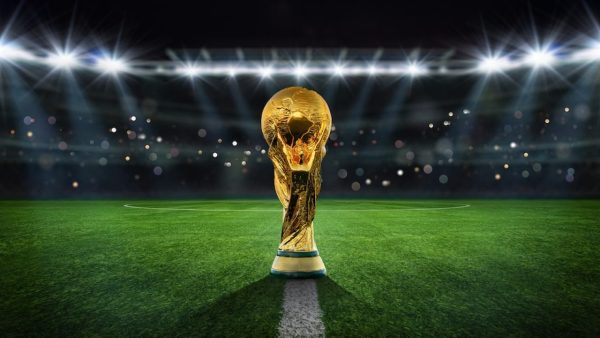
The 2026 FIFA World Cup could usher in one of the biggest changes in modern football after FIFA and the International Football Association Board approved a series of new laws aimed at speeding up matches, reducing time-wasting and expanding the powers of the Video Assistant Referee.
The rule changes, which will be introduced during the tournament in North America, are expected to alter team tactics, player behaviour and match management across all 104 games.
At the centre of the reforms is a major crackdown on time-wasting.
Referees will now enforce a five-second countdown for throw-ins and goal kicks.
Players who fail to take a throw-in within the allotted time will concede possession, while goalkeepers who delay goal kicks beyond five seconds could hand opponents a corner kick.
Substitutions will also be monitored more closely.
Players leaving the field after being substituted must exit from the nearest boundary line within 10 seconds.
Failure to do so will delay the entry of the replacement player, leaving the offending team temporarily short-handed.
Another significant change targets players who receive medical treatment during matches.
Under the new law, any outfield player treated on the pitch must remain off the field for 60 seconds after play resumes, except in specific situations involving goalkeepers, serious head injuries or other approved exceptions.
FIFA has also moved to eliminate tactical huddles during goalkeeper injury stoppages.
Outfield players will no longer be allowed to gather around the touchline to receive instructions from coaches while a goalkeeper is being treated on the pitch.
The governing body is equally introducing stricter disciplinary measures.
Players who cover their mouths during confrontations could face a straight red card if officials determine the action was intended to conceal abusive or discriminatory language.
The new disciplinary approach also targets protests against referees.
Players who deliberately walk off the pitch to challenge an official’s decision risk immediate dismissal, while teams responsible for abandoning a match could suffer an automatic forfeit.
VAR has also been handed broader authority.
Video officials will now be able to review certain second yellow-card decisions, intervene in mistaken identity incidents, correct wrongly awarded corner kicks and assess attacking fouls committed before set-pieces become active.
The changes are expected to have a major impact on how matches are officiated and how teams approach crucial moments.
Player welfare has also been addressed through the introduction of mandatory hydration breaks.
Every match will feature a three-minute break in each half, giving players an opportunity to recover during games played in demanding conditions.
FIFA will also reset accumulated yellow cards after the group stage and again after the quarter-finals, reducing the likelihood of star players missing key knockout matches through suspension.
The reforms represent one of the most extensive rule updates in recent football history and are expected to reshape the pace, discipline and tactical flow of the 2026 World Cup.
Key FIFA laws for the 2026 World Cup
Five second countdown for throw-ins and goal kicks
Ten-second limit for substituted players to leave the field
One-minute mandatory off-field period after medical treatment
Ban on tactical huddles during goalkeeper injury stoppages
Red cards for mouth-covering during confrontations
Red cards for players who leave the field to protest decisions