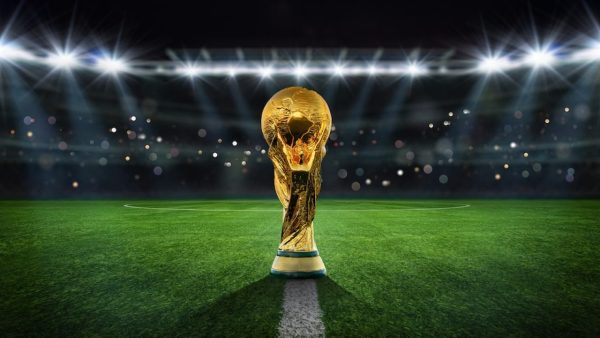
Africa heads to the 2026 FIFA World Cup with unprecedented representation, as 10 nations prepare to compete following FIFA’s expansion of the tournament to 48 teams.
This marks the largest tournament in the history of the event, with teams competing across 16 host cities in the US, Mexico, and Canada from June 11, 2026 to July 19, 2026.
The enlarged competition has opened new opportunities for African football, offering the continent its strongest chance yet to challenge established global powers.
Nine African nations secured direct qualification, while DR Congo claimed the continent’s final slot through the intercontinental playoffs.
The achievement underlines Africa’s growing influence in world football and reflects years of steady progress across the continent.
For millions of supporters, the tournament represents far more than participation.
It presents an opportunity to rewrite history and push African football into uncharted territory.
Morocco arrive as Africa’s leading standard-bearers after becoming the first African nation to reach a World Cup semi-final in Qatar 2022.
Ranked among the world’s elite, the Atlas Lions possess experience, technical quality and confidence drawn from their historic achievement.
Their Group C campaign will pitch them against Brazil, Scotland, and Haiti.
Morocco’s stars include Achraf Hakimi, Brahim Diaz, Yassine Bounou, Sofyan Amrabat, and Youssef En-Nesyri.
The North Africans remain widely regarded as Africa’s strongest contenders for another deep tournament run.
Senegal also enter the competition carrying high expectations after establishing themselves among Africa’s most consistent teams.
The Terenga Lions face France, Norway, and Iraq in Group I.
Their squad boasts of proven performers, including Sadio Mane, Ismaila Sarr, Nicolas Jackson, Kalidou Koulibaly, and Edouard Mendy.
Senegal will draw confidence from their famous victory over France at the 2002 World Cup.
They also remain buoyed by recent impressive performances against leading European opposition.
Reigning African champions Ivory Coast return to the global stage seeking to translate continental success into World Cup progress.
The Elephants are drawn alongside Germany, Ecuador, and Curacao in Group E.
Led by Franck Kessie, Amad Diallo, Simon Adingra, and Sebastien Haller, Ivory Coast possess a blend of youth and experience.
Their qualification campaign was particularly impressive, yielding eight wins, two draws, and no defeat.
Egypt return after missing the 2022 edition and will rely heavily on captain Mohamed Salah’s leadership and experience.
The Pharaohs face Belgium, Iran, and New Zealand in Group G.
Support from Omar Marmoush, Mostafa Mohamed, Mohamed Elneny, and Ibrahim Adel could prove decisive.
Egypt will target a long-awaited breakthrough and seek to register memorable victories on football’s grandest stage.
Algeria return after a 12-year absence determined to restore their reputation among Africa’s leading football nations.
The Desert Foxes face Argentina, Austria, and Jordan in Group J.
Riyad Mahrez, Ismael Bennacer, Mohamed Amoura, and Ramy Bensebaini are expected to spearhead Algeria’s challenge.
Their qualification campaign demonstrated resilience, consistency, and attacking quality.
Ghana, Africa’s quarter-finalists in 2010, hope to revive memories of their greatest World Cup achievement.