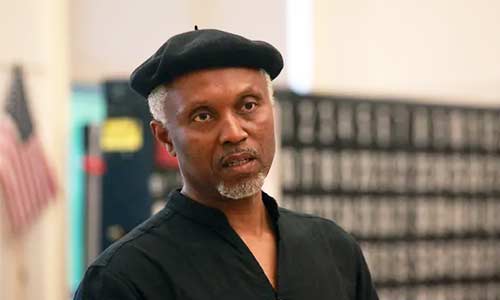
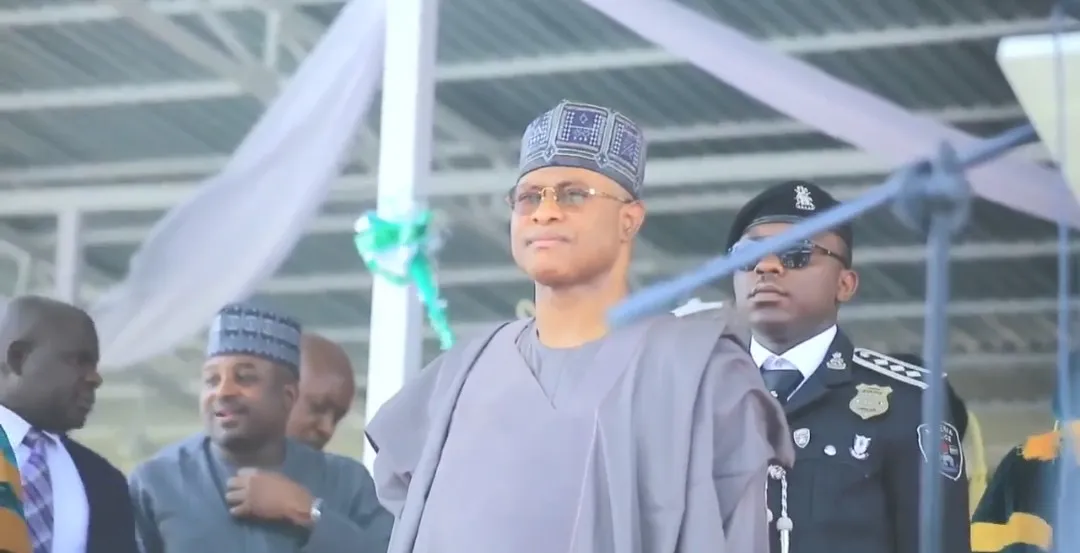
A confidential report by the Anambra State Truth, Justice and Peace Commission (TJPC), chaired by Prof. Chidi Anselm Odinkalu, has provided the most detailed official account to date of the brutal murder of the former Chairman of the Nigerian Bar Association (NBA), Onitsha Branch, Barnabas Igwe, and his pregnant wife, Amaka, on September 1, 2002, describing the unresolved case as “a continuing violation crying out for remedy” and documenting allegations of state complicity, police interference, judicial manipulation, disappearance of case files, and a prison break that enabled suspects to escape custody, all of which combined to ensure that 24 years after the killings, no court conviction has been secured and some of the individuals named in the report now hold positions of authority in Anambra State.
The report was prepared by the 14-member commission, with Ambassador Bianca Odumegwu-Ojukwu serving as secretary, as part of the commission’s assignment to investigate historical violence, insecurity, and unresolved grievances in Anambra State and the South-East. Its findings, recommendations, and the identity of the individuals it names raise urgent questions about whether justice can still be achieved for one of the most notorious political killings in the history of the Nigerian legal profession.
The commission traced the murder of Barnabas and Amaka Igwe to September 1, 2002, the day after the couple returned from the NBA Annual General Conference in Ibadan, Oyo State. According to the report, the couple were attacked on Oraifite Street, Onitsha, shortly after leaving work.
The report alleged that a convoy led by Ken Emeakayi, who served as Commissioner for Works under the administration of former Governor Chinwoke Mbadinuju, blocked their vehicle. Armed men, described in the report as members of the then state-backed Anambra Vigilante Service (AVS), allegedly dragged the couple from their vehicle and attacked them with machetes and clubs before running over them with an automobile.
Neither Barnabas nor Amaka died from gunshot wounds, the report stated. They were killed by the brutality of the physical assault.
The report contained a particularly harrowing detail: when the attack began, Amaka, believing she recognised Emeakayi as a client of the family’s law firm, reportedly ran toward him seeking safety. Instead, she was caught in the same assault that killed her husband.
Onlookers rushed the couple to several hospitals, but the report alleged that medical facilities refused to admit them without a police report, a requirement that caused critical delays in treatment. “It is believed that one or both of Barnabas and Amaka Igwe would have survived if they had been attended to promptly when they were rushed to hospital,” the commission stated.
Amaka reportedly died later that night. Barnabas succumbed to his injuries in the early hours of the following morning, September 2, 2002. Before he died, Barnabas identified some of his attackers to his elder brother, Vincent Igwe, and narrated details of the incident.
In one of the most chilling passages of the report, the commission alleged that Barnabas told his brother that one of his attackers described the assault as “a lesson for fighting the government” and told him that “in his next life, he would not fight a sitting Governor again.”
The commission established that the killings occurred against the backdrop of escalating tensions between the NBA Onitsha Branch, led by Barnabas Igwe, and the administration of Governor Chinwoke Mbadinuju.
According to the report, Igwe had become “one of the loudest critics of governance under the Mbadinuju administration” at a time when workers including teachers, judicial staff, and civil servants were owed months of unpaid salaries and had embarked on prolonged strikes. As Chairman of the NBA’s largest branch in the old Eastern Region, Igwe regularly criticised what he described as poor governance and was outspoken against the operations of the Bakassi Boys, a vigilante group licensed by the then government and accused in the report of carrying out intimidation, unlawful detention, and violent attacks.
In August 2002, just weeks before his murder, the NBA Onitsha Branch under Igwe issued a 21-day ultimatum to the Anambra State Government demanding payment of salary arrears owed to judiciary workers, teachers, civil servants, and legislative staff, warning of unspecified consequences if the government failed to comply. Igwe had also demanded the governor’s resignation if he was unwilling or unable to resolve the salary crisis.
The report detailed an altercation between the NBA leadership and a political appointee in the Mbadinuju administration during a high-level meeting of senior lawyers convened to discuss possible action against the government. According to the commission, the incident deepened tensions between the state government and the NBA leadership shortly before the killings.
The commission also noted that Barnabas and Amaka Igwe were not the only critics of the administration allegedly attacked during this period. It cited the case of Charles Onyeagba, the then Chairman of the Nigeria Labour Congress (NLC) in Anambra State, who was reportedly attacked and nearly killed around the same time after criticising the government over unpaid wages. His office was also allegedly burnt down.
The report named Ken Emeakayi as the leader of the convoy linked to the attack on the Igwes. Emeakayi served as Commissioner for Works under the Mbadinuju administration at the time of the killings.
The commission stated that witnesses and police investigators at the time identified Emeakayi and other suspects, leading to arrests and the commencement of prosecution. However, those efforts subsequently stalled.
In a development that compounds the anguish of the Igwe family and raises questions about governance in Anambra State, Emeakayi currently serves as the Special Adviser on Community Security to Governor Charles Soludo and heads the Agunechemba security outfit in Anambra State.
No court conviction has been secured against Emeakayi or any other suspect in connection with the case. The allegations contained in the TJPC report remain documented claims by the commission based on its investigation, witness testimonies, and review of police and court records.
Perhaps the most damning section of the report deals with what the commission described as the systematic obstruction of justice that followed the killings.
According to the report, a Special Investigation Team of the Nigeria Police initially handled the matter and identified suspects, leading to arrests. But the commission alleged that investigators came under political pressure to either drop the case or compromise it, and that senior police officers who pursued the investigation “suffered career setbacks” as a consequence.
The prosecution of the case was repeatedly disrupted through what the commission described as judicial transfers, interference, and the disappearance of suspects. Suspects who were initially denied bail later secured bail, raising concerns at the time over possible executive interference with the judicial process.
In 2006, a prison break enabled several suspects to escape custody, effectively bringing criminal proceedings to a halt.
Most devastatingly, the commission stated that case files later disappeared from both the courts and the Directorate of Public Prosecutions, making the resumption of prosecution virtually impossible. Without the case files, the documentary evidence, witness statements, and procedural records necessary to sustain a criminal prosecution effectively ceased to exist.
According to the report, some suspects were allegedly still living freely within and outside Anambra State as of the time the commission conducted its investigation.
The commission documented the personal tragedy beyond the murder itself. Barnabas and Amaka Igwe left behind three orphaned children whose upbringing was taken over by relatives. Amaka was pregnant at the time of her death.
The report also argued that the killings had consequences extending far beyond the Igwe family. The commission stated that the murders had “a chilling effect on civic activism and accountability in Anambra State,” weakening the legal profession, civic organisations, and pressure groups at a period of heightened political tensions.
The message sent by the killing of a sitting NBA Branch Chairman and his pregnant wife, for the act of demanding that a state government pay workers’ salaries, was not lost on other potential critics of government in Anambra State and beyond. The absence of any conviction 24 years later has only reinforced that message: those who speak truth to power in Nigeria may pay the ultimate price, and their killers may never face justice.
The commission made several specific recommendations aimed at addressing what it described as “the injustices suffered by the victims and their family, especially their orphaned children, by people who clearly appeared to be representatives of the state.”
First, the commission recommended that a public apology be offered to the Igwe family by the Anambra State Government, acknowledging the state’s connection to the attack.
Second, the commission recommended that “recognising that nothing can compensate for the injuries they have suffered, the Anambra State Government may, nevertheless, consider a symbolic monetary compensation to the family.”
Third, the commission recommended that the Anambra State Government should consider renaming Oraifite Road, where the couple were killed, after Barnabas and Amaka Igwe.
Fourth, and most significantly for the question of accountability, the commission recommended that the Governor “should direct an independent review of the handling of this case by a person or team to be led by a senior lawyer or retired judge, both to learn lessons which should preclude repetition, but also to determine the possibility of being able to ensure effective accountability for these crimes.”
The fourth recommendation effectively calls for a fresh investigation into whether prosecution can be revived, recognising that 24 years of institutional failure have not extinguished the state’s obligation to pursue justice for the victims.
The TJPC report places Governor Charles Soludo in an extraordinarily difficult position. The commission his own government established to investigate historical violence and unresolved grievances in Anambra State has produced a report that names an individual currently serving as his Special Adviser on Community Security as the alleged leader of the convoy that attacked and killed a sitting NBA Branch Chairman and his pregnant wife.
The report recommends a public apology, symbolic compensation, a road renaming, and an independent review of the case with a view to pursuing accountability. Implementing these recommendations while retaining the named individual in a senior security position within his administration would create an obvious contradiction that the public, the legal profession, and the Igwe family would be entitled to question.
The governor has not publicly responded to the commission’s report or its recommendations as at the time of this report. Emeakayi has not publicly responded to the allegations contained in the commission’s findings. No indication has been given as to whether the recommended independent review of the case will be undertaken.
The commission’s description of the Igwe murders as “a continuing violation crying out for remedy” carries both legal and moral weight. In international human rights law, the concept of a “continuing violation” applies to situations where the effects of a past injustice persist because the wrong has not been remedied. The failure to investigate, prosecute, and punish the perpetrators of a killing transforms a single act of violence into an ongoing violation of the victims’ rights and the rights of their surviving family members.
Twenty-four years after Barnabas Igwe was told by his attackers that the assault was “a lesson for fighting the government,” the lesson that the absence of justice teaches is that the attackers were right: in Nigeria, fighting a sitting governor can cost you your life, and those who take it may never be held accountable.
The TJPC report, prepared by a commission chaired by one of Nigeria’s most respected human rights scholars, now places the facts, the names, and the recommendations on the public record. What remains to be seen is whether any institution, whether the Anambra State Government, the Nigeria Police, the Directorate of Public Prosecutions, or the Nigerian Bar Association itself, will act on them.
The three orphaned children of Barnabas and Amaka Igwe are now adults. They have grown up without their parents, raised by relatives, while the individuals the commission’s report identifies as connected to their parents’ murder have lived freely, and in at least one case, risen to positions of public authority.
Justice, 24 years later, remains a continuing violation crying out for remedy.
The post “24 Years Without Justice” — Odinkalu-Led Truth Commission Report Names Soludo’s Security Adviser As Leader Of Convoy That Attacked NBA Chairman Barnabas Igwe appeared first on TheNigeriaLawyer.