Parallel primaries, rigging allegations and factional disputes across several states raise questions about the party’s readiness for 2027
The African Democratic Congress (ADC), which has positioned itself as a major opposition platform ahead of the 2027 general elections, is grappling with growing internal tensions after its governorship and presidential primaries were marred by allegations of irregularities, parallel exercises, voter disenfranchisement and factional disputes across several states.
A review of the party’s primary elections by PREMIUM TIMES shows a recurring pattern of controversy from Rivers and Oyo to Kaduna, Akwa Ibom and Katsina, with aggrieved aspirants rejecting outcomes, demanding fresh elections and, in some cases, threatening legal action.
The disputes come at a critical moment for the ADC, which recently attracted several high-profile political figures and has sought to present itself as a credible alternative to the ruling All Progressives Congress (APC) ahead of the 2027 elections.
While the party successfully produced candidates in several states, the controversies surrounding the exercises have exposed underlying struggles over control of party structures and raised questions about its ability to manage a broad opposition coalition.
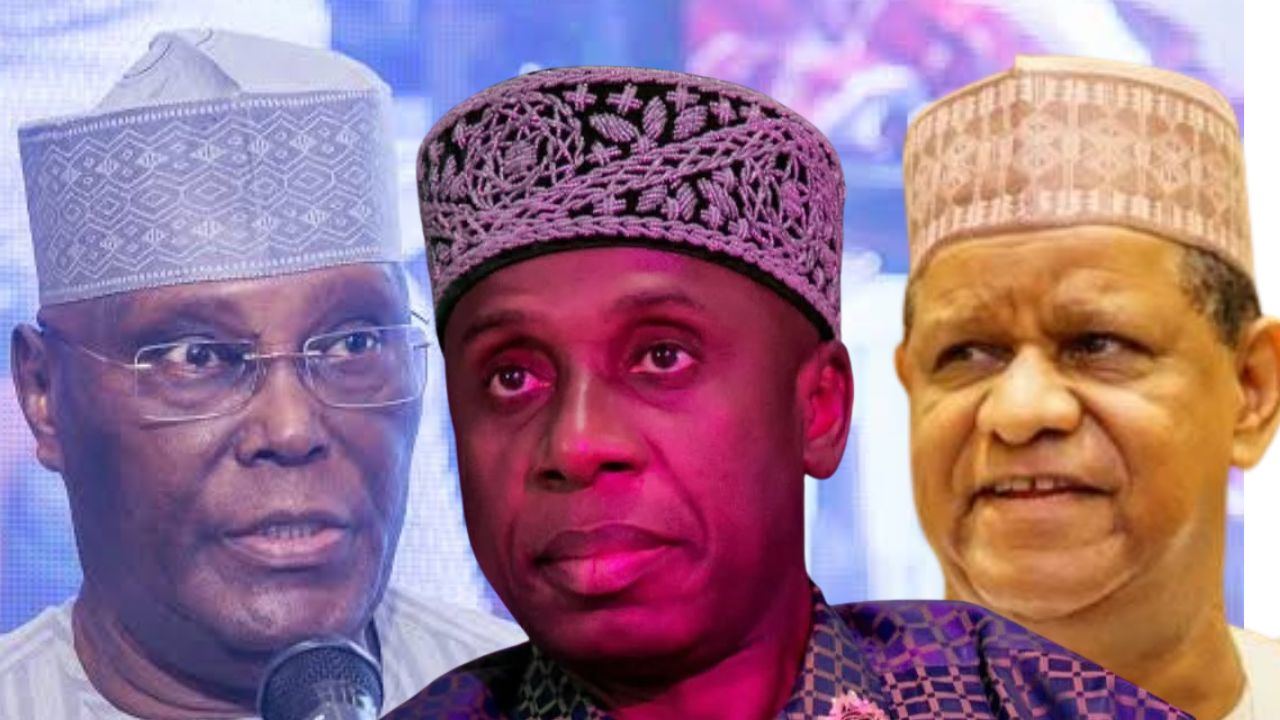
The tensions intensified after former Vice President Atiku Abubakar emerged the winner of the party’s presidential primary, defeating former Rivers State Governor Rotimi Amaechi and businessman Mohammed Hayatu-Deen.
Although the party described the exercise as transparent, both Mr Amaechi and Mr Hayatu-Deen rejected the outcome.
In a statement after the primary, Mr Amaechi alleged widespread voter disenfranchisement and said he could not accept results from a process that failed to reflect the democratic ideals the party claimed to represent.
“There is no way that about 80 per cent of members of the party were not allowed to vote and you expect me to accept such results,” he said.
The ADC leadership subsequently urged aggrieved aspirants to seek redress through the party’s established mechanisms and electoral processes.
The dispute at the presidential level mirrored similar complaints that had already emerged from several gubernatorial contests.
Nowhere were the divisions more visible than in Rivers State, where parallel governorship primaries produced different candidates.
One faction announced former Secretary to the Rivers State Government, Gabriel Pidomson, as the winner after he reportedly secured more than 112,000 votes.
Another faction declared former House of Representatives member Farah Dagogo as the party’s candidate after a separate exercise.
A third aspirant, Allen Ezekiel-Hart, rejected both outcomes, alleging that the process was manipulated and produced multiple winners.
The dispute fuelled speculation that the Rivers crisis reflected a broader struggle between political camps aligned with Mr Amaechi and Atiku, both of whom were simultaneously battling for influence within the party ahead of the presidential primary.
Political observers say recognising a governorship candidate in Rivers could become an important test of the party’s ability to manage internal disputes.
In Oyo State, the governorship primary also generated controversy.
While Taofeek Adegoke was declared the winner of one exercise, rival groups announced separate outcomes, exposing divisions within the state chapter.
A governorship aspirant, Adebisi Ilaka, rejected the result and alleged that the result sheets meant for several local government areas were diverted.
He described the exercise as a “travesty” and an assault on internal democracy.
Similar complaints emerged in Akwa Ibom State, where former senator John Akpanudoedehe was declared the winner of the governorship primary.
His opponent, Mfon Peter, rejected the outcome, alleging exclusion from parts of the process, illegal rescheduling of voting and widespread irregularities.
Mr Peter subsequently petitioned the party’s appeal committee and threatened legal action.
In Kaduna State, some governorship and legislative aspirants rejected the entire primary process.
At a press conference, they alleged that electoral materials were seized during the exercise and that predetermined results were announced without actual voting.
The aspirants demanded outright cancellation of the primaries and called on the party’s national leadership to organise fresh elections.
Katsina is another state where primary disputes remain unresolved.
Rival groups within the ADC have exchanged accusations over the emergence of the party’s governorship candidate.
While one faction accused the national leadership of imposing a candidate and bypassing internal democratic procedures, another group aligned with the state party structure dismissed the allegations and accused disgruntled aspirants of attempting to destabilise the party.
Although rival camps within the party have publicly backed different aspirants and accused one another of attempting to influence the outcome, the party has yet to formally announce a governorship candidate.