One hundred and seven years later, the Palace of Versailles was chosen once again for a signing that would shape international relations. Over a century before, in 1919, the very same halls had witnessed a treaty that reshaped the world following one of history’s deadliest conflicts.
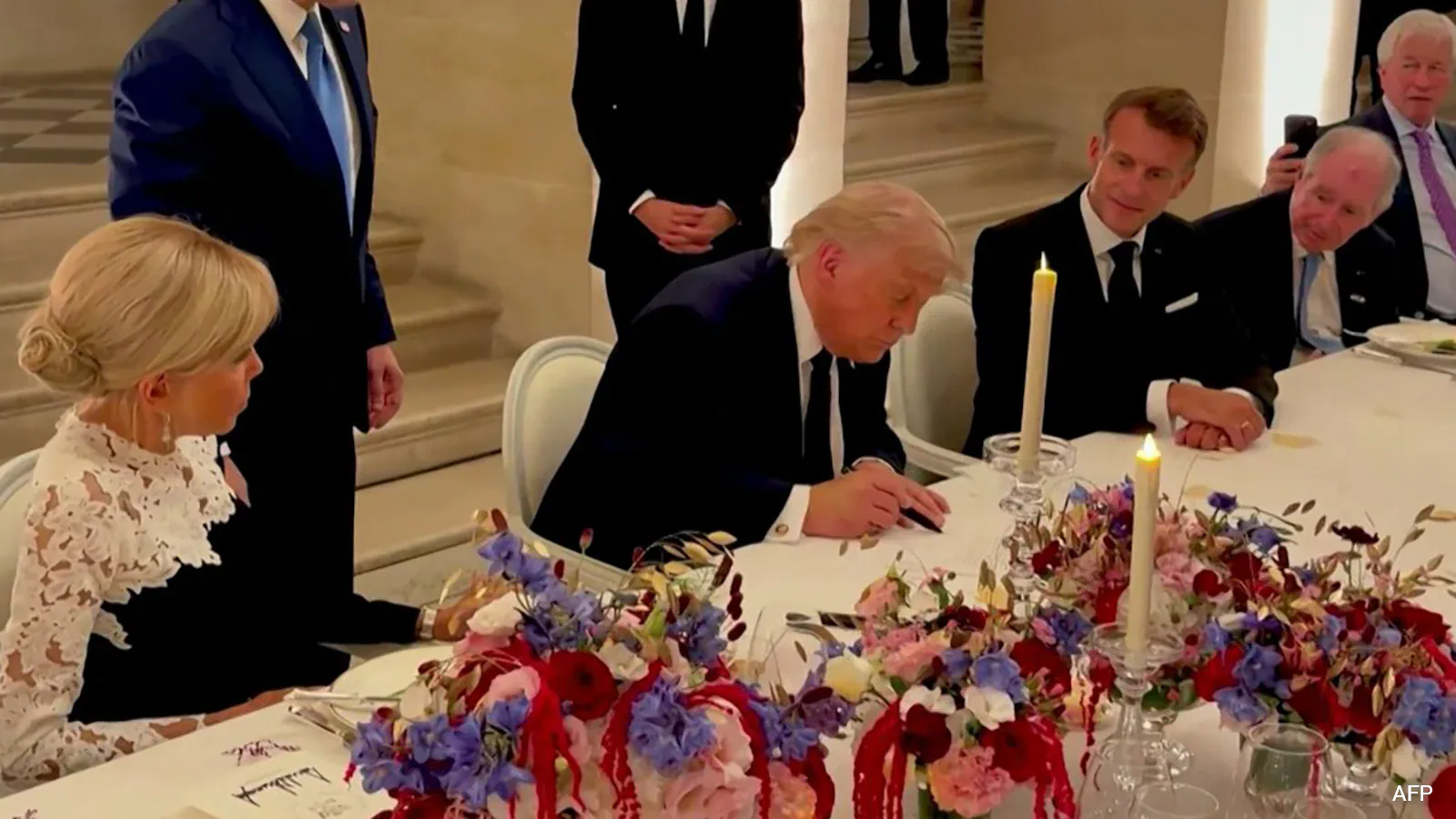
Donald Trump signed his Iran deal at Versailles, describing the moment to reporters, “I signed it in Versailles. Versailles is not gold leaf, Versailles is the real deal.” The historic palace, sprawling across more than 800 hectares to the west of Paris, has long served as a backdrop for the world’s most consequential negotiations.
Le Président Trump a signé ce soir à Versailles l’accord entre l’Iran et les États-Unis.
Cet accord ouvre la voie à une paix durable et permet la réouverture du détroit d’Ormuz.
C’est un pas important dans la bonne direction pour nos compatriotes… pic.twitter.com/b1XgZrBv0m
— Emmanuel Macron (@EmmanuelMacron) June 18, 2026
The treaty signed on 28 June 1919 came exactly five years after Archduke Franz Ferdinand’s killing, the event that had triggered World War I. Negotiated in the Hall of Mirrors, the agreement formally brought an end to four years of devastating conflict between Germany and the Allied powers.
What followed was harsh. Germany was forced to accept sole responsibility for the war, known as the “war guilt” clause. The nation also had to dramatically weaken its military, surrender territories across Europe and abroad, and make substantial financial payments to cover wartime damage.
The treaty created the League of Nations, an early attempt to prevent future large-scale warfare. It also led to the emergence of new nations, including Poland, Czechoslovakia and Yugoslavia, redrawing Europe’s political landscape entirely.
The origins of Versailles trace back to 1623, when Louis XIII commissioned a modest hunting lodge. His successor, Louis XIV, transformed it into an extraordinary seat of royal power during the 17th century, cementing his place in history through architectural grandeur.
The palace’s splendour is remarkable, featuring over 1,000 kilograms of 22-carat gold adorning its gates, sculptures and interior decoration.
Versailles’ role in shaping world affairs extends far beyond 1919. In 1783, leaders signed another treaty at the palace following American independence from British rule. A series of agreements signed there between France and Austria from 1756 to 1758 changed the balance of power in Europe.
Following World War II, the palace transitioned from imperial seat to international meeting ground. It hosted the 1982 summit of major industrial nations, an early precursor to what would become the G7. France continues to host significant diplomatic events and state visits within its walls.