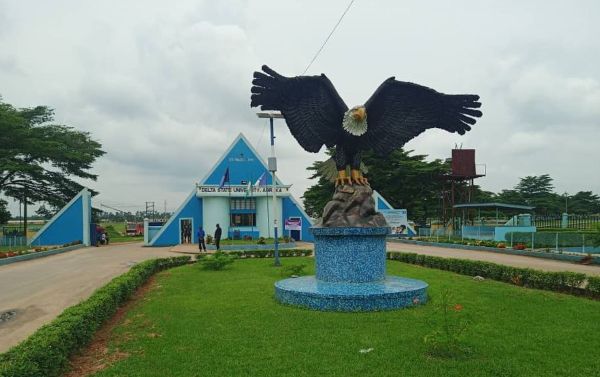
Behind the lectures, assignments, and social activities, many students at Delta State University, Abraka are fighting a daily battle with rising living costs. For them, getting a degree now means far more than attending classes—it means learning how to survive.
By 7am, the roads leading to Delta State University, Abraka are already busy with students hurrying to lectures. Some carry backpacks stuffed with books, while others clutch takeaway breakfasts as they rush to beat the morning bell.
From a distance, campus life looks exciting and full of promise. But beyond the lecture halls and hostels lies another reality—one shaped by rising food prices, expensive accommodation and the daily struggle to survive on limited income.
For many students, getting a university degree is no longer just about passing examinations. It also means paying rent, buying food, covering transportation costs, subscribing for internet access, printing assignments and constantly finding ways to stretch every naira.
Interviews with students, a food vendor, and a parent revealed that the real cost of university education goes far beyond school fees.
For Precious Uti, a 200 level Journalism and Media Studies student, feeding and transportation consume most of her monthly expenses. Living off campus has added to the pressure as she shares accommodation that costs ₦285,000 annually.
Although Uti receives financial support from her parents, she said it is rarely enough to meet all her needs. To support herself, she works while studying, a responsibility that often competes with her academics.
She said: “There have been times I’ve had to skip meals because I couldn’t afford food. Balancing work with my studies is one of the biggest challenges I face.”
Another Journalism and Media Studies student, Abia Ugochukwu Divine, said accommodation, feeding, transportation, internet subscription, and academic materials take up most of his income. Divine pays ₦120,000 yearly for off-campus accommodation and also works while studying.
According to him, financial worries often affect his concentration in class. “Sometimes I spend more time worrying about finances than focusing on my studies,” he said.
Despite the challenges, Divine believes budgeting and financial discipline have become essential survival skills for students trying to cope with rising living costs.
Not every student’s experience is the same, but nearly everyone agrees that life has become more expensive. For Kenechukwu Helen Ozegbe, a 200 level Journalism and Media Studies student, food and transportation are her biggest expenses. She lives in the university hostel, where she pays ₦85,000 for accommodation, and depends on financial support from her parents.
Although Ozegbe said the increasing cost of living has not affected her academic performance, she admitted that daily expenses continue to rise. “Students have to learn how to budget and spend wisely because the prices of food and other necessities keep increasing,” she said.
Similarly, Ogbotor Faith, another 200 level Journalism and Media Studies student, described balancing academics with financial responsibilities as one of the toughest parts of university life. Her monthly expenses include transportation, feeding, books, printing and internet subscriptions. While she receives support from her parents, she also runs a small business to earn extra income. “I’ve learned to reduce unnecessary spending, prioritize my academic needs and remain disciplined with money,” she said.
For Eze Chidera Great, a 200-level Broadcasting student, the struggle is even more demanding. Living off campus, Great pays ₦300,000 annually for accommodation. Although his parents support him whenever they can, the assistance is often not enough. To support himself, he previously worked as a nursery school teacher. “The hardest part is not having enough money for school expenses and enough food to last throughout the semester,” he said.
The financial pressure facing students is also evident from the perspective of food vendors. Smiler, owner of Smiler’s Kitchen, has been selling noodles and spaghetti around the university for about eight months. She explained that the prices of cooking oil, eggs, meat, and other ingredients have increased sharply, making it difficult to maintain affordable prices.
“If I increase the price of food too much, students simply buy less or stop buying,” Smiler said. According to her, many students who once bought meals every day now buy food only occasionally or ask for smaller portions because they cannot afford regular meals. She believes this affects students’ health and, in some cases, their academic performance.
Parents are also struggling to keep up with the rising cost of education. Uhunmwangho Raphina Oghomwen, a low-income earner and mother of three, said sponsoring children through higher education has become increasingly difficult. Feeding and accommodation, she noted, are among the biggest financial burdens families now face.
Oghomwen recalled borrowing money from a microfinance bank when her business was struggling just to ensure her child’s school fees were paid. “When I was in school, paying school fees and other expenses was not this difficult. Now, everything has become more expensive,” she said.
She appealed to the government and university authorities to introduce measures that would ease the financial burden on students and parents, stressing that many families are making enormous sacrifices to keep their children in school.
The experiences shared by these students, a food vendor and a parent reveal that the real cost of university education is measured not only in tuition fees but also in the sacrifices made every day. Some students work while studying. Others skip meals, reduce personal spending or depend on loans and family support to remain in school.
Beyond the hostels, lecture halls and examination rooms are stories of resilience, determination, and sacrifice for every student.
For many students, getting a university degree is no longer just an academic journey—it is a daily struggle to survive in the face of rising living costs. Yet despite these challenges, they continue to pursue their education with the hope that the sacrifices they make today will lead to a better future tomorrow.
. Osayi, a 200 level Journalism and Media Studies student at Delta State University, Abraka, is passionate about feature writing and human-interest journalism, with a special interest in telling stories that reflect the everyday realities of ordinary people.