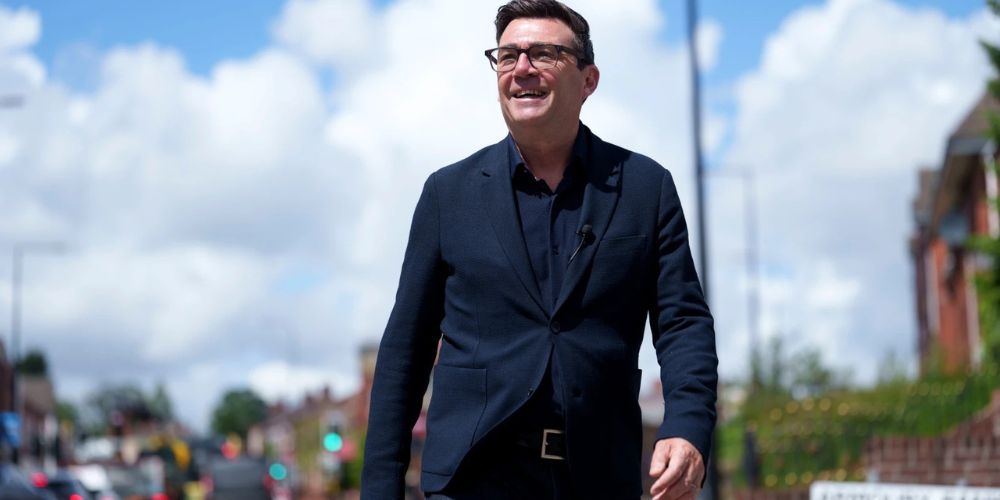
Former Greater Manchester Mayor Andy Burnham has formally confirmed he will contest the Labour Party leadership to succeed Keir Starmer as Prime Minister of the United Kingdom, hours after being sworn into the House of Commons on Monday.
In a post on X, Burnham thanked Starmer for his service and said his resignation “marks the beginning of a transition and it is important that this process is conducted in an orderly and responsible way. I will put myself forward as part of this process.”
“The country expects stability, seriousness and a continued focus on the issues that matter most and that is what it will get,” Burnham added.
“People want to see progress on economic growth, cost of living, public services, housing and opportunities for the next generation.
Political change should never distract from the responsibility to improve people’s lives.”
The path to a coronation appeared to clear further on Monday after former Health Secretary Wes Streeting, until recently considered a leading contender for the leadership, announced he would back Burnham rather than mount a rival challenge, raising the likelihood that Burnham will be selected without a full leadership contest.
Burnham, 56, secured his return to Parliament last Thursday after decisively winning the Makerfield by-election in north-western England, a seat he needed to mount a formal leadership bid.
He had signalled his intentions in his victory speech, warning that Labour had a “final chance to change” and pledging to “lay out a new path for Britain.”
Burnham is associated with what supporters call “Manchesterism” an approach centred on local delivery and integrated public services, drawing on his record as mayor where he transformed Greater Manchester’s transport network into a London-style integrated system.
An Ipsos poll published earlier this week placed Burnham as the preferred prime minister of 25 per cent of British adults, compared with 12 per cent for Starmer.
Under Labour rules, Starmer will remain caretaker Prime Minister until the new leader is chosen, with the leadership process expected to launch in July and a successor in place by September ahead of the party’s annual autumn conference.
Should Burnham prevail, he would become the United Kingdom’s seventh prime minister since the country voted for Brexit in 2016.