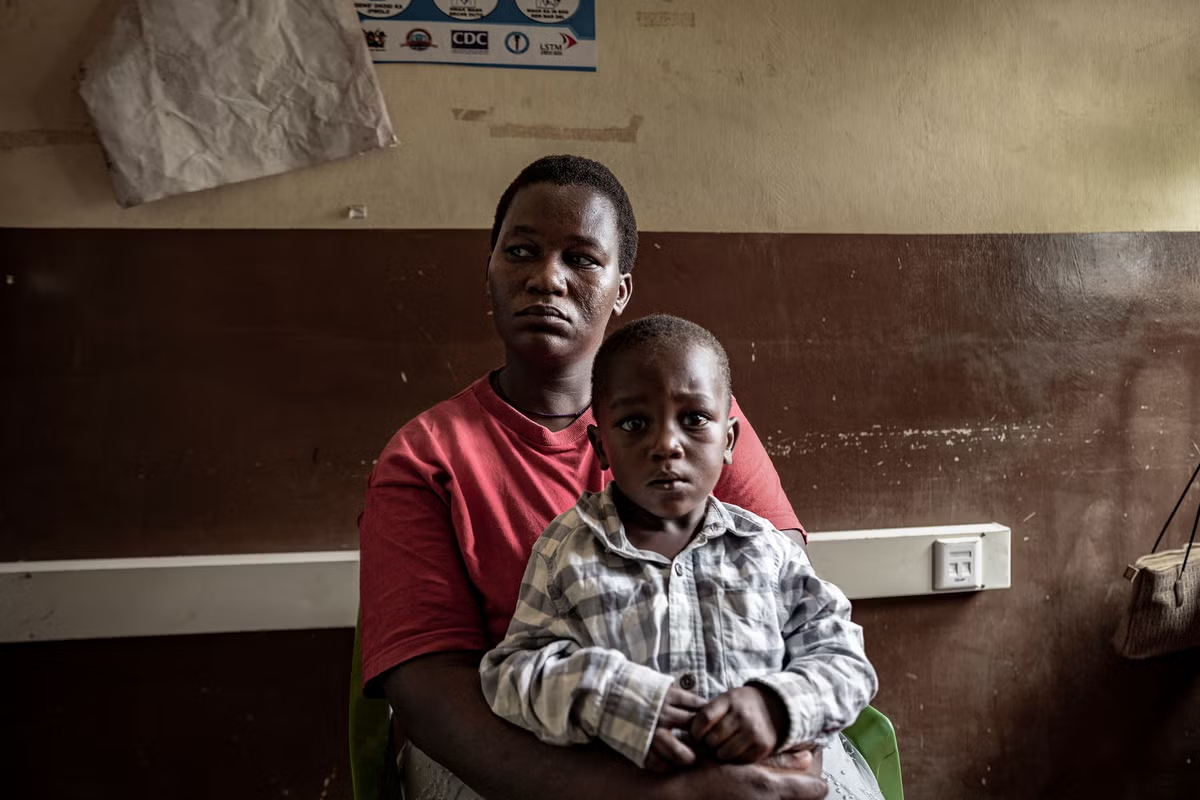
Children living with HIV are being missed, diagnosed later and falling out of care after sweeping cuts to US funded health programmes, according to new HIV services data from across Africa and Asia.
The Clinton Health Access Initiative (CHAI) found a 42 per cent drop in people starting oral HIV prevention treatment, known as PrEP, across 10 countries across 2025 and into early 2026, compared with the previous 12 months. HIV testing fell by 12 per cent across eight countries, while enrolment of children onto treatment dropped by 15 per cent.
Thanks to this “children are in crisis”, Dr Doris Macharia, president of the Elizabeth Glaser Pediatric AIDS Foundation (EGPAF) said that the new figures mirror trends her organisation has identified in its own analysis. She continued: “Testing is the entry point into the paediatric HIV cascade. Once testing drops, every other indicator is likely to drop, especially for children.”
More than a year after the Trump administration’s abrupt freeze on foreign aid upended HIV programmes across the developing world, there are few signs of recovery. “What I keep coming back to is that we’re not seeing a rebound. Across the board, key indicators haven’t recovered”, said Carolyn Amole, CHAI’s vice-president for HIV, hepatitis and tuberculosis.
The findings come as Donald Trump and his administration continue to defend its overhaul of US foreign assistance and its handling of the President’s Emergency Plan for AIDS Relief (PEPFAR), the flagship programme launched by George Bush that is credited with saving more than 26 million lives worldwide. Trump’s officials argue countries must take greater responsibility for financing their own HIV responses and has shifted away from the traditional aid model towards bilateral agreements with national governments.
Last week, the secretary of state – Marco Rubio – told Congress the programme remained operational, while Jeremy Lewin, the acting undersecretary overseeing foreign assistance, described recently released PEPFAR figures as “very, very good.” But health experts say the headline numbers mask a deeper crisis. Although the number of adults receiving antiretroviral treatment increased slightly, by 0.6 per cent across eight countries, testing, diagnosis and prevention services have all deteriorated sharply since aid freezes and contract cancellations began in early 2025.
While overall treatment numbers remained largely stable at around 20.6 million people, HIV testing supported by the programme fell from 21.9 million people in late 2024 to 17.2 million during the same period in 2025.
Ms Macharia said clinics are reporting disruptions to early infant diagnosis programmes, shortages of testing supplies and the loss of community health workers who previously tracked mothers and children through treatment.
“There are fewer community health workers. There are fewer mentor mothers”, she added, referring to women living with HIV who support pregnant women and new mothers through care programmes. “The continuity and linkage of mums and kids into care is not as it should be. We are losing kids in testing, in treatment and in retention”.
The declines come despite the arrival of one of the most promising new HIV prevention tools in decades. South Africa last week became the ninth African country to introduce lenacapavir, a long acting injectable drug that provides protection against HIV for six months at a time. Advocates fear weakened health systems could undermine efforts to roll it out. CHAI’s Ms Amole said: “At the exact moment we have a tool that could genuinely change the trajectory of the epidemic, the delivery foundation we’d built it on has been badly weakened.”
Asia Russell, executive director of Health GAP [Global Access Project], told The Independent that the latest data should be viewed in the context of Trump administration claims that no major harm has resulted from the aid cuts. She said: “This report lays bare a completely preventable disaster. In 2026, with access to treatment, people with HIV can live a normal lifespan. But the administration has created a treatment and prevention crisis.”
Ms Russell warned that paediatric HIV progresses far faster than adult HIV: “Without treatment, there is first a mortality spike at six months and then by two years, 50 per cent of HIV-positive children will die. This is different from adult HIV, which moves more slowly from infection to disease progression without treatment. Children are already dying. People with advanced HIV disease are facing a very real threat of accelerated disease progression and death.”
Public health experts say maintaining existing treatment programmes, while important, is not enough to control the AIDS epidemic if fewer people are being tested and diagnosed. Ms Russell said: “What these data show us is the deliberate unraveling of the elements of HIV prevention and treatment service delivery that are essential to actually finish the job and defeat this pandemic.”
CHAI also warned that the Trump administration’s push for countries to take over responsibility for HIV supply chains may be moving too quickly. Eleven of the 14 countries it examined were judged to face elevated risk of supply issues as US supported logistics systems are withdrawn.
Ms Amole said: “The direction is right: countries should own their own supply chains, but this is moving too fast and that’s where it gets dangerous.”
For Ms Macharia, the most alarming figure may be the reported fall in children receiving treatment. She said: “It would be very easy to assume there are fewer children because programmes are succeeding, but if testing is down, then we are simply losing opportunities to identify children [needing help] in the first place.”
More than a year after the disruptions began, she added, the absence of any recovery should be a warning sign: “Children were already behind before this crisis. Now they are falling even further behind.”
This article has been produced as part of The Independent’s Rethinking Global Aid project