Yinka Olatunbosun
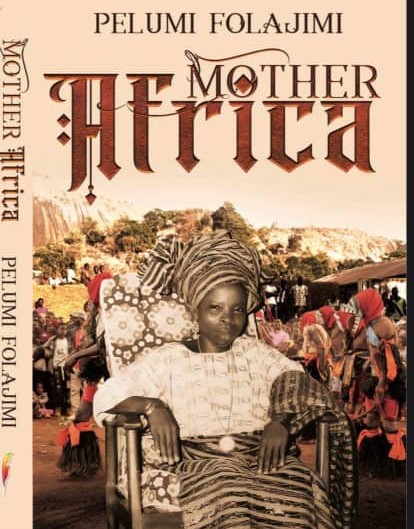
Mother Africa (2026), a collection of poems highlighting Pelumi Folajimi’s astute understanding of Yoruba indigenous traditions and rituals, was borne out of the need for cultural reclaimation. The poet who hails from Abeokuta taps heavily from his cultural roots thus aligning with renowned writers from the same ancient city in worldview. Evidently, the oral traditions and literate culture that had deeply influenced the poetry of Wole Soyinka and the political music of Fela Anikulapo–Kuti, were not lost on Folajimi who also draws upon the same oral traditions of the Abeokuta people. On the strength of the sound education received at his Alma mater, Abeokuta Grammar School, Folajimi’s book x-rays the controversy surrounding the annulment of the June 12, 1993 elections by former Head of State, Ibrahim Badamosi Babangida. The elections were reportedly the freest and fairest with popular votes in favour of Chief M.K.O. Abiola. The undeclared winner was an Egba man supported by his people and legions who protested against the tyranny of military boots that matched and destroyed Chief Abiola’s votes. The culture–wealthy society of Abeokuta provided the fertile soil from which Folajimi, like Soyinka and Fela, draws his creative resources which are embedded in the oral and literate traditions of the Yoruba people.
Published by Austin Macauley Publishers, Mother Africa sheds lights on the colonial history of Nigeria, particularly the encounter of the Egba people with colonial injustice and the resistance of the Egba women to the oppressive tax policies of the Alake of Egbaland, Oba Ladoke Samuel Ademola KBE, who was a stooge of the colonial administration in Abeokuta. Folajimi reveals that his grandmother, Chief Mrs. Eunice Olatayo Olufolajimi, was an activist who worked with other Egba women, including Olufunmilayo Ransome–Kuti and Grace Eniola Soyinka, to confront the tyranny of Oba Ademola, the Alake of Egbaland, between 1947 and ’48. Folajimi pans away from the colonial history of Nigeria to the post–independence politics of the country. Not only did his grandmother fight against the injustice of the Alake of Egbaland but, also, the grandmother fought to ensure the defeat of colonialism in Nigeria when the country earned its political independence on October 1, 1960 (p. 17). Folajimi’s writings are highly influenced by the politics and activism of his grandmother and the Yoruba cultural knowledge passed to him by his grandfather, High Chief James Oyedele Olufolajimi. Folajimi’s father, Mr. Adesegun Israel Olufolajimi, was a Lagos–based Printing Press expert whose career impacted on the writing career of the young Folajimi. Folajimi’s mother, Mrs. Rachael Olufemi Olufolajimi, operated a career in photography and it is not surprising that, benefiting from the photography of his mother, Folajimi uses photographic language in the production of his Yoruba–culture–embedded poetry.
Delving deeply into Yoruba orality, Folajimi celebrates the pantheon of Yoruba deities. In Mother Africa, he writes about the spiritual powers and sacred significance of Ogun, Oduduwa, Oya, Obatala, Esu, Yemoja, Sango and other Yoruba deities. Clearly, the poet is fascinated by Yoruba myth and rituals, especially as practiced and worshipped in the city of Abeokuta. Folajimi’s idolization of the Yoruba rituals and Yoruba deities is not surprising. His upbringing in Abeokuta had exposed him to Yoruba divinity, just as we encounter the celebration of the Yoruba deities in the poetry of Soyinka and in the revolutionary music of Fela.
In ‘‘Obatala, Father of All,’’ Folajimi explores the sacred power of the Yoruba deity, Obatala. In the second stanza of the poem, the poet writes;
Orisanla, father in crafting the head in mortal
Immortal the mortal mould Obatala on Olodumare
Creation in moulding human body in mysterious craft (p. 75).
Folajimi goes into the myth of Obatala who is known as the master creator. Obatala is the Orisa whom Olodumare had endowed with the power of molding the human frame. Folajimi’s celebration of Obatala as ‘‘Father of All’’ reveals the eminence of the deity among human beings and, indeed, his fellow Orisa, including Ogun and Sango, apart from Orunmila. Folajimi gives attention to ‘‘Yemoja,’’ too. The poet praises Yemoja as ‘‘Mother purity’’ who, in calm, provides safety for her children (67).
Folajimi’s searchlight falls on notable African and African diaspora personalities. Remarkably, Folajimi’s ‘‘Maya Angelou,’’ celebrates the exploit and greatness of Maya Angelou, an African American poet and activist. Folajimi’s adoration of Angelou is reminiscent of Leopold Sedar Senghor’s Negritude poem, ‘‘Black Woman.’’ In ‘‘Maya Angelou,’’ Folajimi celebrates Angelou as ‘‘Black woman. Woman of power. Woman of great grace’’ (117). Folajimi’s ‘‘Maya Angelou’’ is a celebration of the power and heroism of an African woman and African diaspora woman. The poem demonstrates the transformative dynamism of a woman of African descent- giving power and dominion to the African and Black woman.
In the same vein, ‘‘African Woman’’ demonstrates Folajimi’s passionate interests in representing the continent of Africa through the figure and characteristics of a woman or a feminine figure. In both ‘‘African Woman’’ and ‘‘Mother Africa,’’ Folajimi explores the figure of a woman to create a picture of the beauty and glory of the African continent. Imperative, in Folajimi’s feminisation of Africa, is the figure of his grandmother, Chief Mrs. Eunice Omotayo Olufolajimi, to whom Folajimi had dedicated some of the poems in the collection and whom the poet identifies as the model of his poetic inspiration and his contemplation of the African continent. In ‘‘Moonlight Tales in Mother’s Muse,’’ Folajimi further represents the figure of the ‘‘Mother’’ to portray the moonlight storytelling and cultural performances in a typical Yoruba setting. In this poem, Folajimi creates images of the games, storytelling, jokes, fables and other nocturnal cultural performative arts among the Yoruba people.
Mother Africa demonstrates the poetic aptitude of Folajimi. The collection epitomises Folajimi’s boundless benefits from the oral traditions of the city of Abeokuta; the same city from which both Soyinka and Fela had lived and inherited cultural competence. Folajimi, in Mother Africa, flaunts the glory and greatness of Yoruba ritual traditions and Yoruba literate heritage. Indeed, it is safe to conclude that Mother Africa brings Folajimi into cultural and artistic contiguity with both Soyinka and Fela.
Pelumi Folajimi is a Lecturer at the Department of Dramatic Arts, Obafemi Awolowo University, Ile–Ife, Nigeria.