Mr Kukah said Mr Gowon struggled in exile after his ouster from office, relied on his wife for survival and later recovered a revoked Abuja land allocation through the intervention of senior military figures.
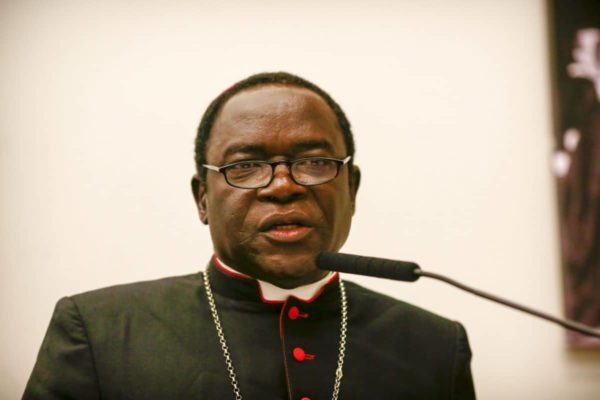
Bishop of the Roman Catholic Diocese of Sokoto, Matthew Kukah, has recounted how a land allocation belonging to former Head of State Yakubu Gowon was withdrawn during the tenure of Nasir El-Rufai as minister of the Federal Capital Territory (FCT).
Mr Kukah disclosed this on Tuesday in Abuja during the public presentation and review of Mr Gowon’s autobiography, “My Life of Duty and Allegiance,” published by Havilah Group.
The event brought together prominent political leaders, traditional rulers, diplomats, former military officers and senior government officials, many of whom reflected on Nigeria’s political journey and the lingering challenges of national cohesion decades after the civil war.
Among dignitaries present were Vice President Kashim Shettima, who represented President Bola Tinubu; former President Goodluck Jonathan; elder statesman Theophilus Danjuma; the Sultan of Sokoto, Muhammad Abubakar; the Emir of Kano, Muhammadu Sanusi, and many others.
Reviewing the memoir, Mr Kukah reflected on Mr Gowon’s ordeal after he was removed from office through the 1975 military coup and forced into exile.
According to the bishop, the former military ruler returned to Nigeria without owning any property in Abuja and only secured a plot years later through the intervention of influential military figures.
“He didn’t have a plot of land, and when he came back, it was just out of pity that Mr Babangida agreed. Finally, they named one crescent after him, and they now gave him a plot of land, his first plot of land in Abuja,” Mr Kukah said.
He explained that Mr Gowon, a retired general, had begun construction on the property after raising resources for the project, but the allocation was later revoked while Mr El-Rufai served as FCT minister.
Mr Kukah, however, said interventions by Mr Danjuma and others helped Mr Gowon regain the property.
The bishop described the autobiography as a sweeping account of Nigeria’s political and military history, noting that the nearly 900-page memoir is arranged in 36 chapters that cover coups, exile, governance, and relationships among key national figures.
He also revealed that much of Mr Gowon’s original records and personal archives were destroyed in separate fire incidents in Bakori and Kaduna, forcing the former head of state to rely heavily on memory while documenting the book.
“You will find in the book evidence of excellent memory and details of things,” the cleric noted, adding that the book nevertheless demonstrated Mr Gowon’s remarkable memory of historical details.
Mr Kukah further highlighted sections of the memoir that deal with Mr Gowon’s relationship with former President Olusegun Obasanjo, despite the tensions that followed the 1975 coup.
Citing portions of the autobiography, he said Mr Gowon described Mr Obasanjo as an “informal guardian angel” and one of the military officers he trusted most.
Mr Obasanjo had served as federal commissioner for works and housing under Mr Gowon for seven months in 1975. He later emerged as the chief of staff of the Supreme Headquarters (deputy head of state) in the administration of Murtala Muhammed, which overthrew the Gowon administration in a bloodless coup in July 1975.
Mr Muhammed served in the Gown administration as federal commissioner for communication.
Mr Kukah also referred to recollections by former permanent secretary Allison Ayida, who reportedly documented debates within government circles over whether Mr Gowon should be allowed to return from exile.
According to Mr Kukah, some officials at the time feared political consequences if news of Mr Gowon’s planned return became public.
Beyond politics and military affairs, the review also focused on the role played by Mr Gowon’s wife, Victoria Gowon, during the family’s years in exile in the United Kingdom.
The cleric described her as a stabilising figure who kept the family together during difficult times, revealing that she supported the household financially by sewing bed sheets and selling pillows.
He added that Mr Gowon admitted in the memoir that his wife carried much of the family’s burden during that period, as he struggled to secure employment and even faced difficulties opening a bank account while living abroad.