The ECOWAS Parliament has called for accelerated investment in renewable energy to drive rural electrification, boost economic activities and improve living standards across West Africa. The call came at the opening of the Delocalized Meeting of the Joint Committee on Energy and Mines, Agriculture, Environment and Natural Resources, and Infrastructure,……
The ECOWAS Parliament has called for accelerated investment in renewable energy to drive rural electrification, boost economic activities and improve living standards across West Africa.
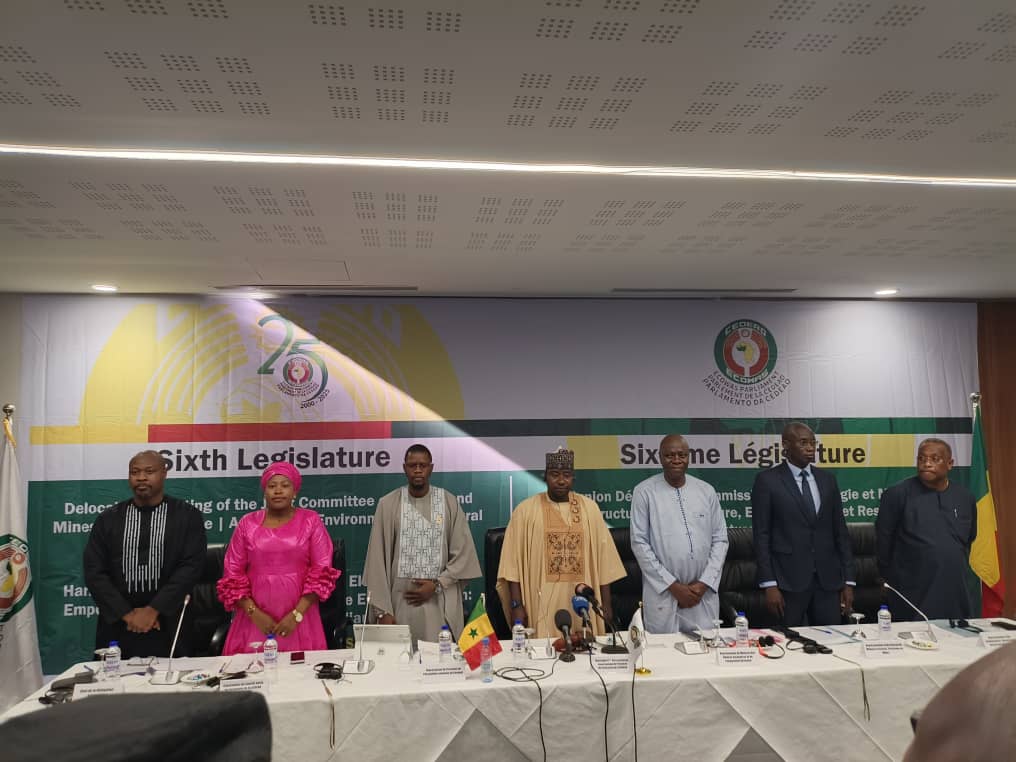
The call came at the opening of the Delocalized Meeting of the Joint Committee on Energy and Mines, Agriculture, Environment and Natural Resources, and Infrastructure, holding in Dakar, Senegal, under the theme: “Harnessing Renewable Energy for Rural Electrification and the Empowerment of Rural Economies in the ECOWAS Region: The Role of the ECOWAS Parliament.”
Declaring the meeting open on behalf of the Speaker of the ECOWAS Parliament, Rt. Hon. Hadja Memounatou Ibrahima, the Fourth Deputy Speaker, Hon. Billay Tunkara, said renewable energy must serve as a tool for economic transformation, particularly in rural communities.
“Renewable energy is not merely a technical response to electricity demand. It is a key driver in transforming economic activities, particularly in rural areas,” Tunkara said.
According to him, access to reliable and clean energy can support local processing of agricultural products, reduce post-harvest losses, improve irrigation, and promote the growth of small businesses, handicrafts and digital services.
He noted that renewable energy currently accounts for less than 20 percent of West Africa’s energy mix despite the region’s vast solar, wind and hydroelectric potential.
“Together, let us make rural electrification through renewable energy a catalyst for the economic empowerment of women, young people and farmers. Access to clean energy is a fundamental right, a factor in social peace and a driver of sustainable development,” he added.
In his welcome address, Head of the Senegalese Delegation to the ECOWAS Parliament, Hon. Guy Marius Sagna, described the meeting as a call for energy sovereignty and regional self-reliance.
“Our country, the Republic of Senegal, is deeply honoured and truly enthusiastic to host this meeting, whose theme resonates particularly strongly as a call to action. A call to make the development of renewable energy a key component of our energy sovereignty,” Sagna said.
He expressed concern that despite the region’s abundant renewable energy resources, rural electricity access remains low.
“The figures speak for themselves. In our ECOWAS region, access to electricity for rural households is still capped at around 12 percent, while our region boasts exceptional solar potential. This gap between our resources and their exploitation is a challenge that we must collectively and urgently address,” he stated.
Sagna further advocated what he described as a “sovereign revolution” for West Africa, arguing that affordable and accessible energy remains critical to tackling unemployment, poverty, food insecurity and underdevelopment.
Chair of the Joint Committee, Hon. Fanta Conte, said the meeting was convened against the backdrop of a widening gap between energy demand and supply across the region.
“Less than 40 percent of the rural population has access to electricity. In some of our Member States, this rate falls below 10 percent in the most remote areas,” she said.
Conte noted that inadequate electricity access continues to affect healthcare delivery, agricultural productivity, education and economic opportunities for millions of people, especially women and youth in rural communities.
She stressed the responsibility of parliamentarians to ensure that regional commitments such as the ECOWAS Renewable Energy Policy and the Energy Efficiency Action Plan are translated into national legislation and effectively implemented.
Representatives of the Senegalese Government also urged lawmakers to strengthen advocacy for universal energy access.
Speaking on behalf of Senegal’s Minister of African Integration, Foreign Affairs and Senegalese Abroad, Mamadou Moustapha Seck said parliamentarians have a strategic role to play in accelerating the implementation of ECOWAS energy policies.
“It is about ensuring that our brothers and sisters living in rural areas have sufficient energy to work better, flourish and live decently,” he said.
A representative of Senegal’s Minister of Energy, Petroleum and Mines highlighted the importance of mini-grids and off-grid solar solutions in reaching remote communities, describing them as the fastest and most cost-effective means of expanding electricity access.
The five-day meeting features technical presentations, stakeholder engagements and field visits to renewable energy projects in Senegal. Lawmakers are expected to develop recommendations aimed at strengthening rural electrification, mobilising investments and advancing renewable energy development across the ECOWAS region.
The meeting is part of the ECOWAS Parliament’s efforts to support the regional goal of achieving universal access to electricity by 2030 while promoting sustainable economic growth and development.