As political activities gather momentum ahead of Saturday’s governorship election, Ekiti State is under national attention.
Despite its relatively small size, Ekiti occupies an important place in Nigeria’s political and intellectual history. Its reputation for education, active political participation and production of influential public figures has given it a voice that often outweighs its demographic size. As political activities gather momentum ahead of Saturday’s governorship election, the state is once again likely to command national attention.
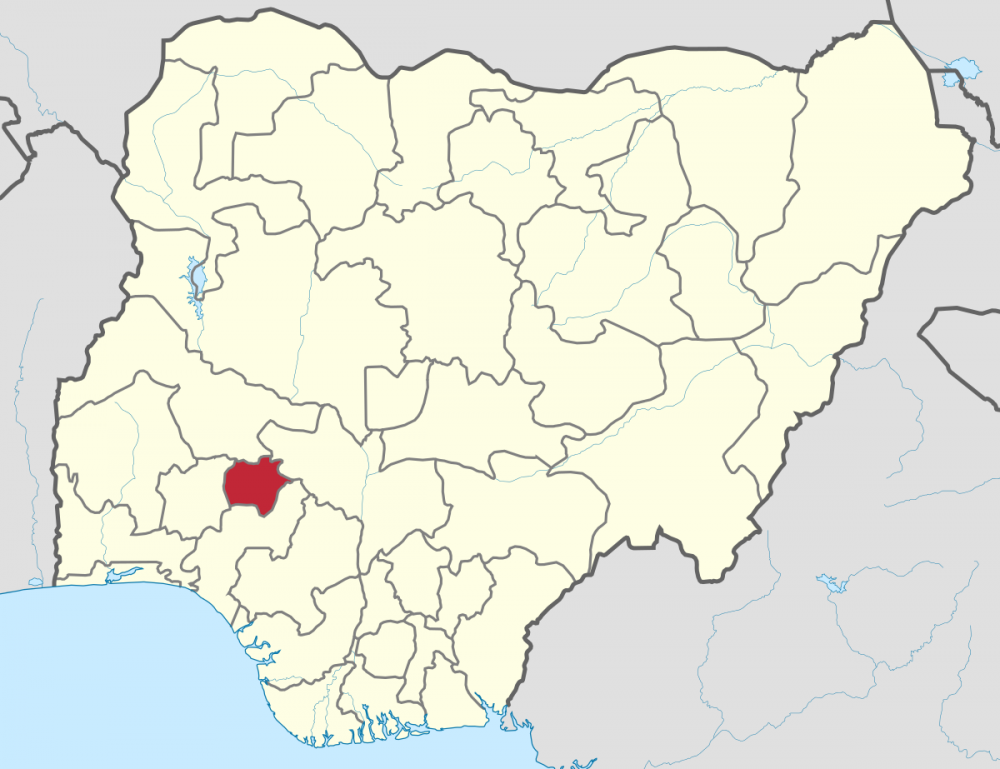
Here are 15 things to know about the state.
1. Ekiti is one of Nigeria’s youngest states. It was created on 1 October 1996 by the military administration of General Sani Abacha from the old Ondo State. It was among six states created during Nigeria’s last major state-creation exercise. Its first governor, a military man, was Mohammed Bawa. Ado-Ekiti, which had long served as an important administrative and commercial centre, is the state capital.
2. It is one of the smallest states in Nigeria by land area. The state occupies about 5,888 square kilometres in Nigeria’s South-west geopolitical zone. It shares boundaries with Kwara State to the north, Kogi State to the north-east, Ondo State to the south and east, and Osun State to the west.
3. According to the 2006 National Population Census, Ekiti had a population of 2,384,212 people. Although no national census has been conducted since then, population projections indicate substantial growth over the past two decades, particularly in urban centres such as Ado-Ekiti.
4. It is popularly known as the Fountain of Knowledge. Few states are as strongly associated with education as Ekiti. The state earned the nickname “Fountain of Knowledge” for its long-standing reputation as a producer of teachers, academics, judges, lawyers, and other professionals. Education remains one of the most valued social investments among many families in the state.
5. Agriculture is the backbone of the economy. It is the largest source of livelihood for many residents. Major crops grown in the state include cocoa, yams, cassava, maize, rice, plantain and oil palm. Cocoa is one of the state’s most important cash crops and a major source of income for rural communities.
6. Ekiti is governed by Governor Biodun Oyebanji of the All Progressives Congress (APC), who assumed office in October 2022. The APC also controls the state House of Assembly, making it the dominant political force in the state.
7. Ekiti is one of Nigeria’s most politically competitive states. Since the return to democratic rule in 1999, political control of the state has changed hands between major parties. Elections in Ekiti often attract national attention because of the state’s politically conscious electorate and history of closely contested governorship races. Five democratically elected governors have governed the state since its creation. They are Adeniyi Adebayo, Ayo Fayose, Olusegun Oni, Kayode Fayemi and Mr Oyebanji. Mr Oni took office in May 2007, but he was removed in October 2010 after the courts voided his election.
8. The vast majority of residents belong to the Yoruba ethnic group, particularly the Ekiti sub-group. Yoruba is widely spoken across the state, while English remains the official language of government and education.
9. The state has 16 local government areas. They are Ado-Ekiti, Efon, Ekiti East, Ekiti South-West, Ekiti West, Emure, Gbonyin, Ido/Osi, Ijero, Ikere, Ikole, Ilejemeje, Irepodun/Ifelodun, Ise/Orun, Moba and Oye. Ado-Ekiti, which hosts the state capital, is the most urbanised and economically vibrant local government area in the state.
10. Ado-Ekiti is the state’s political and economic hub. As the capital city, Ado-Ekiti hosts the state secretariat, major government institutions, courts, financial institutions and higher educational establishments. It is also the most urbanised part of the state and serves as its commercial centre.
11. Ekiti is rich in solid minerals. The state possesses commercially significant deposits of minerals, including granite, kaolin, feldspar, quartz and other industrial minerals. Quarrying activities, particularly granite extraction, are common in several communities.
12.It is home to one of Nigeria’s oldest state universities. Ekiti State University traces its origins to 1982, when the government of the old Ondo State established it in Ado-Ekiti. The institution was originally known as Obafemi Awolowo University, Ado-Ekiti, before undergoing several name changes over the decades. Today, it is one of Nigeria’s oldest state-owned universities and has produced thousands of graduates who occupy leadership positions in academia, government, business and the professions
13. Ekiti State is also home to Afe Babalola University, founded in 2009 by legal icon Afe Babalola. The institution has gained national and international recognition for its investments in research, infrastructure and professional education, particularly in medicine, law, engineering and the sciences.
14. The state is home to one of Nigeria’s most famous tourist attractions. Ikogosi Warm Springs is located in the Ekiti West Local Government Area. It is one of the country’s best-known natural tourist sites, famous for the meeting of warm and cold springs flowing side by side while retaining their distinct thermal characteristics.
15. Ekiti has produced some of Nigeria’s most prominent personalities in politics, law, academia and public service. They include Legal icon, Afe Babalola, former NBA President, Wole Olanipekun, legal luminary, Femi Falana, late renowned professor of economics, Sam Aluko, former military governor of Western Region, Adekunle Fajuyi, former military governor of Western State, Adeyinka Adebayo, incumbent Chief of Defence Staff, Olufemi Oluyede, former deputy governor of the old Ondo State, Akin Omoboriowo, and former governor of old Ondo State, Bamidele Olumilua,
Others are a renowned history professor, Jacob Ade-Ajayi, a literary icon, Niyi Osundare, the first female professor of Yoruba studies in the world, Omotayo Olutoye, former Education Minister, Tunde Adeniran, Second Republic senator and Afenifere leader, Ayo Fasanmi, current Senate Leader, Opeyemi Bamidele, Minister of Solid Minerals Development, Dele Alake, former Minister of Education, Babalola Borishade, prominent gospel preacher, Joshua Ignila, veteran actor, Jimoh Aliu, prominent gospel musician, Yinka Ayefele, Nollywood actor and Glo Ambassador, Odunlade Adekola, renowned potter, Aina Olajide, renowned educationist and diplomat, Michael Omolewa, popular cartoonist, Josy Ajiboye and late sprinter and Olympic medalist, Oluyemi Kayode.
More details here...