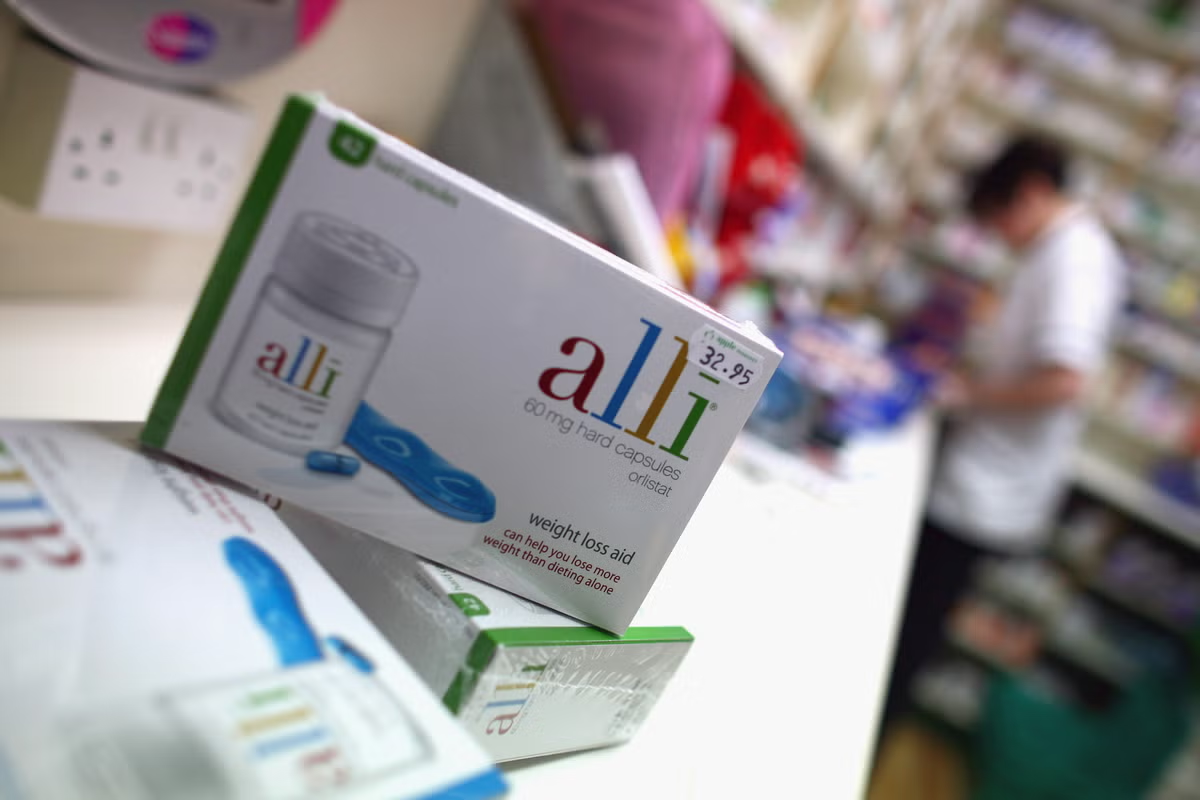
Federal regulators are warning American consumers about kidney problems potentially linked to taking a longstanding weight loss pill.
The GSK-made drug, called Alli, was the first over-the-counter weight loss pill approved by the U.S. Food and Drug Administration. It first received federal approval back in 2007 — before the boom of popular GLP-1 drugs for weight loss.
But safety reports over the years prompted a review that identified 12 cases of kidney complications linked to the drug.
That’s why the agency is recommending that people with a history of kidney disease or kidney stones consult a doctor before taking Alli. Taking it could lead to acute kidney injury in rare cases, the FDA cautioned Wednesday.
“The labeling changes also tell consumers to stop using Alli and ask a doctor if they develop symptoms of kidney injury or kidney stones, such as back or groin pain, painful urination, blood in the urine, feet and leg swelling or less frequent urination,” the agency said.
GSK directed The Independent to reach out to Haleon. The company spun off its consumer healthcare business into Haleon in 2022.
A request for comment from Haleon was not immediately returned to The Independent.
The 60-milligram capsules are approved for weight loss in adults without a prescription, but there is a prescription version that is double the dosage.
“Xenical is indicated for obesity management, including weight loss and weight maintenance, when used in conjunction with a reduced-calorie diet and to reduce the risk for weight regain after prior weight loss,” the FDA said.
Risk to kidney health exists for both prescription and nonprescription doses, according to the agency.
While the risk is rare and mild cases of acute kidney injury may be reversible, untreated cases can be fatal.
Between 2018 and 2023, 569,877 deaths were related to acute kidney injury, researchers said last year.
This isn’t the first time Alli has been reviewed for adverse events.
In 2010, the FDA published a safety review of the product following rare reports of serious liver injury. However, the review found no evidence that confirmed it was the cause of the injuries, according to the Mayo Clinic.
There’s also been a problem with counterfeit versions of Alli that contain sibutramine, a compound that was linked to an increased risk for heart attack and stroke.
The active ingredient in Alli is known as orlistat. Orlistat works by reducing the amount of dietary fat absorbed in your intestines by approximately a quarter. To do that, it blocks the digestive tract enzyme lipase, which helps break down that fat to be stored for energy.
The pill can be taken up to three times a day.
Semaglutide, the active ingredient in the GLP-1 drugs Ozempic and Wegovy, work differently, mimicking the body’s GLP-1 hormone that suppresses appetite.
GLP-1 products are more effective for weight loss, too. The shots are taken once a week and the pills are once-daily.
New GLP-1 pills, such as Eli Lilly’s Foundayo and Novo Nordisk’s Wegovy pill, have recently become widely available to the public.
At least three million people have gotten prescriptions of the Wegovy pill since January, Novo Nordisk says, and more than 20,000 were taking Foundayo, Eli Lilly told CNBC in April.