In a first since 1996, a flesh-eating parasite that feeds on cattle and other warm-blooded animals has been detected in a calf in the US, the US Department of Agriculture (USDA) announced on Wednesday.
The New World Screwworm (NWS) was discovered in a 3-week-old calf in La Pryor, Texas, about 161km southwest of San Antonio and 80 km from the US-Mexico border. Now, why is this of serious concern to US? Answer: Texas is home to $17 billion worth of the nation’s cattle, which is why officials have been working to prevent the parasite from reaching the state.
The flies were detected in Mexico late in 2024, after years of being contained at the southern end of Panama. The fly was an annual warm-weather scourge of cattle ranchers from at least the 1930s through the 1960s, until the US eradicated the pest by breeding sterile male flies and dropping swarms of them from planes to mate with wild females. The USDA said the most recent case was the first in Texas since 1966.
What is the New World Screwworm?
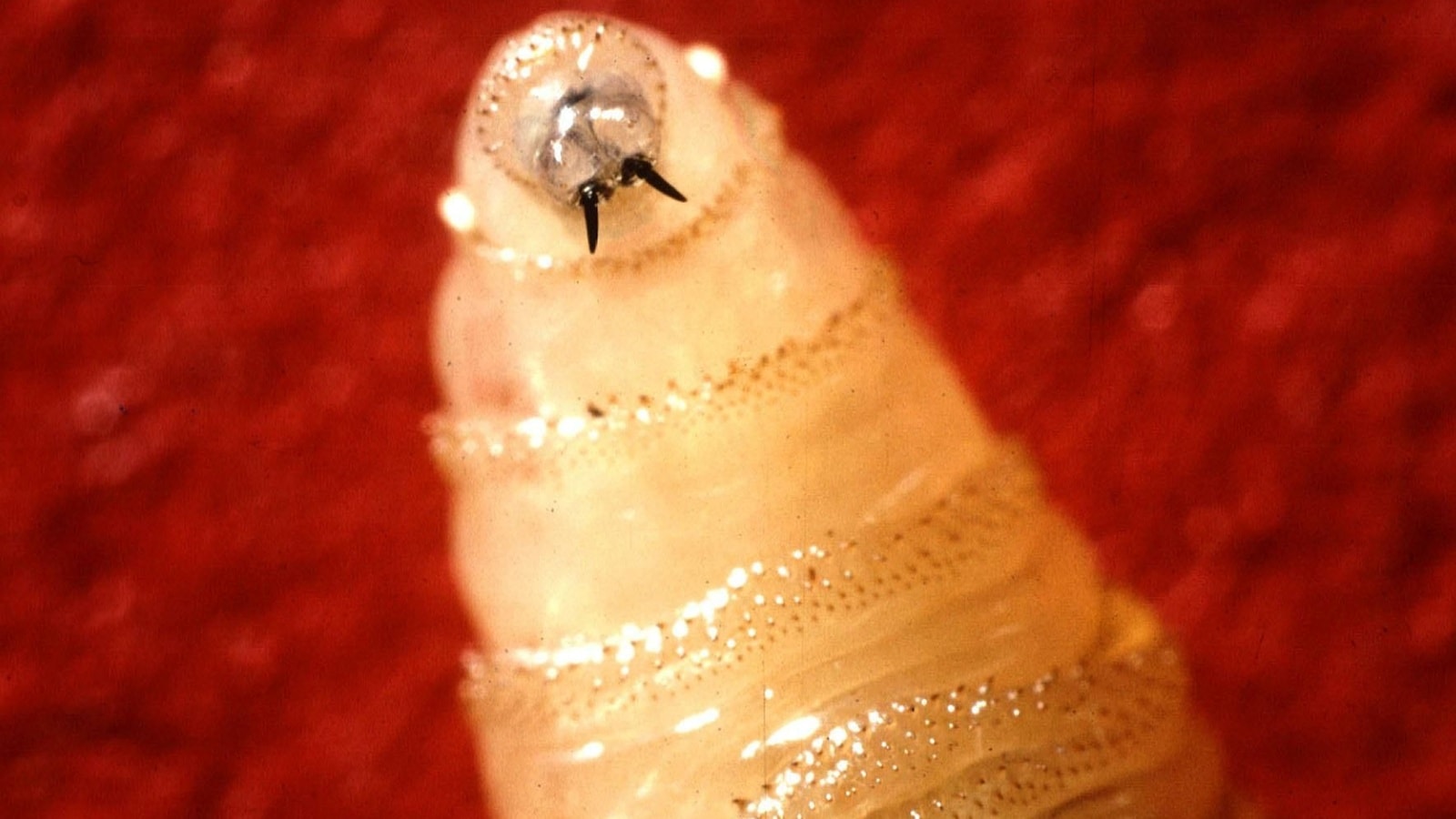
NWS is a pest that affects livestock, pets, wildlife, birds and sometimes even people. The NWS fly larvae (maggots) burrow themselves into the flesh of a living animal, causing serious damage if left untreated.
“One female can lay 200 to 300 eggs at a time and may lay up to 3,000 eggs during her 10 to 30-day lifespan,” the US Centers for Disease Control and Prevention (CDC) said.
A sample of the NWS has been taken to USDA’s National Veterinary Services Laboratories (NVSL) for confirmatory testing, the USDA posted on their X handle. They added that they have already activated personnel on the ground and are working with local partners.
A case of NWS may have been detected in South Texas. The sample is now at USDA’s National Veterinary Services Laboratories (NVSL) in Ames, lowa for confirmatory testing. We will provide updates the moment results are available.
We have already activated personnel on the ground…
— Dept. of Agriculture (@USDA) June 3, 2026
An outbreak of NWS in the US could impact the livestock industry heavily and cause a rise in beef prices. The USDA has predicted that this could cost the Texas economy $1.8bn in losses, news reports say.
“Mr. President, I am asking you to take direct control of this response. Cut through the bureaucracy, deploy SWASS immediately, and throw every available federal resource at this threat before it becomes a full-blown agricultural disaster,” said the Commissioner of the Texas Department of Agriculture, Sid Miller as posted by the Texas agriculture website.
Story continues below this ad
What has been done to prevent an outbreak?
A 20-km wide “control zone” has been established by the USDA around the site of the first infection along the South border to prevent an outbreak. The USDA is also “implementing quarantines, movement controls and surveillance in this area,” it said.
Sniffer dogs are being used to detect the insects. USDA plans to deploy hundreds of millions of genetically-altered sterile screwworm flies. The females mate only once in their lifetime, and any eggs they lay will be unfertilised and will not hatch.
The Sterile Insect Technique has been in use for many years to control a variety of insect populations, including fruit flies and mosquitos.
Although, experts told BBC that the supply of the sterile flies is too low to make an impact immediately and halt the population growth of NWS. Officials say at least 600 million sterile screwworm flies need to be bred each week to combat the outbreak, but currently, US facilities in the US and Mexico are capable of producing only 100 million sterile screwworm flies.
Story continues below this ad
Adult screwworm flies are capable of travelling many kilometres in search of hosts, so infestations spread quickly across the livestock herds, wildlife and even between humans.
Can this impact humans as well?
The threat to humans, albeit low, is significant to note. Last year, the US Department of Health and Health Services (HHS) reported its first ever human case of the NWS. The infected patient had returned from El Salvador to the US. The case was investigated by the (CDC) and the patient was said to make a full recovery.
The current case of the NWS infected calf becomes important because it is the first time the NWS was detected in animals in the US since it was declared eradicated in 1966. This was followed by the massive release of sterile flies which killed off any existing populations.
The parasite reappeared in Panama, Costa Rica, Guatemala, Nicaragua, Honduras, Belize and El Salvador before it moved to Mexico in 2023.
Story continues below this ad
How does this affect beef prices?
The US halted cattle imports from Mexico for the past year, stating that the insect had spread further in Mexico. Typically, the US imports more than one million cattle from Mexico annually.
A US outbreak would further the shortage of cattle supply and put the livelihoods of cattle herders. The first confirmed case could also lead to beef prices rising further. Due to NWS being eradicated for years now, most cattle ranchers don’t have methods to diagnose and treat screwworm, experts say, as reported by Al Jazeera.