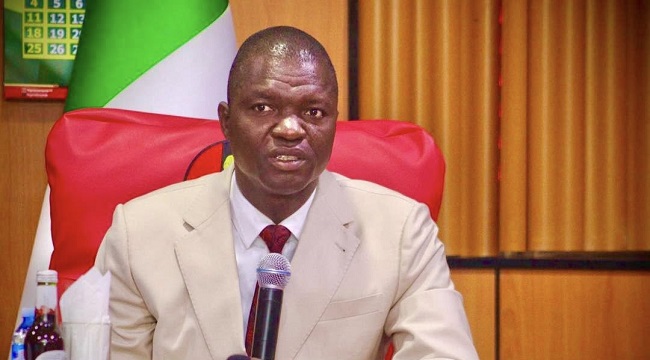
The Governor of Ebonyi State, Francis Nwifuru, has called for the creation of a natural disaster fund by the Federal Government for the state to mitigate the impact of Disasters on the people.
He made the appeal when he received members of the Revenue Mobilisation, Allocation and Fiscal Commission who are in the state for the 2026 data verification exercise.
READ ALSO: Tinubu Approves N108bn For States To Tackle Flood, Erosion
In a press statement released on Monday and signed by the Chief Press Secretary to the governor, Monday Uzor, Nwifuru told the team that a lot of natural disasters had befallen the state, requiring urgent assistance from the Federal Government.
“A lot of disasters have happened in this city. Wind and thunderstorms unroofed almost all the buildings inside this Government House. The natural disaster is costing us huge resources to rebuild.
“Unfortunately, mining pits impose serious environmental hazards which the state is remedying, yet we are not benefiting from them since mining licenses are not granted by the state government. And so this is why we are asking for the natural Disaster fund,” Nwifuru was quoted as saying.
He expressed optimism that the ongoing nationwide revenue data collection would boost the revenue accruing to the state.
Governor Nwifuru observed that poor data collection inadvertently yields errors, which, if relied upon, mislead, but expressed confidence in the calibre of members of the team.
“The confidence reposed on the Commission is evident in the quality of people here, because the Commission has shown capacity and commitment in the discharge of their assignments.
“It will make sense if the collected data should be updated and analysed to reflect current realities,” he added.
Earlier, the team leader, Henry Awuregu, explained that the visit is informed by the ongoing national data verification exercise of the RMFAC.
Awuregu, who represents Ebonyi State in the RMFAC, said revenue mobilisation is predicated on equity and fairness in sharing national resources.
“The revenue allocation system in Nigeria is built on a set of indices that seek to ensure fairness, equality, and justice in the sharing of national resources.
“Over time, however, socioeconomic realities evolve, where population dynamics change, infrastructure expands, developmental gaps shift, and new challenges emerge,” he was quoted as saying.
“It therefore becomes imperative that the data underpinning these indices are periodically verified and updated to reflect present-day realities.”
“Therefore, it has become necessary to validate the integrity and accuracy of the data that will ultimately inform the distribution of revenue across the Federation,” he added.