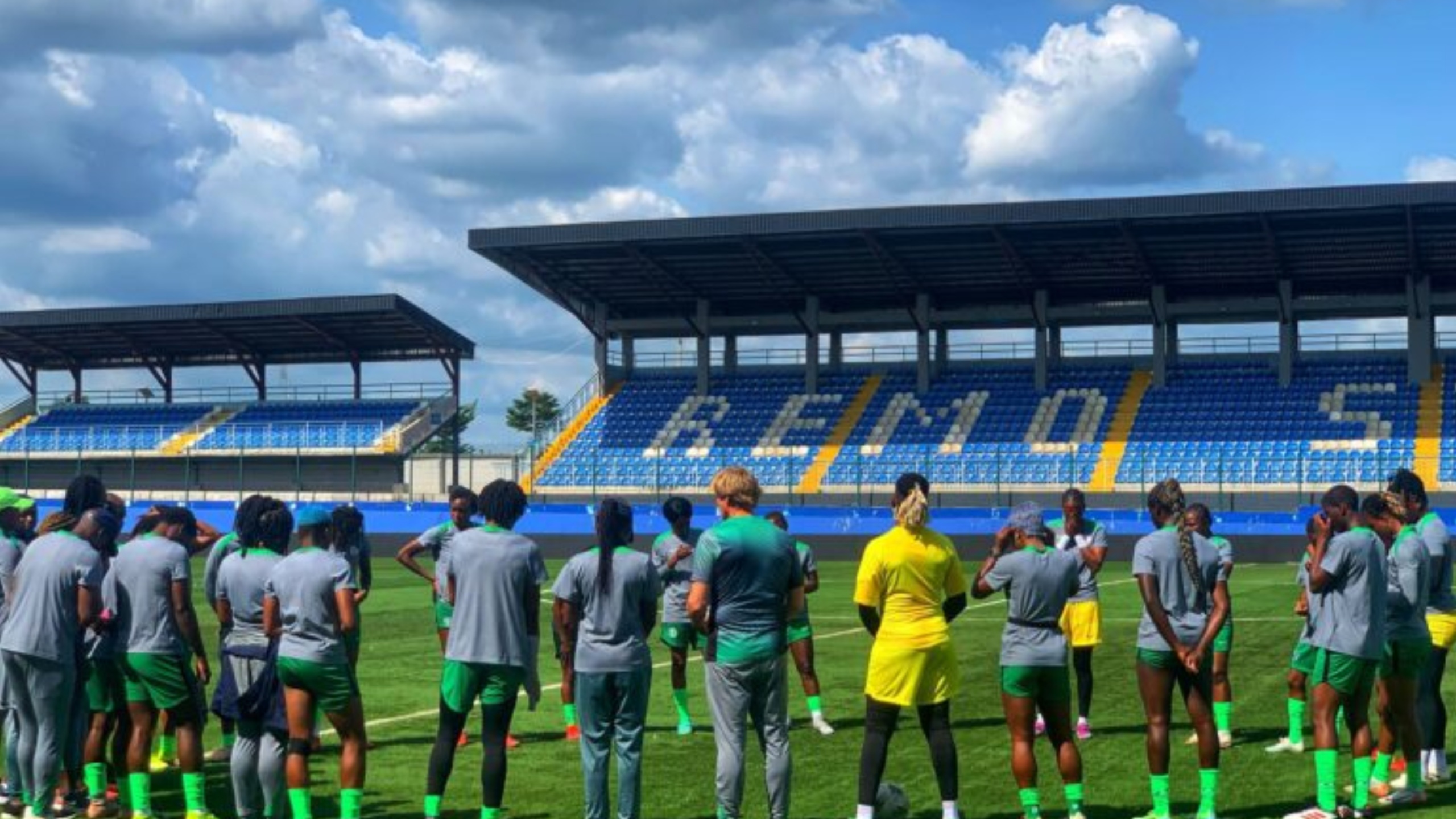
Norway’s preparations for the 2026 FIFA World Cup have been disrupted by extreme weather conditions after players, including Erling Haaland, struggled to cope with soaring temperatures during their first training session in the United States.
The Scandinavian side, led by Erling Haaland, were forced to modify parts of their training routine in Greensboro, North Carolina.
This was as temperatures approached 40 degrees Celsius.
The Norwegian Football Federation selected Greensboro as its World Cup training base because of its facilities and quiet environment, but the dramatic change in climate has presented an immediate challenge for players accustomed to cooler conditions.
Rather than reducing their workload, the squad introduced a series of measures aimed at managing heat stress and maintaining fitness levels ahead of the tournament.
Several players removed training shirts, socks, and boots during parts of the session to improve cooling, while coaches scheduled frequent hydration breaks to monitor fluid levels and reduce the risk of heat-related illnesses.
The team also adopted pre- and post-training cooling routines, including the use of ice baths and specialised equipment designed to keep body temperatures under control.
The heat challenge has become a growing talking point ahead of the World Cup, particularly for European nations preparing to compete in North America’s summer conditions.
FIFA has already introduced mandatory hydration breaks for every World Cup match as part of its new tournament regulations.
Under the revised protocol, play will be stopped around the 22nd minute of each half for a three-minute cooling break regardless of weather conditions or stadium design.
The governing body previously relied on the Wet Bulb Globe Temperature index to determine whether cooling breaks were necessary, but has now adopted a universal approach for all matches.
The new system means every team will receive scheduled hydration intervals throughout the tournament, a move designed to protect player welfare and ensure consistent playing conditions across all venues.
Norway will continue preparations in Greensboro ahead of their opening Group I match against Iraq on June 17, 2026 as they adapt to conditions expected to be among the most demanding of the tournament.
The situation has also highlighted a potential advantage for teams from Africa, Asia, and Latin America, whose players are generally more accustomed to competing in high-temperature environments than many European nations.