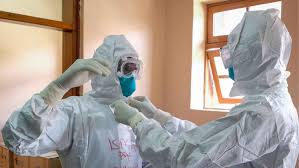
(Medical experts practicing the Safety Measure. Photo Credit: Vanguard News)
Use alcohol-based hand sanitizers or wash your hands frequently with soap and water, especially after handling ill people or touching public surfaces.
Steer clear of blood and bodily fluids including perspiration, vomit, urine, feces, or saliva from anyone exhibiting symptoms of sickness.
Don’t touch dead bodies or engage in risky funeral customs without the right safety precautions and qualified medical personnel.
Steer clear of bush meat and interaction with wild animals, particularly fruit bats and monkeys, as they may harbor the Ebola virus.
Keep an eye out for signs including rapid fever, weakness, diarrhea, vomiting, sore throat, and unexplained bleeding.
If symptoms emerge after recent travel or contact with a suspected Ebola patient, get medical help right once.
Since early discovery and isolation are essential to stopping the spread, avoid self-medicating or concealing symptoms.
Rely solely on updates from health officials and reliable news sources to prevent the spread of misinformation or fear.
At airports, borders, hospitals, and communities, assist health officials with contact tracking and screening.
Maintain a clean atmosphere and follow excellent hygiene practices, such as routinely disinfecting commonly touched surfaces.
Nigeria’s best defense against any potential Ebola outbreak, according to doctors affiliated with the Academy of Medical Sciences of Nigeria, continues to be public collaboration, early reporting, and surveillance.