The recent graduation of 812 retiring military personnel at the Nigerian Armed Forces Resettlement Centre (NAFRC), Oshodi, Lagos, was more than a ceremonial farewell to military service as it showcased the centre’s ongoing efforts to prepare service members for life beyond the barracks through vocational training, entrepreneurship education and institutional reforms. Beyond this, Chiemelie Ezeobi writes that its quest to modernise retirement curriculum to include digital entrepreneurship, agribusiness, renewable energy and information technology, while also upgrading infrastructure and exploring new support programmes for military families, reflects a broader commitment to ensuring that personnel who have spent decades safeguarding the nation are equipped to remain productive and economically independent after leaving active service
As military authorities push to modernise retirement preparation, the Nigerian Armed Forces Resettlement Centre (NAFRC) is expanding its curriculum beyond traditional vocational training to include digital entrepreneurship, agribusiness, renewable energy, information technology and modern business management.
The reforms are part of a wider effort to ensure that military personnel who have spent decades safeguarding the nation leave active service equipped not only with honour and commendations, but also with the skills needed to remain productive and economically independent in civilian life.
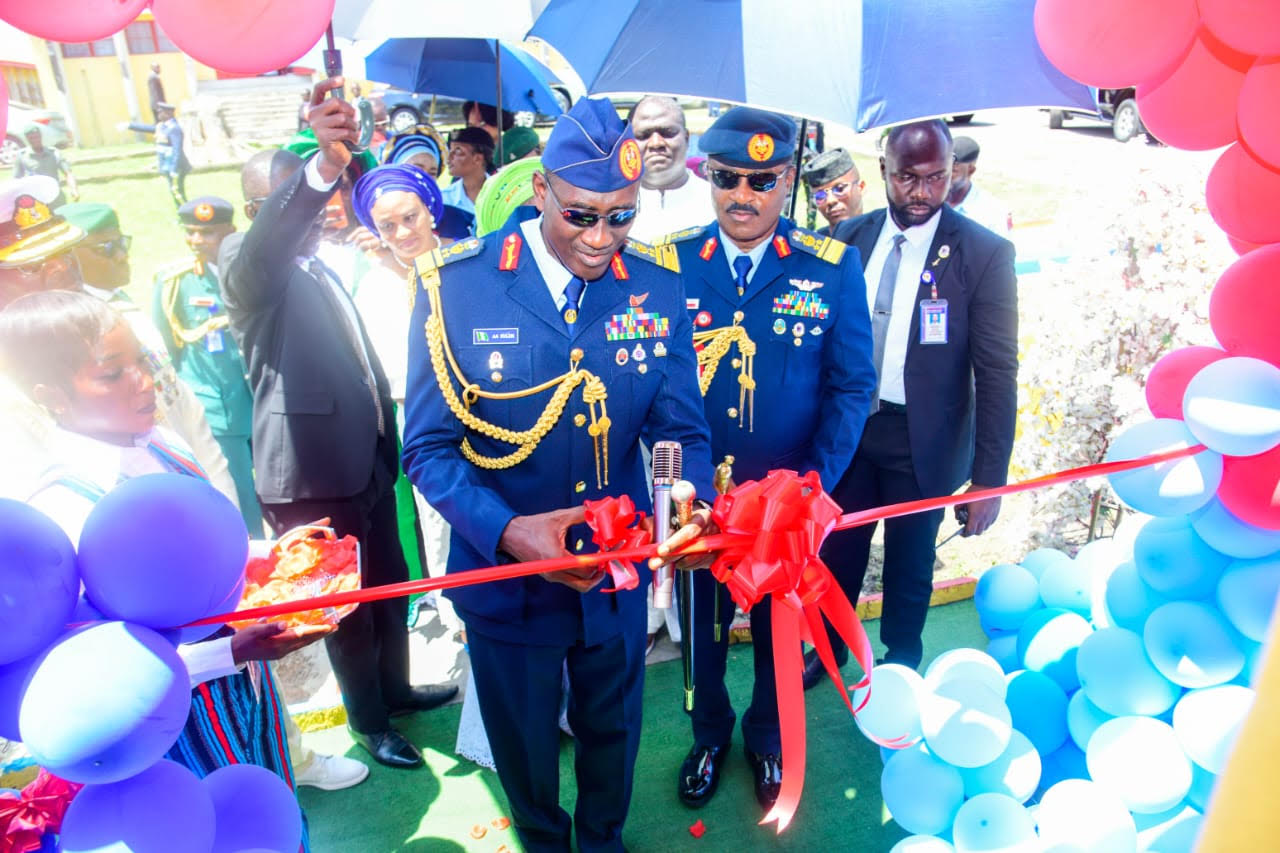
That vision was on display at NAFRC, Oshodi, Lagos, on Thursday as 812 retiring military personnel completed the institution’s Course 01/2026 pre discharge training programme, highlighting what military authorities describe as a growing shift from retirement preparation to retirement empowerment.
Representing the Chief of the Air Staff, Air Marshal Hasan Bala Abubakar, at the graduation ceremony, the Air Officer Commanding Logistics Command, Air Vice Marshal Abubakar Abdul Suleh, described the occasion as a celebration of courage, discipline and patriotic service.
He commended the retiring personnel for their sacrifices and unwavering commitment to national security, noting that many had distinguished themselves in counter insurgency operations, internal security duties, peacekeeping missions and humanitarian interventions within and outside Nigeria.
According to him, the graduates are leaving active service with honour after making significant contributions to the defence, unity and territorial integrity of the country.
Suleh urged them to approach retirement with the same resilience, discipline and determination that defined their military careers, stressing that the vocational and entrepreneurial skills acquired during the six month programme would serve as valuable tools in their post service lives.
“The vocational and entrepreneurial skills acquired during the six month programme will serve as valuable tools in your post service lives,” he said.
He also advised the retirees to invest wisely, avoid fraudulent schemes and continue to uphold the values of integrity, loyalty and selfless service that earned them respect during their years in uniform.
Preparing Soldiers for a New Reality
For the Commandant of NAFRC, Air Vice Marshal Nnaemeka Ignatius Ilo, the graduation ceremony represented more than the completion of a training programme.
He described it as the beginning of a new phase of productivity and opportunity for retiring personnel and reaffirmed the centre’s commitment to equipping military retirees with practical vocational, entrepreneurial and management skills.
Ilo said that since assuming office on December 15, 2025, his administration has pursued an ambitious reform agenda centred on infrastructure renewal, curriculum enhancement, personnel welfare and stronger community engagement.
According to him, the centre has recorded significant improvements, including extensive renovation projects, upgraded accommodation facilities, installation of additional solar powered streetlights and the conduct of a major medical outreach programme at the Ladipo International Auto Spare Parts Market.
Beyond physical infrastructure, the centre has also reviewed its training curriculum to better align with current economic realities and emerging opportunities.
The revised programme places greater emphasis on digital entrepreneurship, information technology, agribusiness, renewable energy, vocational innovation and modern business management, reflecting the changing demands of Nigeria’s economy.
Beyond Vocational Training
One of the emerging priorities of the centre is strengthening support systems for military families, particularly those who have lost loved ones in service.
To this end, Ilo disclosed that discussions are ongoing with the Tony Elumelu Foundation on a proposed empowerment programme for widows and children of fallen military personnel.
The initiative, he said, is aimed at creating economic opportunities and enhancing support for military families whose sacrifices often continue long after service has ended.
The Commandant expressed gratitude to President Bola Ahmed Tinubu, the Ministry of Defence, the Chief of Defence Staff and the Service Chiefs for their support, which he said had contributed significantly to the institution’s recent achievements.
He also acknowledged the contributions of corporate organisations and development partners from the logistics, pharmaceutical, financial and manufacturing sectors for supporting the successful execution of the programme.
The Numbers Behind the Programme
Earlier, the Director of Training, Brigadier General Isang Akpaumontia, presented the course report and disclosed that a total of 812 senior non commissioned officers from the Nigerian Army, Nigerian Navy and Nigerian Air Force were enrolled when the course commenced on January 9, 2026.
Following medical screening, 86 participants were found medically unfit and returned to their units, while 724 successfully completed all requirements for graduation and certificate awards.
Akpaumontia said participants received intensive training in 33 vocational and entrepreneurial disciplines, including information technology, agriculture, welding and fabrication, tailoring, bakery, photography, leather works, cosmetics production, security management and business development.
The programme combined practical training, entrepreneurship lectures, industrial attachments, study tours and counselling sessions aimed at preparing participants mentally, professionally and financially for life after military service.
He added that 71 female personnel successfully participated in the six month programme alongside their male counterparts, reflecting the increasing role of women across the Armed Forces.
As certificates were presented to the graduates, the ceremony underscored a growing recognition within the military that retirement planning can no longer be limited to traditional resettlement programmes.
Instead, the focus is increasingly shifting towards building entrepreneurs, business owners and skilled professionals capable of thriving in a rapidly changing economy.
For the hundreds of personnel leaving active service, the uniform may soon be retired, but the skills, leadership and discipline acquired through military life remain valuable assets.
Through its ongoing reforms, NAFRC is seeking to ensure that those assets continue to serve both the retirees and the nation long after their years in uniform have ended.