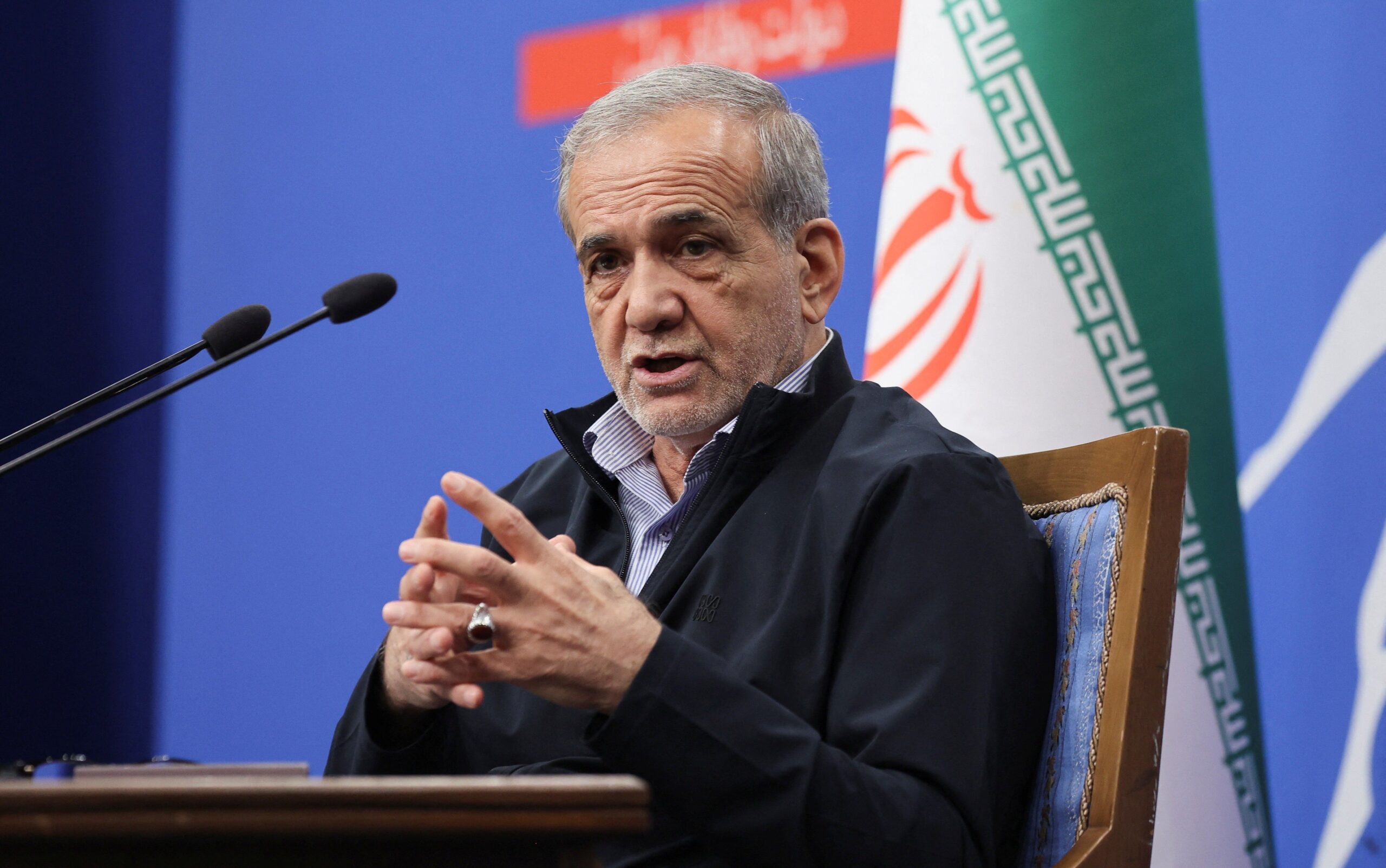
Iranian President Masoud Pezeshkian has submitted a letter of resignation to the office of Supreme Leader Mojtaba Khamenei, accusing the Islamic Revolutionary Guard Corps of effectively seizing control of the government and freezing him out of the country’s most consequential decisions, the London-based opposition outlet Iran International reported Sunday.
The Iranian government swiftly denied the report. Elias Hazrati, head of the government’s information committee, said in a late-Sunday statement that the resignation claims were completely false and that Pezeshkian remains in office and on the job.
Iran International, citing an unnamed Iranian official, said the letter argues that the IRGC has taken over large portions of the state apparatus and that the president and other senior civilian officials have been excluded from the central decision-making channels since the start of the war with the United States and Israel in February. Under the conditions he described, Pezeshkian told the supreme leader he is unable to run the government or fulfill his constitutional responsibilities and asked to step down.
The primary source of friction between Pezeshkian and the IRGC leadership, the official told Iran International, has been the conduct of the war and its cascading effects on the Iranian economy and daily life. The outlet’s reporting tracks a months-long pattern in which, according to its sources, executive authority has steadily shifted away from the civilian cabinet and toward senior Guard commanders and the supreme leader’s office, blocking both planned policy changes and ongoing diplomatic moves.
It is unclear whether Mojtaba Khamenei, who assumed the office of supreme leader on March 8 following the assassination of his father, Ali Khamenei, during the war, will accept the reported resignation. The younger Khamenei rose to power through the eight-day interregnum overseen by the Interim Leadership Council, on which Pezeshkian himself briefly served alongside Judiciary Chief Gholam-Hossein Mohseni-Eje’i and Alireza Arafi.
Pezeshkian, a 71-year-old reformist and former heart surgeon, took office in July 2024 after defeating hardline conservative Saeed Jalili in a runoff. His presidency was framed at the time as a tentative opening toward diplomatic engagement with the West, but the war that erupted in February 2026 and the assassination of Ali Khamenei the following month upended his domestic standing and accelerated the consolidation of authority by the Revolutionary Guard.
The reported resignation lands as Tehran and Washington remain locked in talks over a memorandum of understanding intended to wind down the conflict. President Donald Trump on Friday demanded amendments to the draft accord his envoys negotiated, particularly around the disposition of Iran’s enriched uranium and the reopening of the Strait of Hormuz, pushing the timetable for any final deal back by at least several days. The Iranian negotiating team has reported into Mojtaba Khamenei’s office and to senior IRGC figures, not to the president, according to recent Iran International reporting.
Iran International has been designated a terrorist entity by Tehran and operates from London under the protection of British authorities. Its reporting on internal Iranian politics has drawn both attention and skepticism, with critics inside Iran accusing it of amplifying speculation against the regime and supporters in the diaspora pointing to its track record of breaking material later confirmed by other outlets. The Sunday report has not been independently confirmed by Iranian state media or international wire services.
The presidency of the Islamic Republic, while subordinate to the supreme leader under the country’s constitutional structure, has historically retained meaningful authority over economic policy, the cabinet and diplomatic outreach. A resignation by Pezeshkian, if it stands, would be the first such departure from the office since the 1981 resignation of Abolhassan Banisadr and would mark an open rupture between the civilian government and the security establishment at one of the most volatile moments in the Islamic Republic’s history.
The president’s own office has not commented publicly beyond the Hazrati denial. Iran International said it was continuing to seek confirmation of the letter’s status and any response from the supreme leader’s office.
(YWN World Headquarters – NYC)