For decades, Nigeria’s security architecture has resembled a vast umbrella stretched across a nation of more than 200 million people—ambitious in scope but often too distant from the communities it seeks to protect. As insecurity evolved from isolated criminality into a complex web of banditry, terrorism, kidnapping and communal violence, calls for a more responsive policing model grew louder.
Today, Nigeria stands at what could be a defining moment in its democratic evolution. The push for state police, once viewed as a contentious political proposition, is increasingly being embraced as a practical reform capable of bringing security closer to the people. More significantly, supporters argue that the initiative would align Nigeria with many advanced federal democracies—including the United States, Canada, Germany, Australia and India—where policing responsibilities are shared across national and subnational governments.
As the National Assembly advances legislation to establish state police, advocates believe the country is moving towards a security system designed not just to fight crime, but to strengthen local accountability, deepen community trust and create safer environments for economic growth and national development.
A Response To New Security Realities
The growing momentum behind state police is driven largely by the realities confronting communities across Nigeria.
For years, security experts have argued that a centrally controlled police force cannot effectively meet the demands of a country as geographically vast and culturally diverse as Nigeria. Local threats often require local intelligence, rapid responses and deep knowledge of terrain and communities.
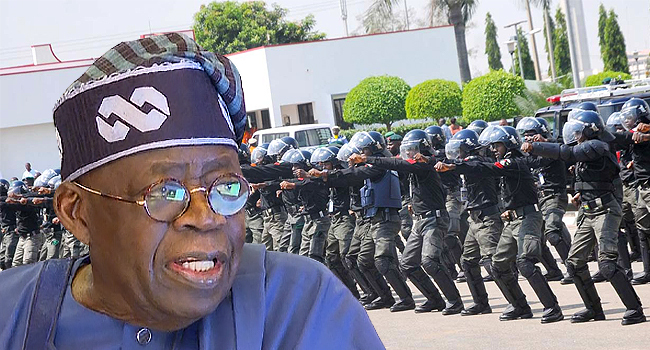
President Bola Tinubu amplified this argument in February when he urged the Senate to begin constitutional amendments for the establishment of state police.
“Nigeria is in an extremely bigger challenge. We are facing terrorism, banditry, insurgency,” the President said.
Calling for urgent action, he added: “What I want to ask for tonight is for you to start thinking how best to amend the Constitution to incorporate the state police. This is for us to secure our country, take over our forest from marauders, free our children from fear.”
For many supporters, that appeal captured the central objective of the reform: creating security institutions that can respond more effectively to threats at the grassroots level.
Growing National Consensus
Perhaps the most striking aspect of the state police conversation is the breadth of support it has attracted across regions and political divides.
In November 2025, Ogun State Governor Dapo Abiodun described state police as “non-negotiable” for effective grassroots security during discussions among Southern governors. His position reflected a growing consensus among state leaders that communities require security structures tailored to local realities.
Support has also emerged from the North, where traditional rulers, political leaders and stakeholders have become increasingly vocal about the need for decentralised policing. At a regional security meeting in December 2025, Northern leaders endorsed state police as part of broader measures aimed at tackling insecurity and protecting economic activities.
The convergence of views from both northern and southern leaders has helped transform state police from a regional demand into a national reform agenda.
Adding to the momentum, Aare Ona Kakanfo of Yorubaland, Gani Adams, expressed confidence that the initiative could significantly improve security outcomes.
According to him, insecurity in Nigeria could be substantially resolved within six months if state police is established and effectively implemented.
Learning From Global Federal Democracies
One of the strongest arguments for state police is that it reflects a model successfully adopted by many developed nations.
In countries such as the United States, state and local police departments operate alongside federal agencies. Canada combines municipal, provincial and federal policing structures, while Germany’s states maintain their own police services under a coordinated national framework.
These systems allow local authorities to respond swiftly to community concerns while national institutions focus on broader threats such as terrorism, organised crime and border security.
Supporters believe Nigeria can adapt similar principles to suit its unique realities. Officers recruited from local communities are expected to possess stronger knowledge of local languages, customs, geography and criminal networks, improving intelligence gathering and strengthening relationships with residents.
The objective, advocates say, is not to weaken federal policing but to complement it with more agile and community-focused structures.
Safeguards, Reforms And The Road Ahead
Despite widespread support, concerns remain about the potential misuse of state police by political actors.
Political scientist Jibrin Ibrahim has warned that Nigeria could face challenges if state police forces are placed entirely under the control of governors without sufficient safeguards.
“However, my biggest concern is that we know the way and level at which the state governments are being governed.
“We know the way state governments go to oppress the opposition, and make sure their powers are unchallenged,” Ibrahim said.
“Within this political context, I have always argued that it is not wise to allow such people who want to eliminate political opponents to be in control of state police because they won’t use it against criminals but against their perceived opponents or enemies.
“The idea of state policing is worrisome, and I think if we go ahead to set them up, and they are under the control of state governance, we are in for trouble”, he said.
His concerns reflect longstanding fears that state police could be used for political intimidation or electoral manipulation.
To address such issues, lawmakers are focusing heavily on accountability mechanisms.
In March, former Inspector-General of Police Tunji Disu submitted a framework on state policing to the Senate, outlining operational structures and safeguards. The framework seeks to ensure professional standards, independent oversight and effective coordination between federal and state security agencies.

Momentum accelerated further in June when Senate Leader Opeyemi Bamidele announced that deliberations on state police would be prioritised within the constitutional review process.
The strongest signal yet came on June 11 when the House of Representatives overwhelmingly passed the state police bill, bringing the reform significantly closer to becoming law.
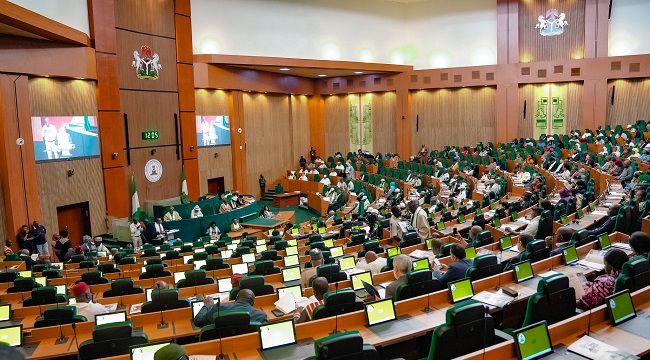
For many Nigerians, the debate has now shifted from whether state police should exist to how it can be implemented successfully.
As the country seeks lasting solutions to its security challenges, state police is increasingly viewed as part of a broader modernisation of governance—one that places communities at the heart of public safety. If successfully implemented with strong safeguards and accountability, the reform could mark a historic step towards a safer, more responsive and globally competitive Nigeria.
The post Is State Police Nigeria’s Journey Towards Smarter, Stronger Grassroots Security? appeared first on Channels Television.