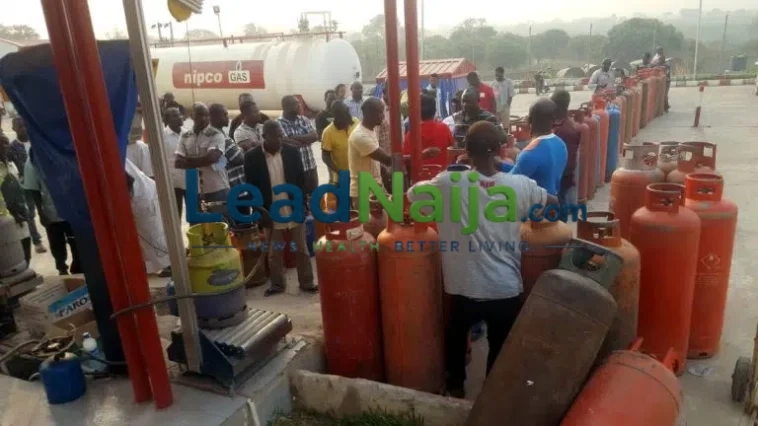
Despite holding Africa’s largest proven gas reserves and recording increased production, Nigeria is facing a growing shortage of Liquefied Petroleum Gas (LPG), popularly known as cooking gas.
The shortage has continued to push retail prices higher and place additional pressure on households and businesses across the country.
According to Vanguard, data obtained from the Nigerian Upstream Petroleum Regulatory Commission showed that 62 per cent of Nigeria’s gas output in the first two months of the year was exported, leaving only 38 per cent for domestic consumption.
Industry analysts warned that a supply structure designed when gas usage was relatively low can no longer support current demand.
According to an industry report titled Nigeria LPG Production & Supply Matrix (2023–2026), national cooking gas consumption rose by 20 per cent to 1.8 million metric tonnes in 2026 from 1.5 million metric tonnes in 2023.
However, estimated national supply stood at between 1.55 million and 1.65 million metric tonnes, creating a supply gap.
The report noted that domestic production has increased with contributions from facilities including the Dangote Refinery, Nigeria LNG and several gas processing plants.
As a result of the supply-demand imbalance, retail cooking gas prices have climbed sharply.
In many parts of the country, LPG now sells for between ₦1,700 and ₦2,000 per kilogramme, compared to an average of about ₦1,100 per kilogramme earlier in the year.
Industry operators warned that prices could continue rising if structural challenges remain unresolved.