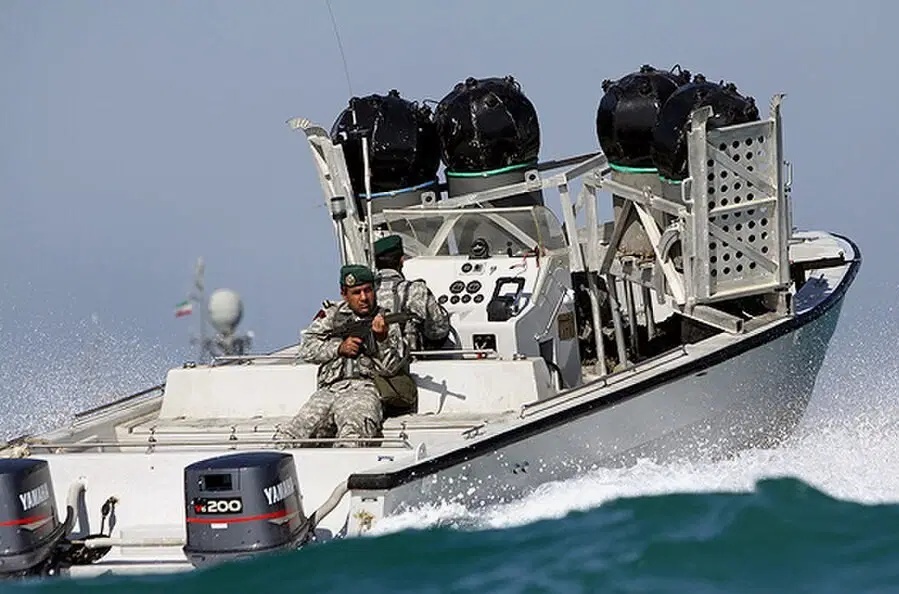
U.S. intelligence officials have assessed that Iran is capable of effectively blocking the Strait of Hormuz at any time it chooses, which means that as a result of the war, Iran has gained the ability to harm the global economy, CNN reported.
One source quoted in the report said: “We have now handed Iran de facto control over the strait – a weapon more powerful than any nuke.” Iran does not need a large navy to threaten global shipping, but can do so using small boats, drones, and missiles.
“Losing control of the Strait will be the biggest blunder of this era because it is a card the US cannot counter without going all in,” a source involved with the military planning for the war said. “Now there is no way to undo the strait without amassing a massive force.”
Another source said that Iran has also learned that asymmetric attacks against the energy infrastructure of Gulf states serve as a powerful and strategic pressure tool. Gulf countries have taken steps to improve relations with Iran, which some describe as a form of “protection funds.”
Meanwhile, the Wall Street Journal reported Tuesday that Washington has also agreed to allow Tehran to immediately resume oil and fuel exports without sanctions, unlike the situation before the war began. According to the report, this marks the first time US officials have acknowledged that Iran has effectively improved its position compared to where it stood before the war.
Under the agreement, the US will allow Iran to begin selling oil and fuel immediately as part of the framework ending the war, providing Tehran with an early financial incentive to halt hostilities. Waivers on oil-sale sanctions are expected to take effect immediately upon signing the agreement and include authorization for banking, shipping, and insurance services necessary to facilitate the transactions.
At the same time, the organization United Against Nuclear Iran reported that an Iranian oil tanker carrying crude oil departed from Chabahar Port, crossed the U.S. blockade line, and sailed beyond the Gulf of Oman while keeping its tracking signal active. According to the report, this is the first time an Iranian tanker has operated in this manner since the American maritime blockade was imposed in April.
The understandings between the sides, which were reportedly signed electronically on Sunday and are expected to be finalized later this week, include an extended ceasefire and the lifting of reciprocal maritime restrictions in the strategic Strait of Hormuz. The move is intended to pave the way for broader negotiations on the future of Iran’s nuclear program.
A senior U.S. administration official said that while immediate relief regarding oil exports would be granted, long-term sanctions relief would depend directly on Iran’s compliance with U.S. demands concerning the Strait of Hormuz and the nuclear issue. The official added that Iran will not immediately gain access to billions of dollars currently frozen in foreign accounts.
The memorandum also outlines the possibility of broader economic relief in the future, including access to portions of Iran’s estimated $100 billion in frozen assets and the establishment of a $300 billion reconstruction fund for war-related damage, provided Iran destroys its enriched uranium stockpile and dismantles its nuclear program.
A Trump administration official commented, “We would be willing to be extraordinarily generous in opening their economy and providing sanctions relief. Everything is on the table, and at the same time, nothing is on the table unless it comes with real performance.”
(YWN Israel Desk—Jerusalem)