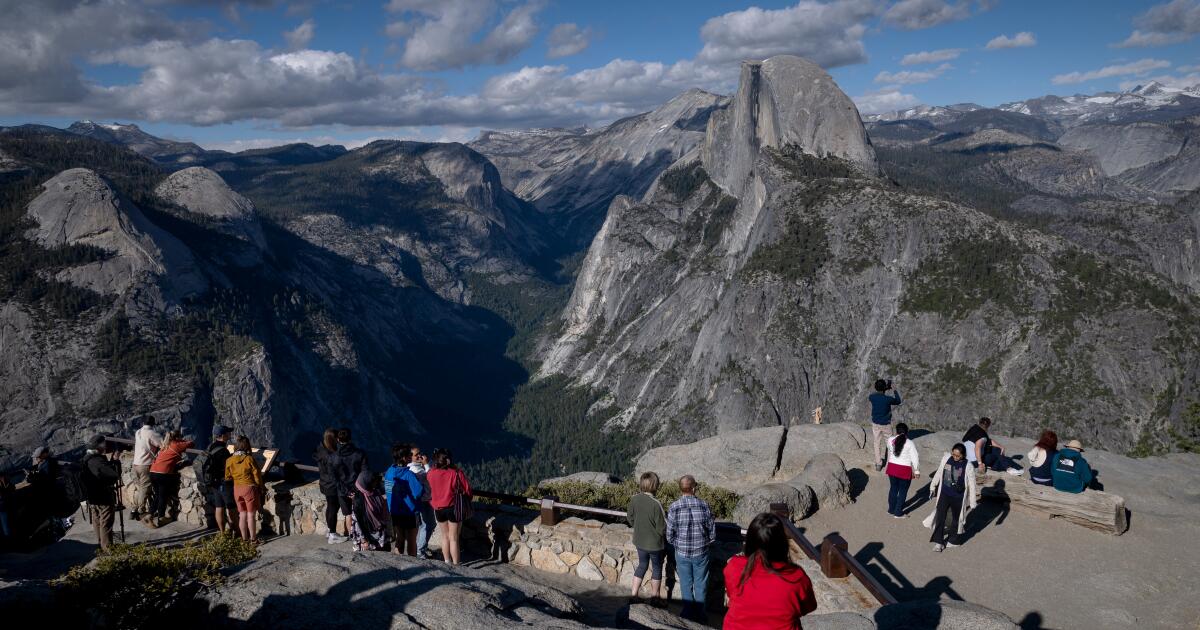
The Trump administration is reportedly ordering staff not to confirm deaths or details about severe injuries at U.S. national parks — but officials are adamant the policy is not meant to conceal information from the public.
In a statement to The Times, an Interior Department spokesperson said the “narrative” that the agency is trying to obscure information “is false and reflects a significant mischaracterization of the Department’s guidance.”
An internal memo, circulated in December 2025 and first reported by The Washington Post this week, states that Department of the Interior employees, including National Park Service staff, are not permitted to confirm deaths that take place in federal park facilities. Only “appropriate authorities” can confirm a fatality after coordinating with the communications office and notifying the decedent’s next of kin, the Post reported, citing the memo.
The memo did not specify what agency would be tasked with confirming deaths, according to the Post.
The Department of Interior did not respond to a request from The Times asking to review the memo. But as reported by the Post, it states that the department “shall not confirm the severity of injuries” and “may state only that an individual was transported and the method of transport.”
Staff are permitted only to confirm that an incident happened, the general location where it occurred and that authorities are responding, according to the Post.
This month, Park Service staff have offered only minimal details about two deaths at California national parks, including a fatality Saturday at Yosemite in which a young man perished after falling from a nearly 600-foot waterfall.
A Yosemite National Park spokesperson would only confirm the date of the incident, that it involved a 23-year-old man and that the agency is investigating.
“Emergency personnel responded to the incident, which remains under investigation. No additional information is available at this time,” the spokesperson wrote.
The Department of Interior also hasn’t issued a public statement on a death in Sequoia National Park, in which a teen was killed after slipping into a river.
In an email, an Interior Department spokesperson told The Times that “the guidance was developed to create a more consistent approach to incident communications across the Department and is not intended to conceal fatalities or delay information.”
“We continue to provide public safety information, statements, news releases, and incident updates as appropriate, while respecting investigative processes, privacy considerations, next-of-kin notifications, and, in some cases, requests from family members not to release identifying information.”
Critics of the new policy, however, say that communicating basic information about deaths at parks is necessary because it can help make visitors aware of possible risks so they can take precautions.
For years, the Park Service would frequently issue press releases on its website within days of a death. The agency issued press releases on at least six deaths in June, including three heat-related fatalities at Grand Canyon National Park and a death that resulted from a paramotor crash in Arizona.
In the Arizona press release, however, the agency did not specifically state the pilot died. Rather, it said the person was “transported to the local coroner’s office.”
From 2014 to 2019, an average of 358 deaths were reported annually in national parks, according to public data. A good share of those were the result of motor vehicle crashes, drowning and falls, though the figures also include instances of suicide and homicide, as well as deaths stemming from a medical issue.