Nearly 5,000 people renounced their status as Americans in 2025, according to data from the Internal Revenue Service, marking the highest number of people to permanently give up their ties to the United States since 2020.
Thousands of people were listed on the Federal Register’s record of people who chose to expatriate, which tracks the number of people who give up their citizenship – often a tax-related reason for American citizens living abroad, or long-term residents who are treated as U.S. citizens by the IRS.
But for some, it’s a personal decision.
Lily, an American woman living in Switzerland who has Belgian citizenship, told Americans Overseas, an organization that provides tax assistance for U.S. citizens abroad, that renouncing her citizenship was “a form of rebellion” against the U.S.
Erin Klatt, an American living in New Zealand, told CNN she chose to give up her citizenship for financial and political reasons after deciding to permanently resettle.
“I never felt overly patriotic or connected to the country,” Klatt told CNN, saying she was disappointed in the political direction of the country under President Donald Trump.
One man living in London told the Washington Post in October that he “wouldn’t be doing this if it weren’t for the election.”
“I just couldn’t understand, and still can’t, how a third of Americans can think a felon and sex offender is the right guy for the job,” the unnamed British man said.
Since retaking the White House, Trump has implemented policies that have made life less accessible for groups of people in the U.S. For transgender people, the president has revoked the ability for a person to declare their preferred gender on passports, banned transgender people from becoming part of the military and sought to ban athletes from competing on the sports team that aligns with their gender.
Every year, some 3,000 to 5,000 people expatriate from the U.S.
For the most part, the decision is financial because the U.S. uniquely taxes income based on citizenship, not residency. That means Americans who live abroad are required to file annual returns with the IRS – even if they’ve lived outside the U.S. for most of their life.
Renouncing citizenship or moving to end long-term residency is a lengthy process riddled with administrative headaches, per the process described by the State Department.
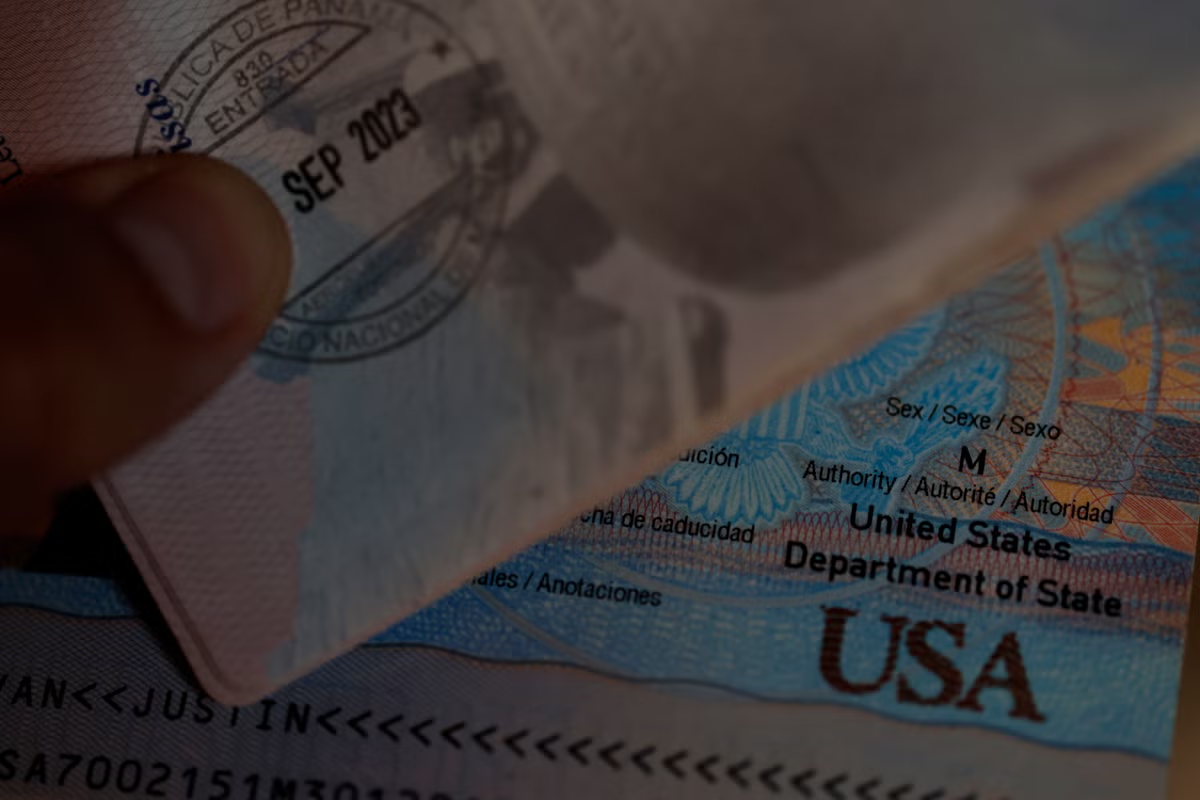
A person must request a Certificate of Loss of Nationality first by contacting the consulate or embassy where they reside. They must attend two interviews with a U.S. diplomatic or consular office abroad, one of which must be in-person. They also must take the oath of renunciation in-person and acknowledge that doing so may result in becoming stateless.
In 2024, approximately 4,800 people also chose to renounce their attachment to the U.S. But slightly more, roughly 4,900, made that same decision in 2025.
Even more people are expected to renounce their citizenship in 2026, in part because the U.S. significantly dropped the cost of consular fees. Before April, the fee was $2,350, but it is now $450.