Lawmakers advance sweeping security reform amid escalating militia violence, mass kidnappings, and growing fear across Nigeria’s vulnerable Christian regions.
By Ebere Inyama
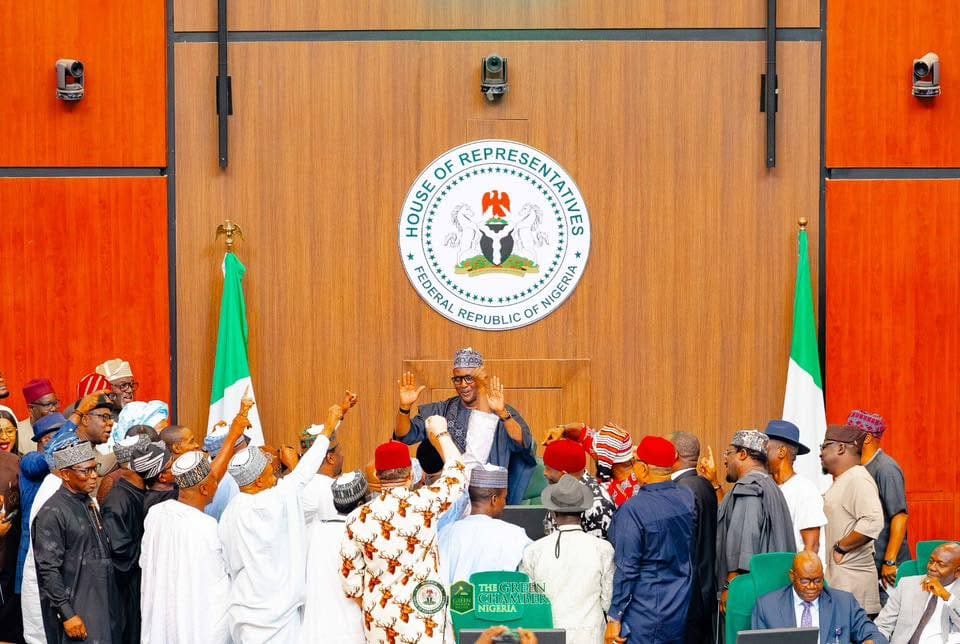
ABUJA, Nigeria — With terror attacks surging and Christian communities pleading for protection, Nigeria’s House of Representatives has passed a landmark bill to establish state police forces, pushing forward the country’s most significant security reform in decades.
The bill, titled “A Bill for an Act to Alter the Constitution of the Federal Republic of Nigeria 1999 to Provide for the Establishment of State Police; and for Related Matters (Sixth Alteration) Bill, 2026,” was approved on Thursday 11 June, 2026, during a plenary session presided over by Speaker of the House, Tajudeen Abbas.
The measure sailed through the House with 289 votes to four. It now heads to the Senate and, if approved, will be forwarded to the 36 state assemblies, where two‑thirds must endorse it before it can reach the president for assent.
Relief underway for persecuted Christians: U.S lawmaker
In a post via x, shortly after the passage of the state police bill by the House of Representatives, U.S. Congressman Rep. Riley Moore, welcomed the passage of Nigeria’s State Police Bill by the House of Representatives, describing it as a key step toward tackling the persecution of Christians in the country.
“I am thankful to see that Nigeria’s House of Representatives passed this important policy that I’ve been calling for since @POTUS first asked me to investigate the genocide against Christians in Nigeria”, Moore wrote via x.
“President Tinubu deserves credit for supporting this legislation and urging its passage through Nigeria’s parliament, and I hope to see him continue pushing on this issue,” he continued in the post.
“There’s still a way to go before state level police forces will be in place, but this is a sign that all our hard work is paying off,” Moore added.
Security expert reacts
Speaking to TruthNigeria, global security strategist Amb. (Dr.) Sylvester Okere, CEO of Champion Investigations & Security Consulting Services (USA), said creating state police in Nigeria is a “commendable and long‑overdue step toward addressing the nation’s security challenges.”
“Unlike the state police in the USA whose lack of deep community integration limit their ability to prevent localized, everyday neighborhood crime, Nigerian state police officers would possess a deep understanding of local terrain, culture, and languages, enabling highly effective intelligence gathering and swift responses without requiring federal clearance”, Okere told TruthNigeria.
“Handling state-level crimes will relieve the Nigeria Police Force (NPF) and military, allowing them to focus on terrorism and national threats”, he continued.
“While state police cannot lead the assault against transnational terror networks, they are vital for long-term stability through specific, localized functions such as providing
local intelligence on insurgent supply lines and securing towns cleared by the military so that combat troops can stay on the offensive”, Okere added.
The challenges ahead
A new analysis by Business Day suggests that establishing and sustaining a functional state policing system could cost Nigerian states N120 bn ($87m).
The analysis based on globally referenced police – population benchmarks and current estimates for police training and operational equipment in Nigeria indicates that a medium sized state with a population of 5 million people could require nearly 50 billion naira ($36m) simply to recruit, train and equip a police force excluding infrastructure, salaries, vehicles, weapons and technology.
Perhaps, the biggest challenge which the State policing system in Nigeria would face when it eventually becomes operational is provision of funds required for its take – off.
“More than half of the states in the country struggle to meet their financial obligations to their workers due to the scarce resources in those states and an additional wage bill for state policing may be a problem”, said Constitutional lawyer, Igene A. Amos.
With a huge debt burden facing most states in Nigeria, state governments may not find it easy to provide funds for the take – off of state policing. Data released by the Debt Management Office (DMO) has revealed that Nigeria’s 36 states and the Federal Capital Territory (FCT) incurred a combined debt of N4.002 trillion ($3bn) as of 30 September 2025 with 10 states accounting for 67 per cent of the total subnational debt.
Furthermore, “local state police forces would lack the legal jurisdiction and cross-border mobility required to defeat highly organized military-grade insurgencies like Boko Haram and ISWAP who freely cross state and international borders to find safe havens,” said Global Security Strategist, Okere to TruthNigeria.
Strategic Solutions
“To overcome these limitations, a clear division of labor must exist between federal military forces and localized policing” Okere said in an interview with TruthNigeria.
Other strategies according to Okere include:
● Joint Task Forces: Standardizing communication protocols between state police and the Nigerian Armed Forces.
● Hot Pursuit Agreements: Establishing legal frameworks that allow state forces to cross internal borders when chasing active threats.
● Border Policing Units: Deploying specialized, heavily armed state border units trained specifically for rural and frontier interdiction.
Ebere Inyama is a conflict reporter for TruthNigeria