The Nigeria Centre for Disease Control and Prevention (NCDC) has disclosed that the country is only 59 per cent prepared for a potential Ebola outbreak.
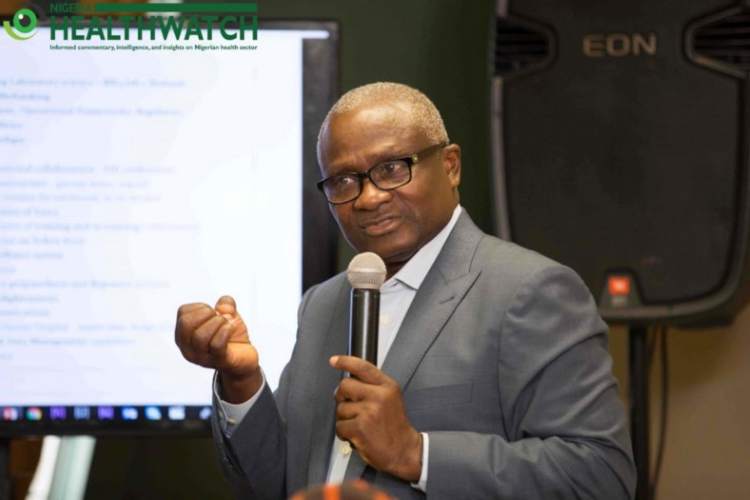
Jide Idris, the director-general of the NCDC disclosed during an interview with ARISE News on Monday, saying a recent assessment revealed areas requiring urgent attention despite ongoing efforts to strengthen the nation’s public health response.
“Our recent latest level of assessment puts us at about 59 per cent. But that’s quite variable. You can’t be 100 per cent prepared, but the essence is that we keep preparing because things change,” Idris said.
According to him, the agency conducted a dynamic risk assessment to evaluate Nigeria’s readiness, identify vulnerabilities and determine actions needed to prevent the importation of the deadly virus.
“We did a dynamic risk assessment for Nigeria basically to assess our level of preparedness, where we are, what gaps we need to cover, and then what we need to do. One area that clearly came out was the point of entry, which is crucial because the objective is that we should not allow this thing to come into this country,” he stated.
Idris noted that the federal ministry of health has already issued protocols for agencies involved in monitoring international arrivals, particularly through airports.
“The essence of that is to control traffic into this country, especially traffic from airlines. That’s why some states were categorised as high risk because they host international airports where people enter the country,” he said.
However, he identified Nigeria’s porous land borders as a greater concern.
“But the biggest one again is our borders—porous borders. Not everybody comes in by air. You have people migrating by road and that kind of thing. These are the scares, and that’s why it is essential for us to prepare,” he added.
Drawing lessons from Nigeria’s successful containment of the 2014 Ebola outbreak, Idris stressed the importance of early detection, isolation, contact tracing and rapid laboratory diagnosis.
“Once you detect, you must isolate the patient because the mode of spread of Ebola is by contact,” he said.
He added that healthcare workers must be adequately protected and isolation facilities maintained to contain any potential outbreak.
“Detection, isolation and contact tracing are the key things. Once you can prevent contact, I think we are reasonably okay,” Idris explained.
The NCDC boss acknowledged that Nigeria is not yet fully prepared for an Ebola emergency but said efforts were ongoing to improve readiness across the country.
“To be frank, we are not 100 per cent ready, but we are improving our readiness. We have sent advisers to states to assess infrastructure, isolation centres, emergency operations centres and available stockpiles in case of an outbreak,” he said.
He also disclosed that the agency is expanding laboratory capacity, training health workers, supplying protective equipment and increasing public awareness campaigns.
“The idea is to optimise preparedness by training staff, providing reagents, providing PPEs and ensuring standard operating procedures are followed,” he said.
Beyond Ebola, Idris revealed that Nigeria is currently managing between seven and eight disease outbreaks, including cholera and Lassa fever.
“Aside from Lassa fever, we are managing about seven to eight outbreaks in this country right now. Cholera is there, and it’s killing people,” he said.
He attributed the persistence of Lassa fever in some communities to cultural practices such as the consumption of rodents and bushmeat.
“It has to do with our culture, our tradition and our health-seeking behaviours. In some areas, people regard these rats as delicacies,” he noted.
The NCDC director-general called on state governments to play a more active role in disease prevention and outbreak response, stressing that public health preparedness cannot be left to the federal government alone.
“The state governments need to take leadership of this,” he said.