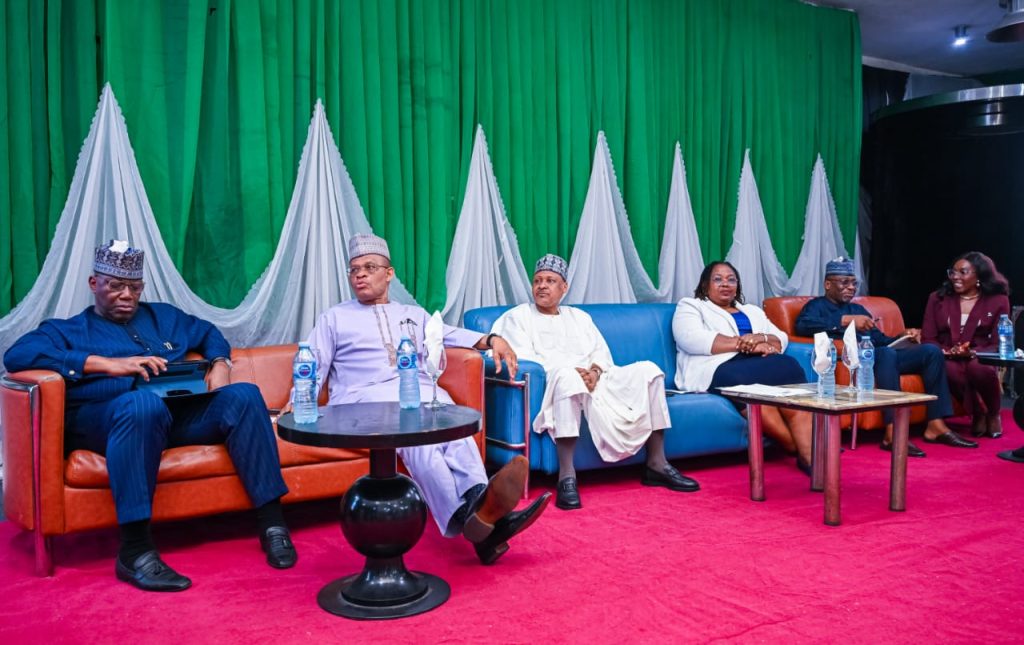
Nigeria’s long-awaited transition from analogue to digital broadcasting got a boost on Tuesday when stakeholders reaffirmed their resolve to complete the country’s Digital Switch Over (DSO) programme.
At the event convened by the National Broadcasting Commission (NBC) under the Federal Ministry of Information and National Orientation, they agreed on a new hybrid model designed to fast-track implementation.
Following extensive deliberations, they endorsed a hybrid digital broadcasting framework, combining Digital Terrestrial Television (DTT), Direct-to-Home (DTH) satellite services and digital application-based delivery platforms.
According to industry observers, this signals a shift in Nigeria’s digital migration strategy. During the meeting, the stakeholders rejected suggestions that digital terrestrial television should be abandoned, arguing that DTT remains a key pillar of Nigeria’s digital broadcasting architecture.
The stakeholders also agreed that the Digital Implementation Team (DigiTeam), which previously played a central role in driving the DSO project, should be reconstituted to provide strategic direction and coordinate implementation efforts.
In his address, the Minister of Information and National Orientation, Mohammed Idris, described the session as a “family discussion”, which he said was targeted at addressing lingering issues and ensuring the completion of the DSO project.
Idris assured those who attended the meeting that the Federal Government had no hidden agenda about the digital migration process, promising that decisions would be guided by national interest, inclusiveness and sustainability of Nigeria’s broadcasting industry.
The minister acknowledged the concerns of stakeholders over participation and consultations but admitted that engagement should have started earlier.
He said that though stakeholders may disagree on implementation strategies, there is a consensus that Nigeria must complete its migration to digital broadcasting.
At the session, participants agreed that the DSO project is necessary and beneficial to the country’s economic and technological development.
The stakeholders listed job creation, investment attraction, local content development, and support for local manufacturing as important objectives that must remain at the heart of the programme.
According to them, there is also a need for regulatory certainty, investor confidence, and stronger collaboration among industry players to guarantee the sustainability of the broadcasting value chain.
One major highlight of the stakeholders’ session was a concern over the protection of investments by licensed set-top box manufacturers and other operators within the DSO ecosystem.
But in response, NBC assured the safeguarding of investments and deepened consultations with stakeholders to ensure transparency and inclusiveness in the implementation process.
Also, at the meeting, one major outcome was the support for ongoing efforts by NBC and ARCON to develop a sustainable business model. This, they said, would strengthen audience measurement systems and improve advertising revenue generation.
It also recommended the institutionalisation of quarterly engagements to ensure continuous alignment and effective monitoring of the DSO rollout process.
The Federal Government reiterated that it will continue to work closely with industry stakeholders to ensure the successful delivery of the DSO programme and the realisation of its full economic and social benefits for Nigerians.
The meeting concluded with a collective resolve to fast-track implementation of the digital transition in a manner that ensures sustainability, innovation, and shared industry growth.
The meeting had 128 participants, including regulators, broadcasters, signal distributors, satellite operators, set-top box manufacturers, content producers, and industry associations in attendance.
Some of them include the Permanent Secretary, Federal Ministry of Information and National Orientation, Binyerem C. Ukaire; the Director General of Nigerian Communications Satellite Limited (NigComSat), Jane Egerton-Idehen; the Director-General of the National Broadcasting Commission (NBC), Charles Ebuebu; the Director General of the Nigerian Television Authority (NTA), Salihu Abdullahi Dembos; the Director General of the Advertising Regulatory Council of Nigeria (ARCON), Olalekan Olumuyiwa Fadolapo; the Chairman of the Broadcasting Organisations of Nigeria (BON), STony Akiotu; the Chairman of Channels Media Group, John Momoh, alongside other distinguished stakeholders and industry leaders from the broadcasting, media, technology, and communications sectors.
The post Nigeria’s Long-Awaited Digital Switch Over Gets Major Boost appeared first on Channels Television.
More details here...