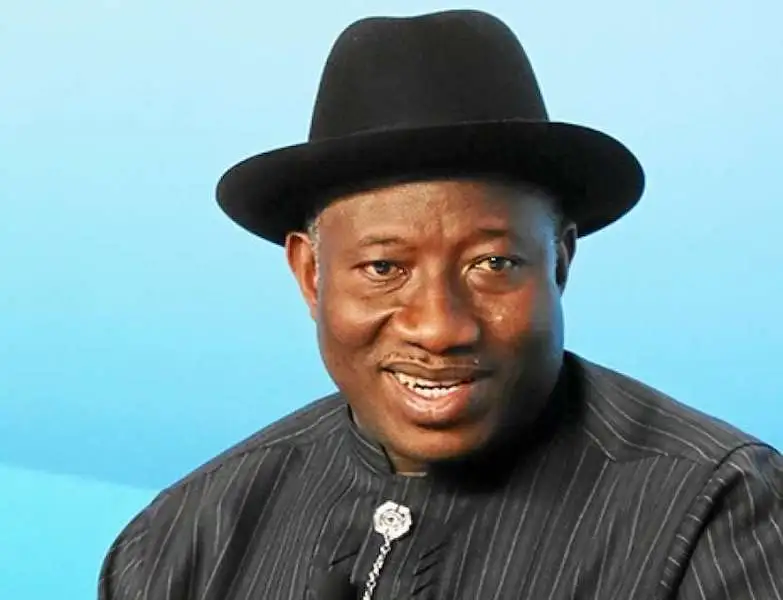
As Nigeria gradually moves toward the 2027 general election, political discussions are increasingly shifting from governance to electoral calculations, potential alliances, and emerging presidential contenders. Among the names generating considerable public interest is former President Goodluck Ebele Jonathan (GEJ), whose possible return to the presidential race continues to spark debate across political circles.
Although his candidacy remains speculative, the prospect of Jonathan joining an already crowded opposition field presents an interesting political question: Would his participation strengthen the opposition’s chances against President Bola Ahmed Tinubu (PBAT), or would it further complicate the opposition’s path to victory?
In my opinion, the answer lies in understanding the realities of Nigeria’s electoral dynamics rather than the popularity of any individual candidate.
Former President Jonathan remains one of the most recognizable political figures in contemporary Nigerian history. He continues to enjoy goodwill in parts of the South-South and among many Nigerians who associate his administration with relative political stability and a peaceful transfer of power in 2015. His political profile, experience and national reach could also attract support from individuals and groups seeking an alternative to the current administration.
Furthermore, some influential northern political stakeholders who may not be aligned with President Tinubu’s government could view Jonathan as a familiar and experienced option capable of attracting broad national support.
Ordinarily, such factors could make him a formidable challenger.
However, the political landscape of 2027 appears significantly different from previous election cycles.
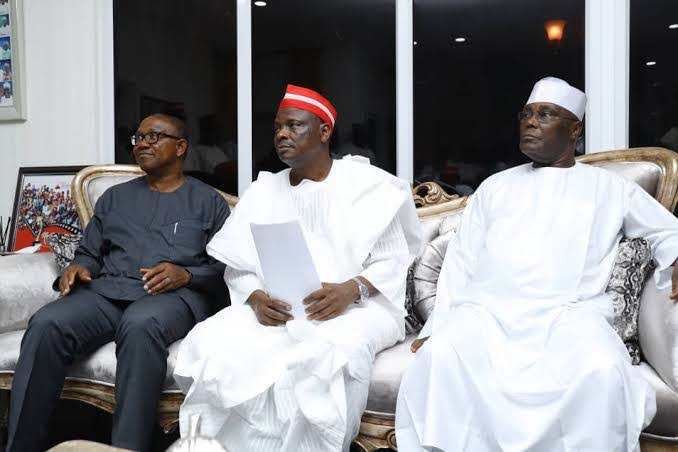
The continued prominence of Mr. Peter Gregory Obi presents a major variable in the equation. Since the 2023 presidential election, Obi has maintained a loyal support base, particularly among young voters, urban professionals and significant segments of the South-East and South-South. If both Jonathan and Obi eventually emerge as presidential candidates, it is likely that they would compete for substantial support within similar voting blocs.
Such a scenario could result in a division of opposition votes across regions where a united front would ordinarily be expected.
This is where the political implications become particularly significant.
While Jonathan’s entry into the race could potentially strengthen the opposition numerically, it could simultaneously weaken it strategically if multiple candidates appeal to the same demographic and regional constituencies. Electoral history has shown that opposition fragmentation often creates opportunities for incumbents, especially in a political environment where victory depends on both total votes and geographical spread.
For President Tinubu, the emergence of several strong opposition candidates could prove advantageous. Rather than confronting a single consolidated opposition movement, the President may find himself facing multiple challengers competing for the same electoral space.
The South-West remains a critical factor in this calculation. As President Tinubu’s traditional political base, the region is expected to remain largely favourable to the APC. While opposition candidates may make inroads in certain areas, the President is likely to maintain a strong advantage across much of the zone.
In the North, the political picture is equally intriguing. Former Vice President Atiku Abubakar continues to command considerable influence across parts of Northern Nigeria. Should he remain active in the race, he would undoubtedly attract substantial support. However, the presence of multiple opposition candidates could also divide votes that might otherwise have been consolidated behind a single challenger.
This raises a broader question about opposition strategy.
Can a fragmented opposition successfully challenge an incumbent president with a nationwide party structure and the advantages of incumbency? Or would the opposition’s greatest obstacle be not the ruling party itself, but its inability to unite behind a common candidate and agenda?
Political history, both in Nigeria and elsewhere, suggests that opposition victories are often built on coalition-building, compromise and strategic unity. Where multiple strong candidates emerge without a coordinated framework, the electoral arithmetic often favours the better-organized political machine.
Beyond the personalities involved, however, the 2027 election may ultimately be decided by issues rather than political calculations. Nigerians remain deeply concerned about economic reforms, inflation, unemployment, insecurity, infrastructure development and the rising cost of living. These challenges will likely shape voter decisions more than political symbolism or historical affiliations.
As a result, whichever candidate successfully convinces Nigerians that he possesses the vision, competence and political capacity to address these concerns may ultimately gain the upper hand.
For now, the political permutations remain fluid. Alliances are being explored, consultations are ongoing, and strategic calculations are taking place behind closed doors. Yet one reality is becoming increasingly clear: the outcome of the 2027 presidential election may depend as much on opposition unity — or the lack of it — as on the popularity of any individual contender.