3 min readJun 12, 2026 10:14 AM IST
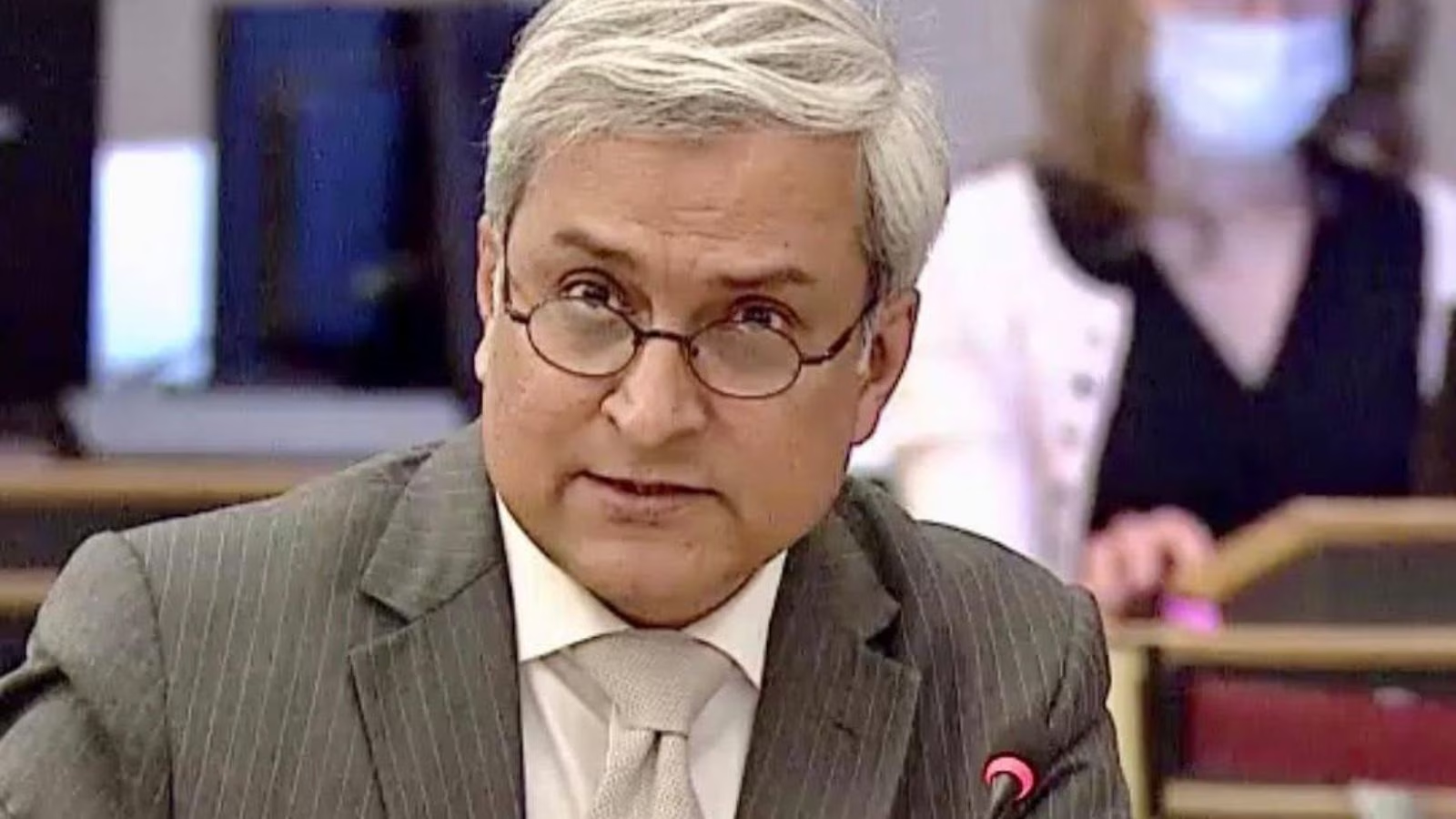
Pakistan on Thursday said that any attempt to restrict water flow would have “serious consequences” and could be viewed as an “act of war” under Article 51 of the UN Charter. Speaking at the Foreign Office’s weekly briefing, Pakistan Foreign Ministry spokesperson Tahir Andrabi was responding to recent remarks by India’s Water Resources Minister CR Patil’s comments on the Indus Water Treaty.
‘Not a single drop would reach Pakistan’: CR Patil
Patil told news agency ANI that India was working to ensure that “not a single drop” of water reaches Pakistan in the coming years, following directions from Prime Minister Narendra Modi.
“The [Indus Water] Treaty has been kept in abeyance. And since Prime Minister Modi took this decision, every effort is being made to ensure not a single drop flows there. Under the Prime Minister’s directives, Home Minister Amit Shah is also personally monitoring the matter, and we are actively working on it. I believe the work is proceeding in a time-bound manner, and the flow of Indus water to Pakistan will stop,” he said.
#WATCH | Delhi: On the decision to terminate the Indus Waters Treaty, Union Minister C.R. Patil says, “It still stands; rather, the treaty has been kept in abeyance. And since Prime Minister Modi took this decision, every effort is being made to ensure not a single drop flows… pic.twitter.com/vnEGNpvD0K
— ANI (@ANI) June 9, 2026
Pakistan reacts
Reacting to the statement, Andrabi said any effort to significantly reduce or stop water supplies essential for the livelihood, agriculture and well-being of more than 250 million Pakistanis would be highly irresponsible. According to Pakistani news website Dawn, Andrabi said that such an action would violate international norms governing shared rivers as well as bilateral agreements between the two countries.
Pakistan, he said, rejected the idea of using water as a political instrument or means of coercion. According to Andrabi, any “disruption to vital water resources could threaten regional peace and security, with responsibility for any resulting instability resting on India”.
He further stressed that Pakistan’s rights over its water resources were non-negotiable and said Islamabad would defend them through diplomatic, political, legal and economic avenues available under international law and the UN Charter.
Reiterating the government’s position, Andrabi warned that any deliberate move to block water crucial for Pakistan’s survival and development would be an extremely serious step with wide-ranging repercussions. He added that Pakistan would take all necessary measures to safeguard its economy, national interests and the lives of its citizens.
‘Pakistan remains open to mediation efforts in Iran conflict’
On the conflict Iran-United States conflict, Andrabi said Pakistan continues to support diplomatic engagement despite the “challenging circumstances”.
Story continues below this ad
He acknowledged that opportunities for dialogue have narrowed due to renewed hostilities but argued that such cycles are common in conflicts and do not eliminate the possibility of future negotiations. “If a mediator loses hope, it does not help the peace process,” he was quoted as saying by Dawn. He said Pakistan remains committed to facilitating dialogue wherever possible.
Andrabi further said Islamabad would continue engaging constructively.