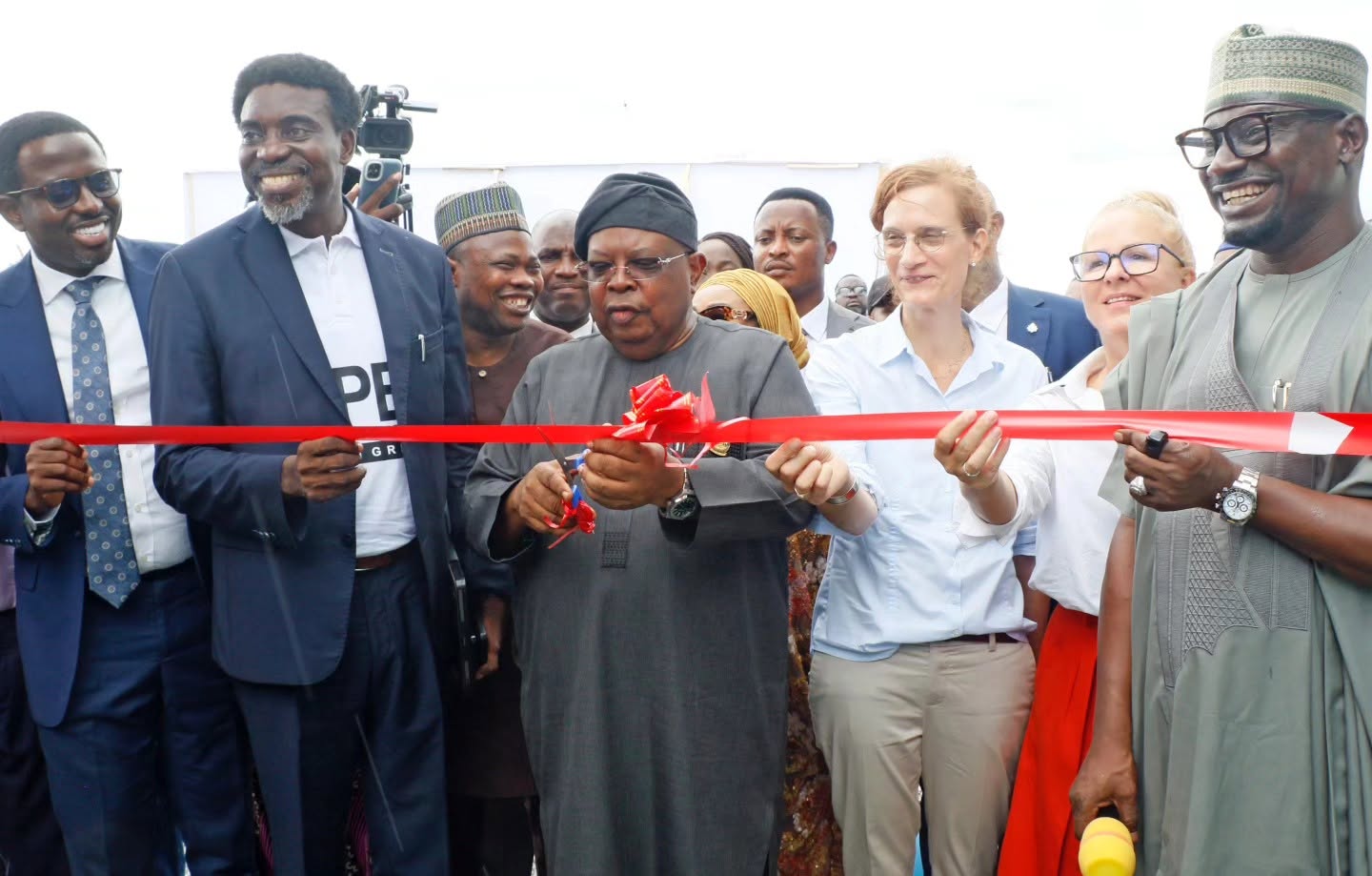
The Rural Electrification Agency (REA) has commissioned a 505kWp interconnected solar mini-grid in Epe, Lagos State, providing reliable electricity to five underserved communities and advancing Nigeria’s rural electrification and clean energy goals.
The Rural Electrification Agency (REA) says it commissioned a 505-kilowatt peak (kWp) interconnected solar mini-grid project to provide reliable and sustainable electricity to five communities in Epe Local Government Area of Lagos State.
The agency disclosed this in a statement issued on Wednesday, noting that the project was developed under the Rural Electrification Fund (REF) Interconnected Mini-Grid Acceleration Scheme (IMAS).
According to the statement, the solar facility will serve the communities of Odogbawojo, Odoshiwola, Odoayan, Ora and Ibowon, improving electricity access for households, businesses and public institutions.
The project was implemented by the REA and co-financed by the European Union, the German Government and the German Agency for International Cooperation (GIZ) through the Nigerian Energy Support Programme (NESP).
It was executed by A4&T Power Solutions Limited in partnership with Eko Electricity Distribution Company (EKEDC).
The agency described the project as a significant milestone in Nigeria’s efforts to expand decentralised renewable energy infrastructure and provide electricity to underserved communities.
It said the 505kWp facility is designed to power homes, small businesses, schools, health facilities and other productive users, with the aim of stimulating economic activities, improving social services and enhancing living standards across the beneficiary communities.
Speaking at the commissioning ceremony, the Minister of Power, Joseph Tegbe, said the project reflects the federal government’s commitment to expanding energy access under President Bola Tinubu’s Renewed Hope Agenda.
Mr Tegbe praised the agency’s growing footprint across the country, noting that more than 1,000 mini-grid projects are currently under development nationwide.
“The scale of what the REA is doing today is extraordinary,” he said.
He added that under the World Bank-supported Distributed Access through Renewable Energy Scale-up (DARES) programme, nearly 3.9 million Nigerians have gained access to solar home systems.
The minister highlighted several recent interventions by the agency, including a 704-kilowatt solar hybrid mini-grid in Offa, Kogi State, serving over 3,000 customers, a 50-kilowatt mini-grid project in Sokoto State, and renewable energy initiatives in Katsina State aimed at supporting communities facing climate and security challenges.
“The REA has shown that the energy transition is not an abstract policy document. It is happening community by community, kilowatt by kilowatt, life by life,” he said.
Lagos State Governor Babajide Sanwo-Olu commended the project, describing it as an example of how collaboration between government and the private sector can accelerate development in rural communities.
“This project is a strong example of how collaboration between the Federal Government and private sector can transform rural communities. Lagos State remains committed to supporting initiatives that expand energy access and drive inclusive growth,” he said.
The Managing Director and Chief Executive Officer of REA, Abba Aliyu, said the commissioning demonstrates the effectiveness of the REF-IMAS framework in attracting private sector investments into the renewable energy sector.
“This commissioning underscores the effectiveness of the REF-IMAS framework in unlocking private sector participation to deliver sustainable energy access,” Mr Aliyu said.
“At REA, we remain committed to closing Nigeria’s energy gap through scalable and impact-driven interventions.”
The Head of NESP-GIZ, Duke Benjamin, said the project illustrates the importance of international partnerships in advancing Nigeria’s clean energy transition.
“This project demonstrates the power of strong partnerships in delivering climate-smart and inclusive energy solutions,” he said.
“GIZ is proud to support Nigeria in scaling decentralised renewable energy systems that improve livelihoods and drive sustainable development.”
A4&T Power Solutions Limited, the project developer, described the commissioning as a testament to the growing capacity of indigenous firms to deliver large-scale renewable energy infrastructure.
“We are honoured to have delivered this landmark project. It demonstrates the capacity of Nigerian developers to design and implement world-class energy solutions that directly serve communities,” the company said.
The Managing Director and CEO of EKEDC also emphasised the importance of collaboration between electricity distribution companies and renewable energy developers in improving service delivery and expanding access to electricity.
“This project demonstrates the value of collaboration between DISCOs and renewable energy developers in strengthening distribution networks and improving service reliability,” he said.
Meanwhile, the Chairman of Eredo Local Council Development Area (LCDA) described the intervention as transformative for the local economy.
“This intervention will significantly improve economic activity, empower small businesses and enhance the quality of life of our people,” he said.
REA said the project forms part of its wider national electrification portfolio, which includes the Rural Electrification Fund, Nigeria Electrification Project (NEP), Energising Education Programme (EEP), Energising Economies Initiative (EEI), Capital Projects and the DARES Programme.
The agency added that the REF-IMAS framework continues to serve as a catalyst for private sector-led mini-grid deployment across Nigeria.
According to REA, the commissioning reinforces the federal government’s commitment to expanding infrastructure, promoting inclusive economic growth and accelerating Nigeria’s transition to cleaner energy sources.